Động vật phổ biến nhất bắt đầu bằng chữ K
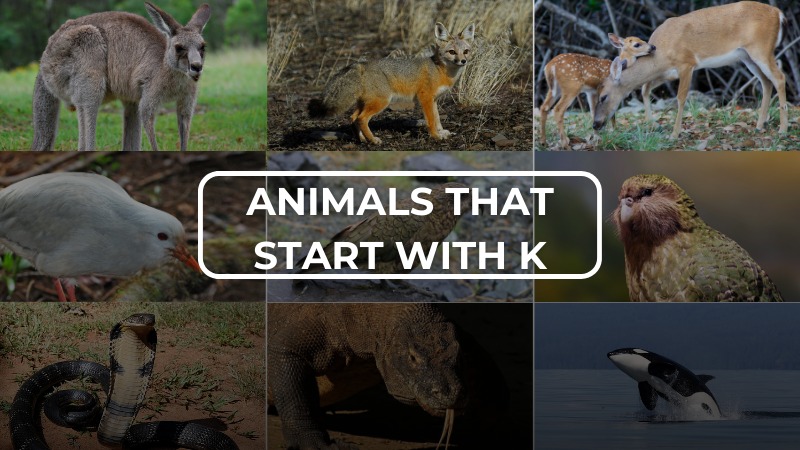
The animal kingdom is full of remarkable creatures, and this section highlights some of the most popular animals that start with the letter K. From the powerful Kangaroo to the colorful Kingfisher, these animals showcase the beauty and diversity of life on Earth.
Whether you’re learning for school, exploring wildlife out of curiosity, or searching for fun animal facts, this list is a great place to start.
| Kangaroo | Kingfisher | Kestrel |
| Kudu | King Cobra | Koala |
| Kiwi | Komodo Dragon | Kakapo |
1. Kangaroo
The Kangaroo (Macropus) is an iconic marsupial native to Australia and one of the largest marsupials in the world. It is globally recognized for its powerful hopping movement, strong hind legs, and long muscular tail, which helps maintain balance while jumping.
Kangaroos inhabit open grasslands, savannas, and woodlands across Australia. They are social herbivores that live in groups called mobs, feeding mainly on grasses, leaves, and shrubs. One of their most unique biological traits is the marsupial pouch, where extremely underdeveloped young—called joeys—complete their early growth stages.

| Attributes | Quick facts |
|---|---|
| Size | 3–8 ft (1–2.4 m), depending on species |
| Weight | 40–200 lbs (18–90 kg) |
| Lifespan | 8–23 years. |
| Habitat | Grasslands, savannas, and woodlands of Australia. |
| Diet | Herbivorous; grasses, leaves, shrubs. |
| Social Structure | Lives in groups called mobs. |
| Conservation | Least Concern, others are Endangered. |
Fun fact: Kangaroos cannot walk backward, which is why they appear on Australia’s national coat of arms—symbolizing forward progress.
2. Kingfisher
Kingfishers (Family Alcedinidae) are a widespread group of small to medium-sized, brightly colored birds known for their disproportionately large heads and long, sharp, dagger-like bills. Classified as perching birds (Passeriformes), they are found globally across all continents except Antarctica. Their most defining feature is their dramatic, rapid hunting technique, which involves diving headfirst into the water from an overhead perch to catch prey.

| Attributes | Quick facts |
|---|---|
| Size | 4–18 in (10–46 cm), depending on species. |
| Weight | 0.3–16 oz (10–450 g). |
| Lifespan | 6–10 years. |
| Habitat | Near rivers, lakes, and coastal areas worldwide. |
| Diet | Fish, insects, and small aquatic animals. |
| Social Structure | Solitary or pairs; territorial. |
| Conservation | Least Concern, others are Endangered. |
Fun fact: Some kingfishers have been observed using their large bills to create “fishing holes” in thin ice during winter.
3. Kestrel
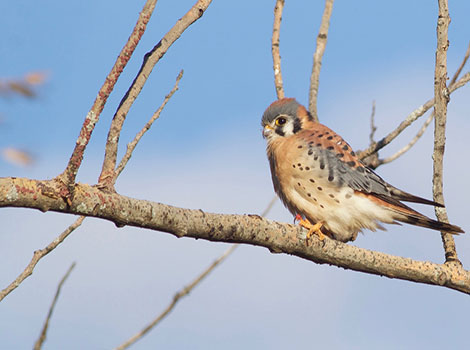
The Kestrel (Falco), a common member of the Falconidae family, is a small, highly adaptable raptor known globally for its distinctive hovering flight pattern while hunting. Classified as a bird of prey, Kestrels inhabit a wide variety of open environments, including farmland, heathlands, and urban areas. They are specialists in catching small prey by remaining virtually motionless in the air, a key adaptation that sets them apart from other falcons.
| Attributes | Quick facts |
|---|---|
| Size | 8–12 inches (20–31 cm) in length; wingspan 20–24 inches (51–61 cm). |
| Weight | 2.8–5.8 oz (80–165 g). |
| Lifespan | 5–10 years in the wild. |
| Habitat | Open areas with sparse vegetation, including grasslands, deserts, and agricultural fields. |
| Diet | Carnivorous: feeds on small mammals, birds, insects, and reptiles. |
| Social Structure | Mostly solitary; pairs during the breeding season. |
| Conservation | Least Concern. |
Fun fact: They steal prey from sparrowhawks, barn owls, and short-eared owls.
4. Kudu
The Greater Kudu (Tragelaphus strepsiceros) is one of Africa’s most majestic and largest antelope species, widely recognized for its handsome appearance and elusive nature. This large mammal is native to the eastern and southern regions of the continent, inhabiting thorny bushlands and savannas. Its most prominent feature is the male’s impressive, long, spiraling horns, complemented by a brown-grey coat marked with distinctive vertical white stripes that aid in camouflage.

| Attributes | Quick facts |
|---|---|
| Size | 4–5 ft (1.2–1.5 m) at the shoulder; males have spiral horns up to 6 ft (1.8 m) long. |
| Weight | 260–700 lbs (120–317 kg). |
| Lifespan | 7–20 years. |
| Habitat | Savannas, woodlands, and rocky hills across sub-Saharan Africa. |
| Diet | Herbivorous: feeds on leaves, shoots, grass, and fruits. |
| Social Structure | Females form small herds; males are solitary or form bachelor groups. |
| Conservation | Least Concern (Greater Kudu); Near Threatened (Lesser Kudu). |
Fun fact: They can effortlessly clear a fence of 2.5 meters from a standstill.
5. King Cobra
The King Cobra (Ophiophagus hannah) is a large, highly venomous snake native to the plains and dense rainforests of Southern China, India, and Southeast Asia. Distinguished by its impressive hood and status as the world’s longest venomous snake, this species is unique among snakes for its oophagous diet and tendency to construct and fiercely guard a nest for its eggs. It is a highly adaptable reptile, found in environments ranging from land and trees to water.

| Attributes | Quick facts |
|---|---|
| Size | Up to 18 ft (5.5 m). |
| Weight | 15–20 lbs (6.8–9 kg). |
| Lifespan | 20 years in the wild. |
| Habitat | Forests, grasslands, and mangrove swamps in Southeast Asia. |
| Diet | Carnivorous; primarily preys on other snakes. |
| Social Structure | Solitary; males may fight during mating season. |
| Conservation | Vulnerable (habitat loss and human conflict). |
Fun fact: They can “stand up” and match the eye level of a human.
6. Koala
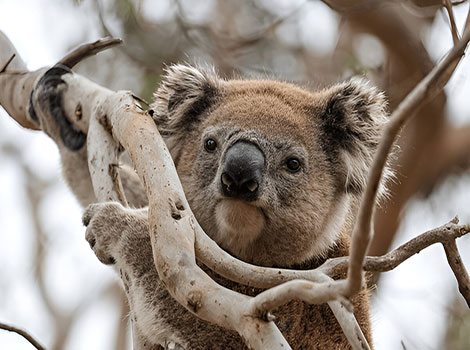
The Koala (Phascolarctos cinereus) is an iconic marsupial endemic to Australia, instantly recognizable by its thick gray-brown fur, large black nose, and fluffy ears. As the sole member of the Phascolarctidae family, this specialized herbivore inhabits eucalyptus forests across eastern and southern regions. Distinguished by its extremely low-energy lifestyle, the Koala spends most of its life resting and feeding exclusively on specific varieties of eucalyptus leaves.
| Attributes | Quick facts |
|---|---|
| Size | 24–33 in (60–85 cm). |
| Weight | 9–33 lbs (4–15 kg). |
| Lifespan | 10–20 years. |
| Habitat | Eucalyptus forests and woodlands in eastern and southern Australia. |
| Diet | Herbivorous; feeds almost exclusively on eucalyptus leaves. |
| Social Structure | Solitary, with overlapping home ranges. |
| Conservation | Vulnerable. |
Fun fact: Though nicknamed “koala bears,” these adorable creatures are marsupials, not bears! Plus, their fingerprints are so human-like that they could potentially confuse crime scene investigations!
7. Kiwi
The Kiwi (Genus Apteryx) is a unique, flightless bird that is indigenous to New Zealand, where it serves as a national icon. A member of the Apterygidae family, this shy, nocturnal creature is distinguished by its large, round body, highly developed sense of smell, and long, sensitive beak with nostrils located at the tip. Due to its soft, hair-like feathers, short legs, and foraging behavior, the Kiwi is considered one of the world’s most unusual birds.

| Attributes | Quick facts |
|---|---|
| Size | 14–18 inches (35–45 cm). |
| Weight | 2.6–8.6 lbs (1.2–3.9 kg). |
| Lifespan | 25–30 years in the wild. |
| Habitat | Forests, grasslands, and scrublands in New Zealand. |
| Diet | Omnivorous; feeds on worms, insects, seeds, and fruits. |
| Social Structure | Solitary; forms monogamous pairs during breeding. |
| Conservation | Vulnerable to Critically Endangered. |
Fun fact: Kiwis are known for laying the largest eggs in their body size.
After exploring the intriguing birds that start with ‘K’, let’s dive into the fascinating world of reptiles that share the same initial letter.
8. Komodo Dragon
The Komodo Dragon (Varanus komodoensis) is the world’s heaviest and largest lizard, indigenous to a few islands in Indonesia, including Komodo and Rinca. This formidable reptile is distinguished by its massive size—measuring up to 10 feet—and its powerful, scaled body. A solitary apex predator, the Komodo Dragon relies on ambush tactics and a keen sense of smell to hunt and subdue large prey, often killing them with a potent combination of saliva and venom.

| Attributes | Quick facts |
|---|---|
| Size | Up to 10 ft (3 m). |
| Weight | 150–200 lbs (68–91 kg). |
| Lifespan | 30 years in the wild. |
| Habitat | Tropical savannas, forests, and volcanic islands in Indonesia. |
| Diet | Carnivorous; preys on large mammals, birds, and carrion. |
| Social Structure | Solitary, territorial. |
| Conservation | Endangered (habitat loss and poaching). |
Fun fact: Komodo Dragons are adept swimmers and can cover distances up to a thousand feet in a single swim.
9. Kangaroo Rat
The Kangaroo Rat (Genus Dipodomys) is a small, bipedal rodent native to the arid and semi-arid regions of Western North America. Distinguished by its long, tufted tail and disproportionately large hind legs, this solitary mammal uses powerful hops for locomotion. This nocturnal creature boasts fascinating adaptations, including fur-lined cheek pouches for transporting seeds and an extreme ability to survive without drinking water.

| Attributes | Quick facts |
|---|---|
| Size | 4–5 in (10–13 cm) body length. |
| Weight | 1–4 oz (35–120 g). |
| Lifespan | 2–5 years. |
| Habitat | Deserts and arid regions of North America. |
| Diet | Herbivorous; seeds and grains. |
| Social Structure | Solitary or in small groups. |
| Conservation | Endangered. |
Fun fact: Despite their compact size, they can spring up to 9 feet in the air to dodge predators.
10. Kakapo
The Kakapo (Strigops habroptila), also known as the owl parrot, is a critically endangered flightless bird indigenous to New Zealand. This large, nocturnal parrot is highly distinguished as the only flightless parrot in the world and the heaviest, possessing soft, mossy-green plumage for camouflage. Kakapos are also unique for their complex lek breeding system and their critically endangered status within protected forest sanctuaries.

| Attributes | Quick facts |
|---|---|
| Size | 23–25 in (58–64 cm). |
| Weight | 4.5–9 lbs (2–4 kg). |
| Lifespan | Up to 90 years. |
| Habitat | Forests of New Zealand. |
| Diet | Herbivorous: eats leaves, seeds, fruit, and bark. |
| Social Structure | Solitary; males gather during breeding season (lekking). |
| Conservation | Critically Endangered; intensive conservation efforts underway. |
Fun fact: It’s the only parrot in the world that can’t fly. Despite this, it’s a skilled climber.
Mammals That Start with K
The animal kingdom is brimming with fascinating creatures, and exploring them through unique perspectives is always a delight. This time, we turn our attention to animals whose names begin with the letter ‘K’. From the beautiful kangaroo to the lively kodiak bear, this collection showcases the incredible diversity of nature. Here are 41 fascinating mammals starting with the letter Z, each showcasing unique traits and characteristics:
11. Kodiak
The Kodiak Bear (Ursus arctos middendorffi) is an enormous subspecies of brown bear that is endemic to the Kodiak Archipelago off the coast of Alaska. Belonging to the Mammal classification, it is widely recognized as the largest bear in the world and the largest land carnivore. This solitary apex predator is distinguished by its immense size—males often exceed 1.000 lbs—and its reproductive isolation over millennia from other bear populations.

| Attributes | Quick facts |
|---|---|
| Size | Up to 10 ft (3 m) when standing on hind legs. |
| Weight | 600-1,600 lbs (270-680 kg). |
| Lifespan | 20-25 years. |
| Habitat | Forests and coastal areas of the Kodiak Archipelago, Alaska. |
| Diet | Omnivorous; fish, berries, and vegetation. |
| Social Structure | Solitary except during mating or feeding. |
| Conservation | Least Concern. |
Fun fact: 30% of the adult population does not hibernate, remaining somewhat active during the winter.
12. Kaffir Cat
The African Wildcat (Felis lybica), historically known as the Kaffir Cat, is widely accepted as the ancestor of the domestic cat. This resilient mammal is native to Africa, the West, and Central Asia, thriving in diverse habitats from savannas to shrublands. Distinguished by its medium size and tawny coat marked with subtle black stripes, this solitary hunter is mainly active at night and in twilight, preying predominantly on rodents and small vertebrates.

| Attributes | Quick facts |
|---|---|
| Size | 2-3 ft (60-90 cm) including tail. |
| Weight | 10-15 lbs (4.5-7 kg). |
| Lifespan | 12-18 years. |
| Habitat | Domestic and semi-wild; native to Africa. |
| Diet | Carnivorous; small mammals and birds. |
| Social Structure | Solitary hunters. |
| Conservation | Domesticated. |
Fun fact: They cannot taste sweetness. This is the result of a mutation in a key taste receptor.
13. Kai Ken
The Kai Ken, historically known as the “Tiger Dog,” is a rare, medium-sized breed indigenous to the mountainous region of Japan near Mount Fuji. This distinctive mammal is one of Japan’s six native spitz breeds, distinguished by its double coat, which comes in various shades of brindle. Renowned for its natural hunting instincts, the Kai Ken exhibits high intelligence, unwavering loyalty to its family, and a reserved, watchful demeanor around strangers.

| Attributes | Quick facts |
|---|---|
| Size | 17-22 in (43-56 cm) tall. |
| Weight | 25-45 lbs (11-20 kg). |
| Lifespan | 12-16 years. |
| Habitat | Domestic; originated in Japan. |
| Diet | Omnivorous; dog food and human scraps. |
| Social Structure | Live with humans; loyal and family-oriented. |
| Conservation | Rare; protected breed in Japan. |
Fun fact: They have climbing skills, including tree climbing, that have been observed during prey tracking.
14. Kangal Shepherd Dog
The Kangal Shepherd Dog (Canis familiaris), also known simply as the Kangal, is a powerful, ancient livestock guardian dog native to the Sivas region of Turkey. Belonging to the Mammal classification, this large, muscular breed is distinguished by its formidable size and protective temperament, making it highly reliable for safeguarding flocks. It is celebrated globally not only for its unwavering loyalty but also for possessing one of the strongest bite forces among all dog breeds.

| Attributes | Quick facts |
|---|---|
| Size | 27-29 in (74-74 cm). |
| Weight | 80-150 lbs (36-68 kg). |
| Lifespan | 12-15 years. |
| Habitat | Domestic; bred in Turkey. |
| Diet | Omnivorous; dog food and meat. |
| Social Structure | Family-oriented, protective of livestock. |
| Conservation | Rare but not endangered. |
Fun fact: It is believed to be related to the dogs depicted in ancient Assyrian art.
15. Kangaroo Mouse
Kangaroo Mouse (Microdipodops megacephalus) is a tiny rodent native to the arid deserts and sandy plains of the western United States. Belonging to the Mammal classification, this diminutive creature is distinguished by its long hind legs and ability to hop bipedally, similar to the larger Kangaroo Rat. A nocturnal forager, the Kangaroo Mouse is highly adapted to its environment, using fur-lined cheek pouches to carry seeds back to its burrow for storage.

| Attributes | Quick facts |
|---|---|
| Size | 3-5 in (8-13 cm). |
| Weight | 1-2 oz (28-56 g). |
| Lifespan | 1-3 years. |
| Habitat | Deserts of North America. |
| Diet | Herbivorous; seeds and grasses. |
| Social Structure | Solitary. |
| Conservation | Least Concern. |
Fun fact: It can obtain water not through drinking, but metabolically from its food.
16.Karakul
The Karakul sheep (Ovis aries) is one of the world’s oldest domesticated sheep breeds, originating in Central Asia, specifically Uzbekistan. Belonging to the Mammal classification, this stocky breed is highly adapted to arid environments with sparse vegetation and limited water resources. It is distinguished by its coarse, strong wool and its valuable, curly black lamb fleeces, making it one of the most historically significant multi-purpose sheep.

| Attributes | Quick facts |
|---|---|
| Size | About 24-28 in (60-71 cm) at the shoulder. |
| Weight | 80-175 lbs (36-79 kg). |
| Lifespan | 10-12 years. |
| Habitat | Arid regions of Central Asia. |
| Diet | Herbivorous; grass and shrubs. |
| Social Structure | Domesticated livestock. |
| Conservation | Not at risk. |
Fun fact: They can withstand severe drought conditions by storing fat reserves in their tails for lean times.
17. Kiang
The Kiang (Equus kiang) is an iconic Mammal distinguished by its impressive size and striking coat pattern, making it the largest of the Asian wild asses. This herbivore belongs to the Equidae family and thrives across the high-altitude Tibetan Plateau’s alpine and montane grasslands. Its distinctive morphology includes a dark chocolate dorsal stripe contrasting sharply with its brilliant white legs and underparts. Known for occasionally forming massive, yet temporary, herds of several hundred individuals, the Kiang is a resilient symbol of its harsh native environment.

| Attributes | Quick facts |
|---|---|
| Size | 4-5 ft (1.2-1.5 m) at the shoulder. |
| Weight | 500-900 lbs (230-410 kg). |
| Lifespan | 20-30 years. |
| Habitat | High-altitude plateaus of Tibet and Nepal. |
| Diet | Herbivorous; grass and shrubs. |
| Social Structure | Live in herds. |
| Conservation | Least Concern. |
Fun fact: Kiangs can go several days without drinking water.
18. Kiko Goat
Kiko Goat (Capra aegagrus hircus) is a hardy and robust breed of Mammal belonging to the Bovidae family. Developed in New Zealand during the 1980s, the Kiko is distinguished by its exceptional resilience and ability to thrive in harsh, challenging terrains and various climates. The breed is highly valued in farming for its strong maternal instincts and capacity to efficiently produce and raise multiple offspring, a key economic trait. While their coats can display any color, white is the most common coloration.

| Attributes | Quick facts |
|---|---|
| Size | 24-36 in (60-91 cm) tall. |
| Weight | 120-300 lbs (54-136 kg). |
| Lifespan | 8-12 years. |
| Habitat | Domestic; originated in New Zealand. |
| Diet | Herbivorous; grass and vegetation. |
| Social Structure | Live in flocks. |
| Conservation | Not at risk. |
Fun fact: Kiko goats can breed year-round.
19. Kinder Goat
Kinder Goat (Capra aegagrus hircus) is a versatile American Mammal recognized as a highly efficient dual-purpose breed suitable for both meat and milk production. Originating in Snohomish, Washington, the Kinder Goat is distinguished by its unique heritage, the result of a cross between the smaller American Pygmy and the dairy-focused Nubian goat. This medium-sized breed inherits a sturdy, compact body structure combined with the longer legs characteristic of its Nubian ancestors. It is highly valued among small homesteaders for its manageable size and high milk output.

| Attributes | Quick facts |
|---|---|
| Size | 20-26 in (50-66 cm). |
| Weight | 100-150 lbs (45-68 kg). |
| Lifespan | 8-12 years. |
| Habitat | Domestic. |
| Diet | Herbivorous; grass, hay, and grains. |
| Social Structure | Social: lives in herds. |
| Conservation | Not at risk. |
Fun fact: A healthy Kinder Goat can live up to 15 years or longer.
20. Key Deer
The Key Deer (Odocoileus virginianus clavium) is an endangered subspecies of white-tailed deer and a remarkable Mammal belonging to the Cervidae family. This diminutive deer is endemic to the Florida Keys, with the largest concentration found on Big Pine Key. Distinguished as the smallest deer species in North America, it typically has a coat that ranges from reddish-brown to grey-brown. The Key Deer possesses the unique ability to swim between islands and often exhibits a striking lack of natural fear toward humans.

| Attributes | Quick facts |
|---|---|
| Size | 24-32 in (60-81 cm) at the shoulder. |
| Weight | 55-80 lbs (25-36 kg). |
| Lifespan | 9-12 years. |
| Habitat | Pine rocklands and mangroves of the Florida Keys. |
| Diet | Herbivorous; leaves, fruits, and grasses. |
| Social Structure | Lives in small herds. |
| Conservation | Endangered; habitat loss is a major threat. |
Fun fact: The Key Deer are the smallest deer species in the Americas.
21. Keeshond
Keeshond (Canis lupus familiaris) is a striking, medium-sized spitz-type Mammal originally developed in the Netherlands. This breed, which belongs to the Canidae family, historically served as an alert watchdog and companion aboard barges navigating the country’s extensive canal system. The Keeshond is instantly distinguished by its dense, plush, silver-and-black coat and its signature, spectacles-like markings around the eyes. Known for being extremely people-oriented and highly protective of its family, this dog requires full involvement in domestic life.

| Attributes | Quick facts |
|---|---|
| Size | 17-18 inches (43-46 cm). |
| Weight | 35-45 lbs (16-20 kg). |
| Lifespan | 12-15 years. |
| Habitat | Domestic. |
| Diet | Omnivorous; standard dog food. |
| Social Structure | Family-oriented and affectionate. |
| Conservation | Not at risk; popular domestic breed. |
Fun fact: Their nickname: “Smiling Dutchman”, which comes from their habit of curling their lip and showing their teeth in a grin.
22. Kelpie
Kelpie is an iconic Australian Mammal recognized globally as one of the world’s premier livestock herding dogs. Classified as Canis lupus familiaris, this medium-sized breed is distinguished by its highly athletic body, energetic personality, and exceptional intelligence. Kelpies are indispensable in rural and farming regions of Australia, where they demonstrate remarkable adaptability across diverse climates, from arid deserts to temperate grasslands. Their deep-seated work ethic and loyalty make them devoted companions, provided their need for a stimulating “job” is met.

| Attributes | Quick facts |
|---|---|
| Size | 17-20 inches (43-51 cm). |
| Weight | 30-44 lbs (14-20 kg). |
| Lifespan | 10-14 years. |
| Habitat | Domestic. |
| Diet | Omnivorous; standard dog food. |
| Social Structure | Highly social and active. |
| Conservation | Not at risk; working dog breed. |
Fun fact: Kelpies have been known to compete frequently in dog surfing competitions.
23. Kit Fox
Kit Fox (Vulpes macrotis) is a petite and agile Mammal that holds the distinction of being the smallest wild canine species found in North America. This member of the Canidae family is indigenous to the semi-arid and arid deserts of the southwestern United States and northern Mexico. Its survival in these hot environments is aided by its characteristic, overly large ears and a coat that changes seasonally, shifting from a rusty tan in summer to a silvery gray in winter. The Kit Fox is nocturnal, spending the day resting in its cool underground den.

| Attributes | Quick facts |
|---|---|
| Size | 15-20 in (38-51 cm) body length. |
| Weight | 4-6 lbs (1.8-2.7 kg). |
| Lifespan | 5-7 years in the wild. |
| Habitat | Deserts and grasslands in North America. |
| Diet | Omnivorous; rodents, insects, and fruits. |
| Social Structure | Solitary or monogamous pairs. |
| Conservation | Least Concern. |
Fun fact: The large ears serve as radiators to dissipate heat and provide them with excellent hearing.
24. Kermode Bear
Kermode Bear (Ursus americanus kermodei) is a unique subspecies of American black bear and a prominent Mammal belonging to the Ursidae family. It is indigenous to the dense temperate rainforests along the Central and North Coast regions of British Columbia, Canada. This bear is most famously distinguished by a rare white variant known as the Spirit Bear (or ghost bear), which is not an albino but results from a double-recessive gene. The omnivorous Kermode Bear plays a critical role in its ecosystem, relying on a varied diet of herbage, berries, and fish.

| Attributes | Quick facts |
|---|---|
| Size | 5-6 ft (1.5-1.8 m). |
| Weight | 200-500 lbs (90-225 kg). |
| Lifespan | 20-25 years. |
| Habitat | Temperate rainforests in British Columbia, Canada. |
| Diet | Omnivorous; salmon, berries, and plants. |
| Social Structure | Solitary. |
| Conservation | Vulnerable; habitat loss is a threat. |
Fun fact: In British Columbia, where 1 in 10 Kermode bears is born with a white coat.
25. Kerry bog pony
The Kerry Bog Pony (Equus ferus caballus) is a historic, rare breed of equine Mammal originating from the challenging peat bogs of County Kerry in southwestern Ireland. This breed, a member of the Equidae family, is distinguished by its robust physique and an innate ability to navigate soft, marshy terrain. Its distinctive conformation includes a dense, long coat that offers excellent protection from the elements, as well as a characteristic concave head profile. The Kerry Bog Pony is highly valued for its hardiness and reliable temperament.

| Attributes | Quick facts |
|---|---|
| Size | 10-12 hands (40-48 in; 102-122 cm). |
| Weight | 400-600 lbs (180-270 kg). |
| Lifespan | 25-30 years. |
| Habitat | Domestic; boglands of Ireland. |
| Diet | Herbivorous; grass and hay. |
| Social Structure | Social: lives in herds. |
| Conservation | Rare breed but not endangered. |
Fun fact: These ponies have the ability to navigate the mountainous and boggy landscapes to carry both loads and riders.
26. Kinkajou
The Kinkajou (Potos flavus) is an arboreal Mammal native to the tropical forests spanning Mexico, Central, and South America. This fascinating creature belongs to the Procyonidae family (raccoons and relatives) and is distinguished by its incredible prehensile tail, which acts as a fifth limb for climbing. Kinkajous inhabit a variety of environments, from dense rainforests to savannah woodlands. A strictly nocturnal animal, it possesses a round head, large eyes, and a golden-brown coat, earning it the affectionate nickname, “Honey Bear.”

| Attributes | Quick facts |
|---|---|
| Size | 14.2-21.7 inches (36-55 cm) in length. |
| Weight | 4.4-10.1 lbs (2-4.6 kg). |
| Lifespan | 20-40 years. |
| Habitat | Central and South America tropical rainforests. |
| Diet | Omnivorous; primarily fruits, nectar, insects, and small vertebrates. |
| Social Structure | Solitary or small family groups. They are nocturnal creatures. |
| Conservation | Least Concern. |
Fun fact: They can twist their feet 180 degrees. This allows them to move with ease in any direction along branches.
27. Kirk’s Dik-Dik
Kirk’s Dik-Dik (Madoqua kirkii) is an iconic small Mammal that holds the distinction of being one of the world’s smallest antelope species. Indigenous to the savanna areas of Eastern Africa, this ungulate is a member of the Bovidae family. It is characterized by its slender limbs, a distinctly pointed snout, and large eyes and ears. Preferring habitats with dense cover but lacking tall grasses, the Dik-Dik is known for its remarkable ability to reach high speeds, which is essential for evading predators.

| Attributes | Quick facts |
|---|---|
| Size | 20-28 in (50-71 cm) body length. |
| Weight | 6-13 lbs (2.7-5.9 kg). |
| Lifespan | 10-12 years. |
| Habitat | Savannahs and grasslands in East Africa. |
| Diet | Herbivorous; leaves, fruits, and shrubs. |
| Social Structure | Monogamous pairs. |
| Conservation | Least Concern. |
Fun fact: When startled, Kirk’s Dik-Dik can leap up to thrice their height. This skill helps them evade predators.
28. Kipunji
Kipunji (Rungwecebus kipunji) is a critically important species of Old World monkey and a terrestrial Mammal endemic to the remote forests of Tanzania. This primate is distinguished not only by its rarity but also by its distinctive long, broad crest of hair along the crown of its head. The Kipunji’s habitat is highly restricted, limited to the Rungwe-Livingstone and Ndundulu Forest Reserves. Primarily arboreal, this monkey is also recognized by its unique and loud “honk-bark” call, which is essential for communication within its dense forest home.

| Attributes | Quick facts |
|---|---|
| Size | 2-2.5 ft (0.6-0.75 m). |
| Weight | 20-30 lbs (9-14 kg). |
| Lifespan | 20-25 years. |
| Habitat | Montane forests in Tanzania. |
| Diet | Herbivorous; leaves, fruits, and flowers. |
| Social Structure | Lives in social troops. |
| Conservation | Critically Endangered; habitat loss is a major threat. |
Fun fact: It was discovered in 2003, making it the first new monkey species found in Africa in over 2 decades.
29. Kishu
Kishu is an ancient and rare Mammal classified as Canis lupus familiaris and one of Japan’s designated National Natural Monuments. This medium-sized dog belongs to the Canidae family and originates from the mountainous regions of Mie and Wakayama Prefectures in Japan. Distinguished by its thick, double coat, the Kishu is most commonly seen in pure white, though red and brindle variations exist. Known for its strong independent nature and intense prey drive, the Kishu is a devoted but challenging companion best suited for experienced dog owners.

| Attributes | Quick facts |
|---|---|
| Size | 17-22 inches (43-56 cm). |
| Weight | 30-60 lbs (14-27 kg). |
| Lifespan | 11-13 years. |
| Habitat | Domestic. |
| Diet | Omnivorous; standard dog food. |
| Social Structure | Loyal and family-oriented. |
| Conservation | Not at risk; domestic breed. |
Fun fact: The Kishu was originally bred for hunting boar and deer in ancient Japan.
30. Kloss Gibbon
The Kloss’s Gibbon (Hylobates klossii) is a small, specialized Primate that is strictly endemic to the Mentawai Islands off the western coast of Sumatra, Indonesia. This Mammal belongs to the Hylobatidae family and is distinguished by its uniform all-black pelage—a rare trait among gibbons, which often exhibit sexual dimorphism in color. A highly arboreal and diurnal species, the Kloss’s Gibbon is renowned for its solitary singing, which begins the day and serves to mark and defend its sizable territory.

| Attributes | Quick facts |
|---|---|
| Size | 16-24 in (40-60 cm). |
| Weight | 10-15 lbs (4.5-6.8 kg). |
| Lifespan | 25-30 years. |
| Habitat | Rainforests in Southeast Asia (Indonesia and Malaysia). |
| Diet | Omnivorous; fruits, leaves, and insects. |
| Social Structure | Lives in family groups or pairs. |
| Conservation | Endangered; habitat loss and hunting are threats. |
Fun fact: Kloss Gibbons uses tree limbs to cross obstacles, like bodies of water.
31. Koala bear
Koala (Phascolarctos cinereus) is an iconic Marsupial Mammal endemic to the eastern and southeastern coastal regions of Australia. This unique creature, which belongs to the Phascolarctidae family, is distinguished by its tailless body, large head, prominent black nose, and characteristic fluffy ears. Koalas are highly specialized arboreal herbivores whose entire diet consists almost exclusively of eucalyptus leaves. They primarily live solitary lives in the eucalypt forests of Queensland, New South Wales, South Australia, and Victoria.

| Attributes | Quick facts |
|---|---|
| Size | 24-33 in (60-85 cm). |
| Weight | 9-33 lbs (4-15 kg). |
| Lifespan | 10-12 years. |
| Habitat | Eucalyptus forests and woodlands in Australia. |
| Diet | Herbivorous; primarily eucalyptus leaves. |
| Social Structure | Solitary. |
| Conservation | Vulnerable; habitat loss and disease are significant threats. |
Fun fact: Koalas get almost all their moisture from the eucalyptus leaves they consume, and rarely drink water.
32. Kob
Kob (Kobus kob) is a member of the Bovidae family. It thrives on the northern savanna’s floodplains of Africa. The Kob has a sturdy build, strong legs, and large hindquarters. Their darker coats contrast with the white patches on their throats, underparts, eye rings, and insides of ears. Males weigh around 150-300 lbs (68-136 kg) and stand 3-4 ft (0.9-1.2 m) at the shoulder, while females are more slender. Kobs are active during the day but rest during the hottest hours. They form groups of either females and calves or exclusively males.

| Attributes | Quick facts |
|---|---|
| Size | 3-4 ft (0.9-1.2 m) at the shoulder. |
| Weight | 150-300 lbs (68-136 kg). |
| Lifespan | 10-12 years. |
| Habitat | Grasslands and savannas in Central and East Africa. |
| Diet | Herbivorous; grasses, leaves, and shrubs. |
| Social Structure | Lives in herds. |
| Conservation | Least Concern. |
Fun fact: Male Kobs whistle to mark their territories and ward off rivals.
33. Kodkod
Kodkod (Leopardus guigna) is a small feline species native to the dense forests of the southern Andean and coastal ranges, particularly the Valdivian and Araucaria forests of Chile. This secretive creature has a small head, large feet, and a thick tail. Its body length ranges from 1.5-2 inches (40 to 52 cm), with a short tail of 20 to 25 cm, and a shoulder height of about 1 inch (25 cm). The Kodkod weighs between 4.4-5.5 lbs (2-2.5 kg). Its fur is grayish-brown to buff, covered with many small black spots. This species is strongly associated with mixed temperate rainforests and spends much of its time divided between terrestrial and arboreal habitats.

| Attributes | Quick facts |
|---|---|
| Size | 16-19 in (41-48 cm) at the shoulder. |
| Weight | 4.4-5.5 lbs (2-2.5 kg). |
| Lifespan | 10-15 years. |
| Habitat | Forests of Chile and Argentina. |
| Diet | Carnivorous; small mammals, birds, and insects. |
| Social Structure | Solitary. |
| Conservation | Near Threatened; habitat loss is a threat. |
Fun fact: They can mimic the sounds of other animals within their vicinity.
34. Kouprey
Kouprey (Bos sauveli) is a wild bovine species native to Southeast Asia. It has a tall, narrow body, long legs, a humped back, and long horns. The body length ranges from 6.8-7 ft (2.1 to 2.3 m), standing 4.5-5.5 ft (1.4-1.7 m) tall at the shoulder, and weighing between 1,000-1,300 lbs (450-590 kg). The primary habitat of the Kouprey is a mix of open grassland and dense open canopy forests featuring grassy glades, waterholes, and salt licks. Kouprey’s behavior is described as similar to that of the banteng, with the two species often being found grazing alongside each other. Herds, made up of cows, their calves, and periodically bulls, are always led by a mature cow.

| Attributes | Quick facts |
|---|---|
| Size | 4.5-5.5 ft (1.4-1.7 m). |
| Weight | 1,000-1,300 lbs (450-590 kg). |
| Lifespan | 15-20 years. |
| Habitat | Grasslands and forests in Southeast Asia (mainly Cambodia, Vietnam, and Laos). |
| Diet | Herbivorous; grasses, shrubs, and leaves. |
| Social Structure | Herd animals, typically in small groups. |
| Conservation | Critically Endangered; very few remaining in the wild. |
Fun fact: Despite their intimidating size and horns, Kouprey exhibit a gentle nature.
35. Kowari
Kowari (Dasyuroides byrnei) is a small carnivorous marsupial native to the gibber deserts of central Australia. It is found in stony desert areas of the Lake Eyre drainage basin, including the Sturt Stony Desert in north-eastern South Australia and south-western Queensland’s Channel Country. They weigh 4-7 oz (110-200 g) with a body length of about 8-10 inches (20-25 cm). The Kowari is most readily distinguished from its closest relatives by having a thick, bushy brush of black hairs fully encircling the end of its tail. The Kowari is an opportunistic and voracious hunter, with its regular diet including rodents, reptiles, insects, and other arthropods.

| Attributes | Quick facts |
|---|---|
| Size | 8-10 in (20-25 cm) in length. |
| Weight | 4-7 oz (110-200 g). |
| Lifespan | 4-5 years. |
| Habitat | Arid regions of Australia, especially in desert areas. |
| Diet | Carnivorous; insects, small mammals, and birds. |
| Social Structure | Solitary. |
| Conservation | Vulnerable; habitat destruction and introduced predators are threats. |
Fun fact: Despite its diminutive size, it can spring up to 18 inches off the ground.
36. Kultarr
Kultarr (Antechinomys laniger) is a small, nocturnal marsupial native to the arid interior of Australia. It thrives in various habitats including stony deserts, shrubland, woodland, grassland, and open plains. They are 5-7 inches (13-18 cm) in body length and 1-2 oz (30-50 g) in weigh. They exhibit a brown or fawn-sandy coloration with a white underside. The Kultarr has a long tail with a distinctive dark brush-like tip, sharply pointed muzzle, and particularly large eyes and ears; the eyes have dark rings around them. The Kultarr is carnivorous, primarily feeding on invertebrates such as spiders, crickets, and cockroaches. It has elongated hind legs with four toes, designed for a bipedal or hopping style movement, used to evade predators and catch prey.

| Attributes | Quick facts |
|---|---|
| Size | 5-7 in (13-18 cm) in body length. |
| Weight | 1-2 oz (30-50 g). |
| Lifespan | 3-5 years. |
| Habitat | Arid regions in Australia. |
| Diet | Insectivorous; feeds on insects and small invertebrates. |
| Social Structure | Solitary and nocturnal. |
| Conservation | Least Concern, though habitat changes may pose a threat. |
Fun fact: Kultarrs have been observed sprinting at speeds up to 13.8 km/h across open terrain.
37. Kuvasz
Kuvasz (Canis lupus familiaris) a breed from Hungary, is known for its protective and loyal nature. Traditionally used as guardians for livestock, these dogs are now more popular as loyal companions. They are best suited for homes with large yards or farms, where they can run and play to their heart’s content. Kuvasz are large dogs, slightly longer than tall, giving them a rectangular body outline. Males range from 26 to 30 inches in height and weigh about 95 to 115 lbs, while females range from 24 to 28 inches in height and weigh an average of 70 to 90 lbs. Their coat is a thick, medium-length double coat that ranges from straight to wavy. Kuvasz is known for being fiercely independent and protective. They are loyal, bright, even-tempered, and protective.

| Attributes | Quick facts |
|---|---|
| Size | 26-30 in (66-76 cm) at the shoulder. |
| Weight | 70-115 lbs (32-52 kg). |
| Lifespan | 10-12 years. |
| Habitat | Mountainous regions, originally bred in Hungary. |
| Diet | Carnivorous; primarily meat-based, suitable for guarding livestock. |
| Social Structure | Family-oriented and protective, typically bond with one family member. |
| Conservation | Least Concern; still maintained in specific regions as a livestock guardian dog. |
Fun fact: Despite their large size, they have a surprisingly low food requirement.
38. Kurilian Bobtail
Kurilian Bobtail, a Russian cat breed, is known for its wild appearance and short “pom-pom” tail. Originating from the remote islands of Russia’s Kamchatka Peninsula, this breed has a strong, brawny build, with males weighing up to 15 pounds and females averaging between 8 to 11 pounds. They have a coat that ranges from short to semi-long hair, in colors such as brown, orange, gray, cream, black, and white. Their eyes can be gold, green, blue, or odd-eyed. Kurilian Bobtails are active, outgoing, and sociable. Despite their hunting prowess, they are gentle and enjoy cuddling.

| Attributes | Quick facts |
|---|---|
| Size | 8-10 in (20-25 cm) at the shoulder. |
| Weight | 5-10 lbs (2.3-4.5 kg). |
| Lifespan | 12-15 years. |
| Habitat | Native to the Kuril Islands and parts of Japan and Russia. |
| Diet | Carnivorous; typically eats meat, fish, and high-quality cat food. |
| Social Structure | Known for being affectionate and social with humans, often forming close bonds. |
| Conservation | Least Concern, though rare in some areas. |
Fun fact: They can recognize about 1.5 thousand words and understand individual phrases.
39. Kusimanse
Kusimanse (Crossarchus obscurus) is a small, diurnal mammal found in West African countries such as Ghana, Liberia, Sierra Leone, Guinea, and Côte d’Ivoire. It prefers forested areas near water, farm bushes, logged forests, and plantations. Kusimanse has a weasel-shaped body with dark or reddish-brown fur. It has a long snout, short legs, a short tail that tapers to a point, long claws, small ears, small, dark-colored eyes, and an elongated nose. Adult size is typically around 30 to 45 cm with a weight of 0.5 to 1.4 kg. This is a highly social animal living in a small family group of 10 to 20 or more individuals, with a strict hierarchical structure. They are territorial and mark their territory with anal scent glands.

| Attributes | Quick facts |
|---|---|
| Size | 15-18 in (38-46 cm) in length. |
| Weight | 3-5 lbs (1.4-2.3 kg). |
| Lifespan | 7-9 years. |
| Habitat | Forests and grasslands of West and Central Africa. |
| Diet | Omnivorous; small animals, fruits, and insects. |
| Social Structure | Live in family groups or small social units. |
| Conservation | Least Concern; although habitat loss is a potential future threat. |
Fun fact: They communicate through various vocalizations, including whistles, chirps, and growls.
40. Kyrgyzstan Titi
Kyrgyzstan Titi (Callicebus) is a small arboreal creature native to South American rainforests, particularly along the Amazon and other rivers. They have long, smooth, glossy fur and tiny, spherical heads with flat, high faces. Their fur can be dark brown, grey, reddish, or blackish, with lighter or different-colored underparts, faces, limbs, and tails. The body length of males ranges from 30-45cm, while females measure 29- 42cm. Males weigh between 800g and 1200g, whereas females weigh between 700g and 1020g. Their tail, which is non-prehensile and hairy, can be 36 to 64cm long for females and 39 to 50cm long for males. Kyrgyzstan Titi are diurnal and arboreal, preferring deep woodlands near water. They live in family groups of two to seven animals, consisting of parents and their offspring.

| Attributes | Quick facts |
|---|---|
| Size | ~12-16 inches (30-41 cm), excluding the tail. |
| Weight | 1-3 lbs (0.5-1.4 kg). |
| Lifespan | 12-25 years. |
| Habitat | Found in forests and mountainous regions of Central Asia. |
| Diet | Omnivorous: eats fruits, leaves, insects, and small vertebrates. |
| Social Structure | Lives in small family groups. |
| Conservation | Unknown or not applicable (pending verification of species). |
Fun fact: Unlike most social animals, Titi monkey fathers play a primary role in caring for their young.
41. Korean Jindo
Korean Jindo (Canis lupus familiaris) a medium-sized dog breed, is native to Jindo Island in South Korea. It has a well-proportioned physique, displaying agility, strength, and alertness. They stand 17.5 to 21.5 inches tall at the shoulder and weigh 33 to 50 pounds. The Jindo has a double coat of medium length, with colors ranging from red fawn, white, black, black and tan, to wolf grey and brindle. They are territorial, making them excellent watchdogs. However, they can be aggressive towards other animals, especially dogs of the same sex. They are also suspicious of strangers. Despite these traits, they are calm, clean, and well-behaved, making them suitable house pets.

| Attributes | Quick facts |
|---|---|
| Size | 18-22 in (45-56 cm) at the shoulder. |
| Weight | 30-50 lbs (14-23 kg). |
| Lifespan | 12-15 years. |
| Habitat | Native to Jindo Island, South Korea; domesticated. |
| Diet | Omnivorous; typically fed a balanced diet of meat and grains. |
| Social Structure | Loyal and independent; bonds strongly with owners. |
| Conservation | Not Evaluated; cultural importance in Korea. |
Fun fact: The Jindo’s trot is quick, light, and elastic, allowing it to traverse any terrain swiftly.
42. Koolie
Koolie (Canis lupus familiaris) is a herding dog from Australia. This breed has a stoutly built stature with a broad head and a long, protruding muzzle ending in a round, dark nose. The Koolie has a diverse appearance, with some having darker coats and noses and others having lighter ones. They can even have blue eyes. The Koolie typically weighs between 33-53 pounds. Koolies are known as silent, upright, working dogs. They are used for herding sheep and also for quiet careful work at close quarters at lambing time or for shedding sheep. The Koolie is a ‘heading dog’, one which has the instinct to cast out, round sheep and bring them back to their owner.

| Attributes | Quick facts |
|---|---|
| Size | 16-24 in (40-60 cm) at the shoulder. |
| Weight | 30-55 lbs (14-25 kg). |
| Lifespan | 12-18 years. |
| Habitat | Domesticated; commonly found in rural and farming areas in Australia. |
| Diet | Omnivorous; typically eats a balanced diet as a domestic working dog. |
| Social Structure | Highly social and intelligent; thrives as a herding dog. |
| Conservation | Not Evaluated; domesticated breed. |
Fun fact: They have a quiet and focused demeanor while herding, a characteristic greatly appreciated by farmers and graziers.
43. Kooikerhondje
Kooikerhondje (Canis lupus), a small spaniel-type breed of dog, originates from the Netherlands. It has a distinctive white and orange coat, with long black hairs adorning its ears, often referred to as “earrings”. The breed stands 15 to 17 inches tall and weighs between 20 and 35 pounds. The Kooikerhondje is known for its alert, intelligent, energetic, loyal, active, and bright temperament. They are high-energy, high-stamina dogs, seeming tireless at times and requiring regular exercise and mental stimulation. They are good watchdogs but are not noisy.

| Attributes | Quick facts |
|---|---|
| Size | 14-16 in (35-41 cm) at the shoulder. |
| Weight | 20-30 lbs (9-14 kg). |
| Lifespan | 12-15 years. |
| Habitat | Domesticated; originally bred in the Netherlands as a hunting and companion dog. |
| Diet | Omnivorous; typically fed a balanced diet as a domestic dog. |
| Social Structure | Friendly and playful; bonds well with families. |
| Conservation | Not Evaluated; domesticated breed, but relatively rare. |
Fun fact: This animal’s adaptability and energy make it a versatile companion.
44. Komondor
Komondor (Hungarian sheepdog) is a large breed that originated in Hungary. This breed is well-suited to large homes with spacious and securely fenced yards, ideally in the countryside. The Komondor stands at a minimum height of 27.5 inches for males and 25.5 inches for females. Males typically weigh 100 pounds or more, while females weigh 80 pounds or more. The Komondor is covered with a heavy, matted, corded coat. This breed is known for its protective, affectionate, gentle, calm, and steady temperament. They are independent and fearless, making them excellent watchdogs.

| Attributes | Quick facts |
|---|---|
| Size | 25-31 in (63-79 cm) at the shoulder. |
| Weight | 80-130 lbs (36-59 kg). |
| Lifespan | 10-12 years. |
| Habitat | Domesticated; originally bred in Hungary as a livestock guardian dog. |
| Diet | Omnivorous; typically fed a balanced diet as a domestic dog. |
| Social Structure | Protective and independent; excellent guardian instincts. |
| Conservation | Not Evaluated; domesticated breed. |
Fun fact: Despite their substantial size and heavy coat, they are surprisingly nimble and light on their feet.
45. Khao Manee
Khao Manee (Felis catus) is a unique breed of domestic cat that belongs to the Felidae family. This breed, which has a history that spans centuries, is native to Thailand. It has pure white fur and its eyes, which can be blue, green, gold, or even different colors in each eye. This cat weighs between 6 to 11 pounds, depending on gender. The Khao Manee has intelligence and curiosity, and it forms strong bonds with its owners. This breed is active and playful.

| Attributes | Quick facts |
|---|---|
| Size | Medium-sized; 10-12 inches (25-30 cm) tall. |
| Weight | 8-12 lbs (3.6-5.4 kg). |
| Lifespan | 10-12 years. |
| Habitat | Domestic; thrives in indoor environments. |
| Diet | Carnivorous; primarily fed commercial cat food supplemented with protein sources. |
| Social Structure | Social and affectionate; bonds closely with humans and other pets. |
| Conservation | Rare breed; efforts are underway to preserve its population. |
Fun fact: Kittens may have black spots, but when they reach two years of age, their coat becomes completely white.
46. Kikuyu Colobus
Kikuyu Colobus (Colobus guereza kikuyuensis) is a primate belonging to the Cercopithecidae family. It is distributed across West Central and East Africa, with a preference for diverse forest types such as montane, mopane, gallery forests, and bamboo stands. They have black fur, which is offset by a long white mantle, whiskers, a bushy tail, and a beard around the face. They are an arboreal lifestyle, rarely descending to the ground. It uses branches to leap up, falling with outstretched arms and legs to grab the next branch.

| Attributes | Quick facts |
|---|---|
| Size | 18-27 inches (46-69 cm) in body length; tail adds another 22-35 inches (56-89 cm). |
| Weight | 15-30 lbs (7-14 kg). |
| Lifespan | 20-25 years in the wild, up to 30 years in captivity. |
| Habitat | Forests, woodlands, and montane regions in East Africa, particularly in Kenya. |
| Diet | Herbivorous; primarily eats leaves, fruits, seeds, and flowers. |
| Social Structure | Lives in groups of 3-15 individuals, with a dominant male leading the group. |
| Conservation | Least Concern, but some populations are threatened by habitat loss and hunting. |
Fun fact: The males’ “roar” is a method of long-distance communication that reinforces territorial boundaries.
47. King Shepherd
King Shepherd (Canis lupus), a giant-breed dog from the United States, is a cross-breed of German Shepherds and Shiloh Shepherds. With pointed ears, a long snout, and thick fur on its strong, sturdy body, males stand 27 to 31 inches tall and weigh 90 to 150 pounds, while females are 25 to 27 inches tall and weigh 75 to 110 pounds. Their coat is long, coarse, and either straight or wavy, and comes in colors like black, white, tan, brown, gray, or silver. Despite their large stature, King Shepherds are usually very friendly, calm, and sweet with their owners. They are loyal and protective of their family members, but not aggressive. These dogs are intelligent and easily trainable, but they can become destructive when left alone too often.

| Attributes | Quick facts |
|---|---|
| Size | Large; 25-31 inches (63-79 cm) tall at the shoulder. |
| Weight | 75-150 lbs (34-68 kg). |
| Lifespan | 10-11 years. |
| Habitat | Domestic; thrives in homes with access to outdoor spaces. |
| Diet | Omnivorous; typically fed high-quality commercial dog food with protein-rich supplements. |
| Social Structure | Highly social; bonds closely with families and is protective of its home. |
| Conservation | Not applicable; domesticated breed. |
Fun fact: They can clock in at 30-35 mph, enabling them to traverse vast distances swiftly.
48. Klipspringer
Klipspringer (Oreotragus oreotragus) is a species of antelope that belongs to the Bovidae family. It inhabits regions from northeastern Sudan to South Africa, including coastal Angola and Namibia. The Klipspringer is well-adapted to its rocky and sparse vegetative habitats. This antelope has a brown forehead, short ears with black markings, and white lips and chin. The Klipspringer’s coat varies from yellowish gray to reddish brown and its underbelly is white. These animals stand 17–23 in (43–58 cm) tall at the shoulder and weigh between 18–40 lbs (8–18 kg). They are nocturnal. They have lifelong pair bonds, with mates often staying within 16 ft (5 m) of each other. Males establish territories where they reside with their partners and offspring.

| Attributes | Quick facts |
|---|---|
| Size | Height at shoulder: 17-23 in (43-58 cm). |
| Weight | 18-40 lbs (8-18 kg). |
| Lifespan | Approximately 10-15 years in the wild. |
| Habitat | Rocky outcrops, cliffs, and mountainous areas across sub-Saharan Africa. |
| Diet | Herbivorous; feeds on leaves, shoots, fruits, and flowers. |
| Social Structure | Typically monogamous pairs; territorial and often defend small territories together. |
| Conservation | Least Concern; populations are stable in many areas, though habitat loss and hunting pose localized threats. |
Fun fact: Klipspringer’s fur helps them insulate and shield against rugged terrain.
Now that we’ve explored some of mammals starting with the letter K, let’s dive deeper into another specific category: birds that captivate us with their diversity and unique characteristics.
Birds starting with letter K
Explore a fascinating list of birds that begin with the letter K, showcasing unique species from around the world.
| Kagu | Kakariki | Kea | Killdeer | Keel-Billed Toucan | King Eider | King Penguin |
| King Vulture | Knobbed Hornbill | Kookaburra | Kori Bustard | Koel | Kentucky Warbler | Khaki Campbell |
| King Quail |
49. Kagu
Kagu (Rhynochetos jubatus) is a unique bird endemic to the dense mountain forests of New Caledonia. It’s a ground-dwelling bird, measuring 22 inches in length, weighing 1.5–2.5 lbs (700–1,100 g). Kagu is covered in a coat of bright white or grey feathers, with black-and-white stripes under its wings. It has a long, orange beak and bright red legs. Kagu is spending most of its time on or near the ground. It’s a patient hunter, often standing perfectly still on one foot for long periods, watching and listening for prey. Its diet includes insects, spiders, centipedes, bugs, cockroaches, millipedes, beetles, snails, worms, and lizards.

| Attributes | Quick facts |
|---|---|
| Size | About 22 inches (55 cm). |
| Weight | 1.5–2.5 lbs (700–1,100 g). |
| Lifespan | Around 20 years in the wild. |
| Habitat | Forests of New Caledonia. |
| Diet | Carnivorous; feeds on insects, snails, and small invertebrates. |
| Social Structure | Monogamous pairs, territorial. |
| Conservation | Endangered; threats include habitat loss and introduced predators. |
Fun fact: Despite possessing wings, is nearly flightless, using its wings mainly for displays and swift navigation through the forest.
50. Kakariki
Kakariki (Cyanoramphus novaezelandiae) is a small parrot native to New Zealand. It thrives in varied habitats such as scrubland, grasslands, and forests. This bird is known for its bright green plumage and red crown. Fully grown individuals attain an average length of 11 inches (27 centimeters) and can weigh up to 4 ounces (113 grams). Females are slightly smaller. Kakarikis are social, intelligent, and playful. They are capable of mimicking a range of sounds, words, and imitations, which makes them entertaining pets.

| Attributes | Quick facts |
|---|---|
| Size | 7–11 inches (18–28 cm). |
| Weight | 2–4 oz (60–113 g). |
| Lifespan | 10–15 years in captivity; shorter in the wild. |
| Habitat | Forests and shrublands of New Zealand. |
| Diet | Omnivorous; seeds, fruit, nectar, and insects. |
| Social Structure | Small, social flocks. |
| Conservation | Vulnerable; habitat loss and invasive species are threats. |
Fun fact: They are among the few native New Zealand bird species that can be bred and kept in captivity.
51. Kea
Kea (Nestor notabilis) is a large parrot found in the forested and alpine regions of the South Island of New Zealand. Males weigh 2.2 lbs (1 kg), females 1.7 lbs (800 g). The bird is mostly olive-green with a brilliant orange under its wings and has a large, narrow, curved, grey-brown upper beak. Kea are highly social birds that live in groups of up to 13 birds and forage in flocks of up to 20. They are diurnal, spending time foraging in the morning and resting during the middle of the day. They are known for their intelligence and curiosity, vital to their survival in a harsh mountain environment.

| Attributes | Quick facts |
|---|---|
| Size | 18–19 in (46–50 cm). |
| Weight | 1.6–2.2 lbs (0.8–1 kg). |
| Lifespan | 15–20 years in the wild; up to 50 years in captivity. |
| Habitat | Alpine and forested regions of New Zealand. |
| Diet | Omnivorous; plants, insects, carrion, and human food scraps. |
| Social Structure | Social flocks; highly intelligent. |
| Conservation | Endangered; threatened by predators and human conflict. |
Fun fact: The oldest known captive Kea was 50 years old in 2008.
52. Killdeer
Killdeer (Charadrius vociferus) is a year-round resident in the southern half of its breeding range, which extends from southeastern Alaska and southern Canada to Mexico. This animal is short, and thick, dark bill, flesh-colored legs, and a red eye ring. Its upperparts are brown with rufous fringes, and the head has patches of white and black. There are also two black breastbands. Adult birds measure between 8–11 inches (20–28 cm) in length, a wingspan of 16 – 17 inches (46 to 48 cm), and a weight range of 2.6–4.5 oz (75–128 g). The Killdeer’s diet consists of insects, but it also consumes other invertebrates and seeds. It forages in fields, those with short vegetation, cattle, and standing water. The bird forages during the day, but in the nonbreeding season, it forages at night when the moon is full or nearly full.
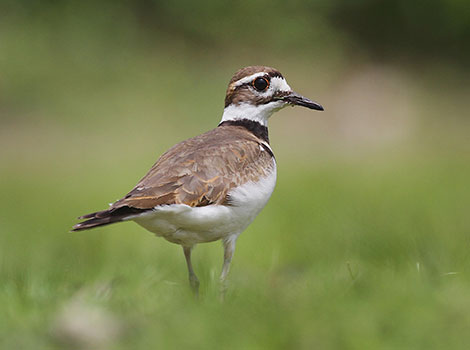
| Attributes | Quick facts |
|---|---|
| Size | 8–11 in (20–28 cm). |
| Weight | 2.6–4.5 oz (75–128 g). |
| Lifespan | Up to 10 years. |
| Habitat | Open fields, grasslands, and shorelines across North America. |
| Diet | Insects, worms, and small crustaceans. |
| Social Structure | Solitary or small groups; monogamous pairs during breeding. |
| Conservation | Least Concern. |
Fun fact: The Killdeer uses a “broken-wing” display to distract predators from its nest.
53. Keel-Billed Toucan
Keel-Billed Toucan (Ramphastos sulfuratus), is a bird that belongs to the Ramphastidae family. It is native to the tropical jungles stretching from southern Mexico to Venezuela and Colombia, and it resides in the canopies of tropical, subtropical, and lowland rainforests. The bird’s plumage is black, with a yellow neck and chest. It has blue feet and red feathers at the tail’s end. Its bill, which is large and colorful, is mainly green with a red tip and orange sides. This bill measures between 17–22 inches (42–55 cm). The bird’s weight ranges from 13–16 oz (380–500 g). They are social creatures, seen in small flocks of six to twelve individuals flying through lowland rainforests.

| Attributes | Quick facts |
|---|---|
| Size | 17–22 in (42–55 cm). |
| Weight | 13–16 oz (380–500 g). |
| Lifespan | 15–20 years. |
| Habitat | Tropical forests of Central and South America. |
| Diet | Omnivorous; fruit, seeds, insects, and small vertebrates. |
| Social Structure | Small flocks; roost in tree cavities. |
| Conservation | Least Concern; habitat loss is a threat. |
Fun fact: This animal bill, its large size, is light due to it being a hollow bone covered in keratin.
54. King Eider
King Eider (Somateria spectabilis) is a large sea duck that can be found in the Arctic regions of North America, Europe, and Asia. They are about 18–25 inches (45–63 cm) in length with a wingspan of 33-40 in (86-102 cm). The male King Eider has a mostly black body, a white breast tinged with buff, and a multicolored head. The head, nape, and neck are a pale bluish-grey, and the cheek is pale green. These ducks are quite social outside of the breeding season and live in large groups. They spend most of their time at sea and rarely come to land unless they are nesting.

| Attributes | Quick facts |
|---|---|
| Size | 18–25 in (45–63 cm). |
| Weight | 2–4 lbs (0.9–1.8 kg). |
| Lifespan | 15–20 years. |
| Habitat | Arctic coastal waters and tundra. |
| Diet | Mollusks, crustaceans, and aquatic insects. |
| Social Structure | Gather in large flocks during migration. |
| Conservation | Least Concern. |
Fun fact: They can dive as deep as 100 ft below the surface in search of food.
55. King Penguin
King Penguin (Aptenodytes patagonicus) is the second largest penguin species, residing on subantarctic islands and other temperate regions. They stand at a height of 3 ft (90 cm) and weigh between 26 to 37 lb. Their appearance is a silvery-grey back, a blackish-brown head, and ear patches of bright golden-orange feathers. King Penguins are known for their deep diving abilities, often exceeding 350 feet (100 meters) to catch small fish and squid. They have adapted to drinking salt water, with their stomachs capable of separating the salt. These penguins are social animals, often found in large colonies. They communicate through vocalizations and physical displays. Their breeding cycle can last between 13 and 16 months.

| Attributes | Quick facts |
|---|---|
| Size | 35–39 in (90–100 cm). |
| Weight | 24–35 lbs (11–16 kg). |
| Lifespan | 25–30 years. |
| Habitat | Subantarctic islands and surrounding waters. |
| Diet | Fish, squid, and krill. |
| Social Structure | Large breeding colonies. |
| Conservation | Least Concern. |
Fun fact: Their outer feathers are waterproof, much like those of ducks, they have three layers of down feathers for insulation.
56. King Vulture
King Vulture (Sarcoramphus papa) is a sizable bird native to Central and South America. Its primary habitat is the tropical lowland forests that extend from the southern regions of Mexico to the northern parts of Argentina. This bird grows to about 2.5 feet tall and can weigh up to 8 pounds. Its wingspan ranges from 4 to 5.5 feet. It is large and predominantly white, with gray to black ruff, flight, and tail feathers. The King Vulture’s head and neck are devoid of feathers, displaying skin that can be a variety of colors, such as yellow, orange, blue, purple, and red. A prominent orange caruncle adorns its beak. The King Vulture is a scavenger and it often makes the initial cut into a fresh carcass.

| Attributes | Quick facts |
|---|---|
| Size | 27–32 in (70–81 cm). |
| Weight | 6–10 lbs (2.7–4.5 kg). |
| Lifespan | Up to 30 years in captivity. |
| Habitat | Tropical lowland forests of Central and South America. |
| Diet | Carrion. |
| Social Structure | Usually solitary, but may gather at carrion sites. |
| Conservation | Least Concern. |
Fun fact: It can glide for hours with minimal wing flapping.
57. Knobbed Hornbill
Knobbed Hornbill (Rhyticeros cassidix), belonging to the Bucerotidae family, is native to Indonesia. This bird measures 35–40 inches (90–100 cm). It thrives in evergreen forests up to 5900 ft (1,800 meters) above sea level and is also found in secondary forests, woodlands, and plantations. This animal is black with a yellow bill, white tail feathers, pale blue skin around the eye, and a dark blue throat. Males have a rufous face and neck, orange-red eyes, and a high red casque on the bill, while females have a black face and neck, a yellow casque, and brownish eyes. These animals feed on fruits but also eat insects and small vertebrates. Its breeding season lasts 27-30 weeks.

| Attributes | Quick facts |
|---|---|
| Size | 35–40 inches (90–100 cm). |
| Weight | 5–6 lbs (2.3–2.7 kg). |
| Lifespan | 30–40 years. |
| Habitat | Forests of Sulawesi and surrounding islands. |
| Diet | Fruit, insects, and small animals. |
| Social Structure | Monogamous pairs. |
| Conservation | Near Threatened; habitat loss is a concern. |
Fun fact: During the breeding season, the female Knobbed Hornbill seals herself inside a tree hole for egg-laying using her feces.
58. Kookaburra
Kookaburra (Dacelo) is a terrestrial tree kingfisher native to Australia and New Guinea. It inhabits eucalyptus forests and woodlands, using trees for perching and nesting. The bird is stout with a medium-length tail and a broad beak. It varies in color from dark brown to tan on top, with a cream or white-colored underbelly. It is almost exclusively carnivorous, eating mice, snakes, insects, small reptiles, and the young of other birds. It hunts by roosting quietly on branches, waiting for prey to pass below.

| Attributes | Quick facts |
|---|---|
| Size | 15–17 in (38–43 cm). |
| Weight | 11–16 oz (310–450 g). |
| Lifespan | Up to 20 years. |
| Habitat | Forests, savannas, and urban areas in Australia and New Guinea. |
| Diet | Carnivorous; insects, small reptiles, and rodents. |
| Social Structure | Family groups; cooperative breeding. |
| Conservation | Least Concern. |
Fun fact: Older siblings assist their parents in rearing the younger ones by providing food and safeguarding the nest.
59. Kori Bustard
Kori Bustard (Ardeotis kori) is a large bird native to Africa, often found in areas with short grass and dry, sandy soil. It is cryptically colored, mostly grey and brown, finely patterned with black and white. Males can weigh between 24-42 pounds (11-19 kilograms), and females are roughly half the size of the males. They are about 5 feet (1.5 meters) tall. This species is ground-dwelling and when alarmed or threatened, both males and females will give a loud bark or perform what’s known as the “shock display,” in which the bird bows forward, lifts its tail feathers, and spreads its wings to appear larger to a potential predator.

| Attributes | Quick facts |
|---|---|
| Size | 3–5 ft (90–150 cm). |
| Weight | 15–40 lbs (7–18 kg). |
| Lifespan | 15–20 years. |
| Habitat | Grasslands and savannas of Africa. |
| Diet | Omnivorous; seeds, insects, small vertebrates. |
| Social Structure | Solitary or small groups. |
| Conservation | Near Threatened. |
Fun fact: Unlike most bird species that scoop up water, Kori Bustards employ a sucking motion to drink.
60. Koel
Koel (Eudynamys) is a large cuckoo native to Asia, Australia, and the Pacific. Males are glossy blue-black with a pale greenish-grey bill and crimson iris, while females have brownish plumage with white and buff spots. They are similar in size to ravens, measuring 5–18 inches (38–46 cm) in length and weighing between 6.5–14 oz (180–400 g). Koels are mainly resident breeders in southern Asia, inhabiting light woodlands, shrubby areas with scattered trees, gardens, plantations, and urban areas. During the day, Koels feed on fruits directly from trees and may sometimes defend favored trees and chase away other frugivores. They are known for their loud, distinctive calls, especially during the breeding season.

| Attributes | Quick facts |
|---|---|
| Size | 15–18 inches (38–46 cm). |
| Weight | 6.5–14 oz (180–400 g). |
| Lifespan | 12–15 years in the wild. |
| Habitat | Forests, open woodlands, urban gardens, and mangroves in Asia, Australia, and the Pacific. |
| Diet | Omnivorous; primarily eats fruits, berries, and insects. |
| Social Structure | Solitary; known for brood parasitism where females lay eggs in other birds’ nests. |
| Conservation | Least Concern (stable population). |
Fun fact: They are brood parasites, laying their eggs in the nests of other species.
61. Kentucky Warbler
Kentucky Warbler (Geothlypis formosa) is a member of the Parulidae family. It originates from the central and eastern parts of the United States. It migrates to the Yucatán Peninsula and the Caribbean islands during the fall and winter. The bird’s back and nape are olive green, and its throat and belly are brilliant yellow. A small black crown and a large black mask with a yellow pattern that runs from the beak and encircles the eyes. The Kentucky Warbler is 5.1 inches long, weighs around 0.5 ounces, and has a wingspan of 7.9-8.7 inches. It ground-dwelling behavior, foraging for insects among leaf litter by walking on the ground, flipping over dead leaves, and occasionally leaping up to catch insects from the underside of foliage.

| Attributes | Quick facts |
|---|---|
| Size | 5.1–5.5 inches (13–14 cm). |
| Weight | 0.4–0.5 oz (11–15 g). |
| Lifespan | 6–9 years in the wild. |
| Habitat | Moist deciduous forests with dense undergrowth in eastern North America. |
| Diet | Insectivorous; primarily feeds on insects, spiders, and small invertebrates. |
| Social Structure | Solitary or in pairs during the breeding season. Migratory. |
| Conservation | Near Threatened (habitat loss due to deforestation). |
Fun fact: The song of the Kentucky Warbler is only sung by males.
62. Khaki Campbell
Khaki Campbell (Anas platyrhynchos) is a domestic duck breed that is a member of the Anatidae family. This breed, which originated in the United Kingdom, has now spread worldwide. The male, or drake, is khaki-colored, with a head typically a darker olive green. The female, or duck, has a more subdued khaki color that covers her entire body. The males weigh between 5-5.5 lbs (2.3-2.5 kg), the females weigh between 4.4-5 lbs (2.0-2.3 kg). They are renowned for their egg-laying capabilities. These ducks are generally calm and docile, and they thrive in both group and solo settings.

| Attributes | Quick facts |
|---|---|
| Size | Average length 20 inches (50 cm). |
| Weight | 3.5–5.5 lbs (1.6–2.5 kg). |
| Lifespan | 8–10 years in captivity. |
| Habitat | Domesticated; found in farm settings and backyards. |
| Diet | Omnivorous; consumes grains, insects, and vegetation. |
| Social Structure | Social; thrives in groups. |
| Conservation | Not applicable (domesticated breed). |
Fun fact: Khaki Campbell ducks are not only excellent swimmers, but they can also dive underwater to chase after prey.
63. King Quail
King Quail (Synoicus chinensis) is the smallest “true quail”, measuring only 4–5.5 inches (10–14 cm) long and weighing 1.2–1.8 oz (35–50 g). They have orange feet which are hard and able to withstand a continuous life on the ground. Females are similar to the males but do not come in shades of blue. King Quails are found in the wild from Southern China, South and South-eastern Asia to Oceania, up to South-eastern Australia. They live on the ground in dense vegetation, such as swamps, shrubland, and grasslands. In the wild, their diet consists of small bugs, seeds, and various grasses that are available at the time. They are social birds, often seen in pairs or groups while foraging.

| Attributes | Quick facts |
|---|---|
| Size | 4–5.5 inches (10–14 cm). |
| Weight | 1.2–1.8 oz (35–50 g). |
| Lifespan | 3–6 years in captivity, shorter in the wild. |
| Habitat | Grasslands, wetlands, and dense vegetation in Southeast Asia and Australia. |
| Diet | Omnivorous; eats seeds, grains, insects, and small invertebrates. |
| Social Structure | Social; often found in small groups or pairs. |
| Conservation | Least Concern (stable population). |
Fun fact: They like terrestrial locomotion despite being capable of flight.
Reptiles that start with K
Explore a variety of reptiles that start with the letter P, from powerful predators to intriguing species, each offering a glimpse into the diverse world of these cold-blooded creatures.
| Killer Clown Ball Python | Keelback | King Rat Snake | Knight Anole |
| Krait Snake | Kenyan Sand Boa | Kemp’s ridley sea turtle | King Snake |
| Kirtland’s Snake |
64. Killer Clown Ball Python
Killer Clown Ball Python (Python regius), is a member of the Pythonidae family. Its habitat is primarily in the savannahs and grasslands of western Africa, where it often seeks refuge in burrows, beneath rocks, and in other hidden areas. They have a vibrant yellow or orange base color adorned with striking white and black patterns. Adults measure between 3 and 4 feet in length. The Killer Clown Ball Python is a solitary and elusive creature that spends most of its time concealed, waiting for prey. They are ambush predators, striking swiftly when an opportunity presents itself. It is not aggressive towards humans and will only defend themselves if they feel threatened.
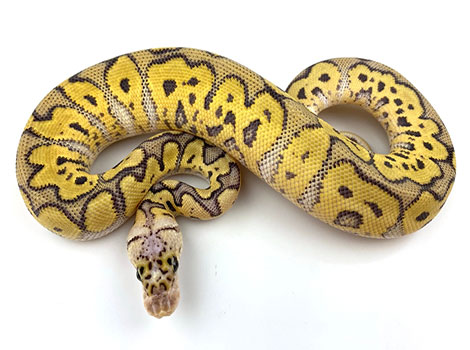
| Attributes | Quick facts |
|---|---|
| Size | 3–5 ft (91–152 cm). |
| Weight | 3–5 lbs (1.4–2.3 kg). |
| Lifespan | 20–30 years in captivity. |
| Habitat | Forests and grasslands in West and Central Africa. |
| Diet | Carnivorous; feeds on small mammals and birds. |
| Social Structure | Solitary, primarily nocturnal. |
| Conservation | Least Concern (common in the pet trade). |
Fun fact: They are not venomous and their bite, while potent, is not dangerous to humans.
65. Keelback
Keelback (Rhabdophis sp.), is a member of the Colubridae family. This snake species is native to Asia and is often found in wet environments such as lakes, rivers, and swamps. Its color ranges from grey to olive-brown or black, and it has a banded pattern. The snake’s belly is cream-colored with dark bands along the edges of each scale. These animals measure between 2–4 ft (61–122 cm) in length. This snake is active during both the day and night, depending on the temperature. It uses its keeled scales to grip slippery surfaces when moving over mud or vegetation. When it is not moving, the Keelback hides under plants, timber, or in empty burrows.

| Attributes | Quick facts |
|---|---|
| Size | 2–4 ft (61–122 cm). |
| Weight | Lightweight, varies by species. |
| Lifespan | 10–15 years. |
| Habitat | Freshwater habitats, wetlands, and forests in Asia and Australia. |
| Diet | Carnivorous; feeds on amphibians, fish, and insects. |
| Social Structure | Solitary and semi-aquatic. |
| Conservation | Least Concern (some species are locally threatened). |
Fun fact: This species has immunity to toad toxins, enabling it to prey on small to medium-sized cane toads.
66. King Rat Snake
King Rat Snake (Elaphe carinata) is a large snake with a total length of up to 5-7 ft. It has a black color with yellow scales and a pattern of thin yellow bands around its midsection that fade toward the tail. Its body scales are thickly keeled, giving it a jeweled appearance. The snake’s head is yellow with black rings around the edges of the scales. The underbelly is olive with irregular black patches. The snake is found in the forests, meadows, rice paddies, and shrubs of China, Taiwan, northern Vietnam, and the Ryukyu islands. It is an active, predatory snake that eats everything from beetles to birds to snakes. When threatened or frightened, it can produce a foul-smelling substance out of self-defense. It is considered to be highly aggressive toward humans.

| Attributes | Quick facts |
|---|---|
| Size | 6–8 ft (1.8–2.4 m). |
| Weight | 3–6 lbs (1.4–2.7 kg). |
| Lifespan | 15–20 years in captivity. |
| Habitat | Forested and mountainous regions in East and Southeast Asia. |
| Diet | Carnivorous; preys on rodents, birds, and other reptiles. |
| Social Structure | Solitary, active during the day and night. |
| Conservation | Least Concern. |
Fun fact: The number of eggs ranges from 6 to 24 depending on the size of the female snake.
67. Knight Anole
Knight Anole (Anolis equestris) is a member of the Dactyloidae family. Its natural habitat is Cuba, can be found in various tree-rich environments, including forests, mangroves, savannas, cultivated areas, and gardens. It has a bright green color, with a yellow stripe on the side of the head another on the shoulder, and a pinkish-white dewlap. The size of an adult Knight Anole ranges from 13–20 inches (33–51 cm) in total length, and they weigh between 0.56 and 4.83 ounces (16-137 g). These creatures are diurnal and territorial. They are usually solitary. They are not tolerant of cold weather and during winter freezes.

| Attributes | Quick facts |
|---|---|
| Size | 13–20 in (33–51 cm). |
| Weight | ~2–6 oz (56–170 g). |
| Lifespan | 6–10 years in captivity. |
| Habitat | Forests and urban areas in Cuba (introduced to Florida). |
| Diet | Omnivorous: eats insects, small reptiles, fruits, and flowers. |
| Social Structure | Solitary, territorial. |
| Conservation | Least Concern. |
Fun fact: When threatened, they inflate and widen their mouths to appear larger and more menacing.
68. Krait Snake
Krait Snake (Bungarus) is a highly venomous snake native to Asian forests and farmland, from Pakistan to southern China and southward into Indonesia. It has a glossy black or bluish-black body with about 40 thin, white crossbars, which may be indistinct or absent anteriorly. The average length of the common Krait is around 3–6 ft (91–183 cm). During the day, it is sluggish and generally docile, often hiding in rodent holes, loose soil, or beneath debris. At night, the snake is very active and escapes by hissing loudly or keeping still, occasionally biting the source of the annoyance.

| Attributes | Quick facts |
|---|---|
| Size | 3–6 ft (91–183 cm). |
| Weight | Lightweight, varies by species. |
| Lifespan | 10–15 years. |
| Habitat | Forests, fields, and near water sources in South and Southeast Asia. |
| Diet | Carnivorous; feeds on other snakes, rodents, and amphibians. |
| Social Structure | Solitary, primarily nocturnal. |
| Conservation | Least Concern (some species face local threats). |
Fun fact: They can mimic the patterns and movements of other snake species, a strategy employed to deter predators.
69. Kenyan Sand Boa
Kenyan Sand Boa (Eryx colubrinus) is a creature that belongs to the Boidae family. Its habitat spans across Eastern Africa, where it thrives in environments ranging from arid and semi-arid regions to desert margins, vegetated dunes, and savannah scrublands. This snake has a small head, small eyes, and a short tail. It boasts a color pattern of yellow or orange with dark brown splotches, and its belly is typically white or cream-colored.
Female Kenyan Sand Boas can grow to lengths of 2 to 3 feet, while males reach a maximum size of around 18 to 20 inches. This species has burrowing behavior, spending most of its life hidden under or moving through sand and loose soil. It is nocturnal, active during the night or mornings and evenings, and prefers to stay hidden from the sun during the midday heat.

| Attributes | Quick facts |
|---|---|
| Size | 1.5–2.5 ft (46–76 cm). |
| Weight | 0.5–1 lb (0.2–0.5 kg). |
| Lifespan | 15–20 years in captivity, shorter in the wild. |
| Habitat | Arid and semi-arid regions in East Africa. |
| Diet | Carnivorous: eats small mammals, birds, and lizards. |
| Social Structure | Solitary, fossorial (burrowing). |
| Conservation | Least Concern. |
Fun fact: Kenyan Sand Boas spend about 80 percent of their life buried in the sand.
70. Kemp’s ridley sea turtle
Kemp’s Ridley Sea Turtle (Lepidochelys kempii) is the smallest sea turtle species in the world. Adults typically reach 2 feet and weigh between 70 to 100 pounds. They have a grayish-green color on top with a pale, yellowish bottom shell. The top shell, or carapace, is often as wide as it is long.
These turtles are primarily found in the Gulf of Mexico, but juveniles are also found in the Atlantic Ocean as far north as Nova Scotia. They were once abundant in the Gulf of Mexico with tens of thousands of females nesting at Rancho Nuevo, Mexico. Kemp’s Ridley Sea Turtles are omnivores. They prefer shallow waters, where they dive to the bottom to feed on crabs, their favorite food, and other shellfish. They also eat jellyfish and occasionally munch on seaweed and sargassum.

| Attributes | Quick facts |
|---|---|
| Size | 24–28 inches (61–71 cm) in shell length. |
| Weight | 70–110 lbs (32–50 kg). |
| Lifespan | 30–50 years in the wild. |
| Habitat | Coastal areas, bays, and shallow waters in the Gulf of Mexico and Atlantic Ocean. |
| Diet | Carnivorous; primarily feeds on crabs, shrimp, fish, and jellyfish. |
| Social Structure | Solitary except during nesting or migration. |
| Conservation | Critically Endangered (due to habitat loss, accidental capture in fishing gear, and egg poaching). |
Fun fact: Despite their small stature, they undertake extensive migrations as far as the Atlantic coasts of Europe and Africa.
71. King Snake
King Snake (Lampropeltis getula) is a terrestrial snake found from southeastern Canada to Ecuador. They inhabit rock outcrops, brushy hillsides, river valleys, woodlands, fields, and pine forests. King Snakes are of medium size, with lengths typically ranging from 3 to 5 feet. However, certain species have been known to reach lengths of up to 7 feet. They can weigh up to 4.8 pounds (2.2 Kg).
Their appearance varies widely in coloration. Some are colored in muted browns to black, while others are brightly marked in white, reds, yellows, grays, and lavenders that form rings, longitudinal stripes, speckles, and saddle-shaped bands. They are nonvenomous and use constriction to kill their prey. They are known to seek out and eat other snakes. As a sign of nervousness, King Snakes will twitch their tails.

| Attributes | Quick facts |
|---|---|
| Size | 3–6 feet (0.9–1.8 m) in length, depending on the species. |
| Weight | 1.5–3.5 lbs (0.7–1.6 kg). |
| Lifespan | 15–20 years in captivity; 10–15 years in the wild. |
| Habitat | Grasslands, forests, deserts, and marshes throughout North and Central America. |
| Diet | Carnivorous: feeds on rodents, birds, eggs, lizards, and other snakes (including venomous species). |
| Social Structure | Solitary; comes together only for mating. |
| Conservation | Least Concern (stable population). |
Fun fact: Despite their formidable appearance and predatory instincts, snake enthusiasts often keep them as pets.
72. Kirtland’s Snake
Kirtland’s Snake (Clonophis kirtlandii): Adults reach a total length of 12-18 inches (30–46 cm). It is grayish brown with a double series of large black spots down the back, and alternating smaller spots running down each side. The ventral scales are brick red with a prominent round black spot at each outer end.
Females are generally heavier than males, weighing an average of around 7 ounces (200 grams), while males weigh 5 ounces (150 grams). This snake is native to North America and is found in Illinois, Indiana, northern Kentucky, southern Michigan, Ohio, and western Pennsylvania. It prefers moist open meadows, and wet prairie lands, and is almost always found very close to a water source.

| Attributes | Quick facts |
|---|---|
| Size | 12–18 inches (30–46 cm) in length. |
| Weight | 2–5 oz (57–142 g). |
| Lifespan | Estimated 10–15 years in the wild. |
| Habitat | Wet meadows, marshes, and grassy areas near water, primarily in the Midwest United States. |
| Diet | Carnivorous: primarily eats earthworms, slugs, and small amphibians. |
| Social Structure | Solitary; hides under logs, rocks, or in burrows. |
| Conservation | Near Threatened (due to habitat destruction and wetland drainage). |
Fun fact: When threatened, it’ll either take flight or roll up into a ball and wait for the danger to pass.
After exploring the fascinating reptiles that start with K, let’s now take a look at some incredible fish species beginning with the same letter.
Fish that start with K
Let’s dive into the underwater world and explore the fascinating fish species that start with the letter
| Killer Whale | Kaluga Sturgeon | Keyhole Cichlid | Killifish | Kelp Greenling |
| King Mackerel | King Salmon | Koi Angelfish | Koi Carp | Kokanee Salmon |
| Knifefish | Keta Salmon | Kingklip | Kissing Gourami | Kitefin Shark |
73. Killer Whale
Killer Whales (Orcinus orca), stand as the most sizable representatives within the dolphin lineage. They inhabit all oceans of the world, from shallow coastal areas to deep waters off the continental shelf. They have a distinctive black-and-white coloring, with a white belly and patches near the eyes. Males can grow up to 26 feet long and weigh up to 6 tons.
They are highly intelligent and social animals, living in pods where they hunt together and share responsibility for raising young. Utilizing echolocation, Orcas employ a method of communication and hunting by producing sounds that traverse underwater spaces. These emitted sounds continue their journey until they encounter objects, subsequently rebounding and disclosing information about the objects’ location, size, and shape. They have a diverse diet including fish, penguins, seals, sea lions, and even whales.

| Attributes | Quick facts |
|---|---|
| Size | 16–26 ft (5–8 m). |
| Weight | 6,600–12,000 lbs (3,000–5,400 kg). |
| Lifespan | 30–50 years in the wild, up to 80 years in some cases. |
| Habitat | Oceans worldwide, from polar regions to tropical seas. |
| Diet | Carnivorous; preys on fish, seals, whales, and squid. |
| Social Structure | Very social; lives in pods of 5–30 individuals. |
| Conservation | Data Deficient (some populations are threatened). |
Fun fact: They are not whales at all because they belong to the Delphinidae family, which comprises oceanic dolphins.
74. Kaluga Sturgeon
Kaluga Sturgeon (Huso dauricus) is a large, long-lived anadromous species found in the lower reaches of the Amur River in Russia and China. It has a gray-green to black coloring on its back and a yellowish-green-white belly. Mature individuals can exceed 18 feet in length and weigh up to 1 ton. Mature Kaluga Sturgeons migrate from the Amur estuary to the river to breed, mainly during the spring. They are active predators and eat freshwater and marine fishes, including smelt, salmon, and herring. Despite being endangered, the Kaluga Sturgeon is known for its aggressive nature.

| Attributes | Quick facts |
|---|---|
| Size | Up to 18 ft (5.5 m). |
| Weight | Up to 2,200 lbs (1,000 kg). |
| Lifespan | 50–80 years. |
| Habitat | Rivers and estuaries of the Amur River basin in Russia and China. |
| Diet | Carnivorous; primarily feeds on fish. |
| Social Structure | Solitary, migratory. |
| Conservation | Critically Endangered (overfishing and habitat loss). |
Fun fact: Kaluga Sturgeon doesn’t reach sexual maturity until it is between 14 and 23 years old.
75. Keyhole Cichlid
Keyhole Cichlid (Cleithracara maronii) belongs to the Cichlidae family and is indigenous to the lower Orinoco Basin in Venezuela and river basins in The Guianas, located in tropical South America. These fishes have an ovate body and a tan color. It has a black spot on its upper flank that sometimes extends into a short stripe. The scales of this fish are a yellow-cream color, but the color of its fins can vary. Male Keyhole Cichlids can grow up to 4.3 inches (11 cm) in length, while females can reach about 3 inches (7.5 cm). These animals are temperament, shyness, and peaceful nature. They are not aggressive and can coexist with similar-sized, docile species.

| Attributes | Quick facts |
|---|---|
| Size | 3–4 in (7.6–10 cm). |
| Weight | Lightweight, less than 1 oz (28 g). |
| Lifespan | 5–7 years. |
| Habitat | Freshwater rivers and streams in South America. |
| Diet | Omnivorous; eats small invertebrates, plants, and algae. |
| Social Structure | Forms pairs during breeding; generally peaceful. |
| Conservation | Least Concern. |
Fun fact: The skin color of these fish changes from yellow-cream to brown when they are stressed.
76. Killifish
Killifish (Varies) are small, slender fish that usually range from 0.8 to 1.2 inches long. They have a long torpedo shape with a pointed mouth that is upturned, suitable for snagging insects from the water’s surface. Their bodies pike at a certain point, and they have short, rounded fins, contributing to their swimming ability. Killifish predominantly inhabit fresh or slightly salty waters across the Americas, with their range extending from the southernmost regions of Argentina to the southern parts of Ontario. They are also found in southern Europe, Africa, the Middle East, and Asia.

| Attributes | Quick facts |
|---|---|
| Size | 1–6 in (2.5–15 cm), depending on species. |
| Weight | Lightweight, less than 1 oz (28 g). |
| Lifespan | 1–5 years, some species live only a few months. |
| Habitat | Freshwater and brackish waters worldwide, including seasonal pools. |
| Diet | Omnivorous: eats insects, larvae, and algae. |
| Social Structure | Solitary or in small groups. |
| Conservation | Varies by species; some are Critically Endangered due to habitat loss. |
Fun fact: Their eggs can enter ‘diapause’ or suspended animation in harsh conditions, pausing development until conditions improve.
77. Kelp Greenling
Kelp Greenling (Hexagrammos decagrammus) is a marine ray-finned fish found in the eastern Pacific Ocean, from the Aleutian Islands of Alaska to La Jolla in southern California. It thrives in rocky nearshore areas, commonly seen in kelp beds and on sand bottoms. The males are gray to brownish olive in color, dotted with irregular blue spots over the anterior half to two-thirds of their body. Females are also gray to brownish but are marked all over with rust-colored or golden spots.
Both genders have yellowish-orange fins. This species has a maximum published total length of 25 inches (62.9 centimeters) and a maximum published weight of 4.6 pounds (2.1 kilograms). Kelp Greenlings feed on crustaceans, polychaete worms, brittle stars, mollusks, and small fishes. The young are food for large predators such as steelhead and salmon.

| Attributes | Quick facts |
|---|---|
| Size | 15–24 inches (38–61 cm). |
| Weight | 2–5 lbs (0.9–2.3 kg). |
| Lifespan | 6–25 years. |
| Habitat | Rocky reefs and kelp forests in the North Pacific Ocean. |
| Diet | Carnivorous: eats crustaceans, mollusks, and small fish. |
| Social Structure | Solitary or in small groups. |
| Conservation | Least Concern. |
Fun fact: It communicates using a series of chirps and grunts, creating an underwater symphony during their mating season.
78. King Mackerel
King Mackerel (Scomberomorus cavalla) is a migratory species found in the Atlantic Ocean from Massachusetts to Brazil, including the Caribbean and Gulf of Mexico. They live in open waters near the coast, in depths ranging from 115 to almost 600 feet. They prefer warm waters and seldom enter waters below 68° F. King Mackerel are medium-sized fish, typically around 24-30” long, and weigh about 25-30 pounds.
However, they can grow much larger, with some reaching up to 5.5 feet and 100 pounds. Their bodies are covered with small, hardly visible scales, giving them a silvery appearance with iridescent blue-green or dark blue stripes running along the sides. Their migratory behavior is influenced by seasonal changes in water temperature and food availability.
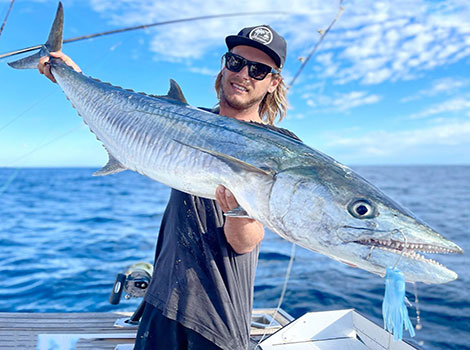
| Attributes | Quick facts |
|---|---|
| Size | 20–40 inches (51–102 cm), up to 72 inches (183 cm). |
| Weight | 5–50 lbs (2.3–23 kg). |
| Lifespan | 14–20 years. |
| Habitat | Coastal waters in the Atlantic Ocean and Gulf of Mexico. |
| Diet | Carnivorous; preys on fish and squid. |
| Social Structure | Migratory; forms schools. |
| Conservation | Least Concern. |
Fun fact: They have a lifespan exceeding 20 years.
79. King Salmon
King Salmon (Oncorhynchus tshawytscha) is the largest species in the Salmonidae family. They are born in freshwater habitats, typically creeks or streams. As they grow, they move downstream into larger lakes, ponds, rivers, and estuaries. Adults spend their lives in the ocean, before returning to freshwater habitats to spawn. In their oceanic form, this species has silver-colored scales with hints of blue-green. This species can reach a maximum weight of about 125 lb and a length of 60 inches. However, the average King Salmon size is approximately 24 to 36 inches and 10 to 50 lbs.

| Attributes | Quick facts |
|---|---|
| Size | 24–58 inches (61–147 cm). |
| Weight | 10–135 lbs (4.5–61 kg). |
| Lifespan | 3–7 years. |
| Habitat | Rivers, lakes, and coastal waters in the North Pacific. |
| Diet | Carnivorous; feeds on smaller fish, squid, and plankton. |
| Social Structure | Migratory; solitary except during spawning. |
| Conservation | Near Threatened (population declines due to overfishing and habitat loss). |
Fun fact: They are born in freshwater, migrate to the sea for their adult lives, return to their birthplace in freshwater to spawn.
80. Koi Angelfish
Koi Angelfish (Pterophyllum scalare) is a freshwater fish originating from the Amazon River basin in South America, commonly found in slow-moving tributaries and backwaters throughout Brazil, Colombia, and Peru. They are frequently found in calm, deep waters with ample vegetation. These social fish flourish in groups of at least five. Koi Angelfish are admired for their marbled patterns, which typically include a blend of white, orange, and black colors. Koi Angelfish have the potential to grow significantly, achieving a body size of around 6 inches (15 cm). With proper care, their lifespan can extend to a maximum of 10 years. They are gregarious by nature and flourish when kept in groups, ideally in schools comprising a minimum of five members

| Attributes | Quick facts |
|---|---|
| Size | 6–8 inches (15–20 cm). |
| Weight | Lightweight, less than 1 lb (0.5 kg). |
| Lifespan | 10–12 years in captivity. |
| Habitat | Freshwater, primarily bred in aquariums. |
| Diet | Omnivorous; eats flakes, pellets, and live food. |
| Social Structure | Social; can be kept in groups in aquariums. |
| Conservation | Not Evaluated. |
Fun fact: They are known to consume any fish small enough to fit into their mouths.
81. Koi carp
Koi carp (Cyprinus rubrofuscus) are domesticated variants of the common carp. They are often kept in large fishponds for decorative purposes. Koi can grow up to 3 feet (90 centimeters) in length and can weigh up to 35 pounds. Their bodies are torpedo-shaped and symmetrical, with no defects in their conformation. They are plump without being obese, and the paired fins are the same shape and size. Koi are omnivorous cold-water fishes that consume insects, crustaceans, and other invertebrates as well as algae and vegetation. They are friendly animals and are not detrimental to others.

| Attributes | Quick facts |
|---|---|
| Size | 24–36 in (61–91 cm). |
| Weight | 5–35 lbs (2.3–16 kg). |
| Lifespan | 25–35 years; some live over 50 years. |
| Habitat | Freshwater ponds and slow-moving rivers; bred in artificial ponds. |
| Diet | Omnivorous: eats algae, insects, and plant material. |
| Social Structure | Social; thrives in groups. |
| Conservation | Not Evaluated (domesticated species). |
Fun fact: They can recognize their feeder and can even be trained to eat from their hand.
82. Kokanee Salmon
Kokanee Salmon (Oncorhynchus nerka) is a landlocked fish that spends its entire life cycle in freshwater. It is native to the northwest of the U.S., including Oregon, Washington, Idaho, Alaska, and British Columbia. The Kokanee Salmon is silver for most of its life, known in some parts as silver salmon or silver trout. It typically reaches a length between 9 to 12 inches at adulthood and has an average weight of 1 pound. Upon reaching the age of 3 to 5 years, these fish attain maturity and become capable of spawning. Their silver hue transforms into a vibrant red, complemented by a head that’s green and black. Additionally, a hump forms in the males. They mainly dine on small zooplankton. After the salmon spawn, they die.

| Attributes | Quick facts |
|---|---|
| Size | 12–24 inches (30–61 cm) |
| Weight | 1–5 lbs (0.5–2.3 kg) |
| Lifespan | 3–4 years |
| Habitat | Freshwater lakes and streams in the North Pacific and inland regions |
| Diet | Omnivorous; feeds on plankton and small invertebrates |
| Social Structure | Solitary except during spawning |
| Conservation | Least Concern |
Fun fact: They can regulate their body temperature to coincide with the water temperature.
83. Knifefish
Knifefish (Notopterus notopterus) is a member of the Apteronotidae family and is indigenous to South America, particularly the Amazon basin, and other river systems in Peru, Brazil, and Columbia. It has a distinctive elongated, eel-like shape, and its body is black with white bands on its tail. The Knifefish measures between 18 and 20 inches when grown. It is a nocturnal species that uses an electromagnetic field to compensate for its poor eyesight, allowing it to navigate and hunt effectively in dark, deep waters.

| Attributes | Quick facts |
|---|---|
| Size | 4–60 in (10–152 cm), depending on species |
| Weight | Lightweight varies by species |
| Lifespan | 5–15 years |
| Habitat | Freshwater rivers and streams in South America, Asia, and Africa |
| Diet | Carnivorous; feeds on insects, small fish, and crustaceans |
| Social Structure | Solitary and nocturnal |
| Conservation | Varies by species; some are Least Concern, while others face habitat threats |
Fun fact: Knifefish can generate weak electric fields for navigation, prey detection, and communication.
84. Keta Salmon
Keta Salmon (Oncorhynchus keta) is a member of the Salmonidae family. Its habitat spans the northern Pacific Ocean, specifically the coastal regions of North America and Asia. In the ocean, they exhibit a metallic greenish-blue back with silver sides and a white belly.
During spawning, they take on darker colors, with patches of olive-green or maroon on their sides. Adult Keta Salmon are large, weighing between 8 and 20 pounds (3.6 to 9 kg). They return to their birthplace to spawn after several years at sea, often covering distances of hundreds or even thousands of miles.

| Attributes | Quick facts |
|---|---|
| Size | 24–35 inches (61–89 cm) in length. |
| Weight | 8–30 lbs (3.6–13.6 kg). |
| Lifespan | 3–6 years. |
| Habitat | Cold coastal waters and rivers in the North Pacific, from Japan to Alaska. |
| Diet | Carnivorous; feeds on plankton, small fish, and crustaceans. |
| Social Structure | Highly migratory; travels between freshwater (spawning) and saltwater (feeding). |
| Conservation | Least Concern |
Fun fact: Keta Salmon are sometimes referred to as “dog salmon” due to the large canine-like teeth they develop.
85. Kingklip
Kingklip (Genypterus capensis) is a species of cusk eel found along the Southern African coast from Walvis Bay in Namibia to Algoa Bay in South Africa. This species grows to a maximum length of 59 in (150 cm). These creatures dwell at the bottom and are typically found in rocky areas on the continental shelf and upper slope.
Younger members of the species are more commonly found in shallower waters. Their diet consists of dragonets, mantis shrimps, hake, squid, and a variety of fish species. The head and body are normally pink to orange in color, with dark blotches dorsally.

| Attributes | Quick facts |
|---|---|
| Size | 35–59 inches (90–150 cm) in length. |
| Weight | Typically 5–30 lbs (2.3–13.6 kg). |
| Lifespan | 15–20 years. |
| Habitat | Deep-sea rocky reefs and sandy bottoms at depths of 160–2,000 feet (50–600 m). |
| Diet | Carnivorous; feeds on crustaceans, squid, and small fish. |
| Social Structure | Solitary; spends most of its time near the seabed. |
| Conservation | Vulnerable |
Fun fact: Despite being commonly referred to as cusk eels, they are not true eels. They do, however, share common ancestors with eels.
86. Kissing Gourami
Kissing Gourami (Helostoma temminckii) is part of the Helostomatidae family and is found in across Mainland Southeast Asia and the Greater Sundas. It shows a preference for shallow, slow-moving, and densely vegetated backwaters.
These animals have a forward-protruding mouth, which resembles a pair of lips, and its tall, deep, and slender body. Its natural coloration is a silvery green. They can reach lengths of up to 12 inches, but in captivity, they grow to half that size. The species has a “kissing” action to show a form of aggression or competition for dominance.

| Attributes | Quick facts |
|---|---|
| Size | 6–12 inches (15–30 cm) in length. |
| Weight | Up to 1.5 lbs (0.7 kg). |
| Lifespan | 7–10 years in captivity. |
| Habitat | Slow-moving or stagnant freshwater bodies like ponds, marshes, and rivers in Southeast Asia. |
| Diet | Omnivorous; feeds on algae, plant matter, and small invertebrates. |
| Social Structure | Social but territorial; known for their “kissing” behavior. |
| Conservation | Least Concern |
Fun fact: Kissing Gouramis have a specialized mouth to scrape rocks and other surfaces.
87. Kitefin Shark
Kitefin Shark (Dalatias licha) is a member of the Dalatiidae family. This species is known to inhabit various regions around the globe, typically residing near the seabed at depths between 656-1968 ft (200-600 meters).
It has a slender body, a short, blunt snout, large eyes, and thick lips. It is gray or brown, with some individuals exhibiting black spots on their dorsal side. The length of this shark is between 3–5 feet (1–1.5 m). These sharks are strong and solitary. Its diet is diverse, including bony fishes, sharks and rays, cephalopods, crustaceans, polychaete worms, siphonophores, and possibly carrion. It can bite larger animals.

| Attributes | Quick facts |
|---|---|
| Size | 3–5 feet (1–1.5 m) in length. |
| Weight | 15–20 lbs (6.8–9 kg) on average. |
| Lifespan | Estimated 25–35 years. |
| Habitat | Deep-sea environments at depths of 650–4,000 feet (200–1,200 m). |
| Diet | Carnivorous; feeds on fish, squid, and crustaceans. It is also known to scavenge. |
| Social Structure | Solitary; exhibits a slow-moving, stealthy hunting style. |
| Conservation | Near Threatened |
Fun fact: They are the largest bioluminescent shark, and are also the largest light-producing vertebrate.
After exploring the aquatic world of fish species startingwith the letter K, let’s elaborate some unique insects start with K.
Insects that start with K
Let’s discover the beautiful insect world of the species starting with the letter K.
| Katydid | Kamehameha Butterfly | Khapra Beetle | Kissing Bug |
| Kudzu Bug | Kinabalu Giant Red Leech |
88. Katydid
Katydid (Tettigoniidae) is found in tropical regions. It can adapt to various climates and habitats, from forests to fields. Katydids are often large, with body lengths ranging from about 1–6 in (2.5–15 cm). They are usually green, sometimes with brown markings, and their body structure closely resembles that of long-horned grasshoppers.
They have long, threadlike antennae, and females have a long, upwardly curved ovipositor for egg-laying. Katydids are primarily nocturnal and are not social. They also exhibit mimicry or camouflage, often resembling leaves.

| Attributes | Quick facts |
|---|---|
| Size | 1–6 in (2.5–15 cm), depending on species. |
| Weight | Lightweight, less than 1 oz (28 g). |
| Lifespan | 6 months to 1 year. |
| Habitat | Forests, grasslands, and tropical regions worldwide. |
| Diet | Herbivorous; feeds on leaves, flowers, and fruits. |
| Social Structure | Solitary, primarily nocturnal. |
| Conservation | Least Concern |
Fun fact: Their distinctive melodies, created by rubbing ridged forewings, serve various functions like mating, claiming territory, or defense.
89. Kamehameha Butterfly
Kamehameha Butterfly (Vanessa tameamea) is a species endemic to Hawaii. It thrives in the native forests of Hawaii, particularly in areas with higher elevation like mountains and upland forests where it’s cooler and humid. The butterfly is medium-sized with a wingspan of 2–3 inch (5–7.6 cm). It features dark coloration with reddish-orange markings.
There is a presence of gender dimorphism, with three small spots on the anterior forewing that are typically white in females, and orange in males. Kamehameha Butterfly is typically found in the mid to upper canopy during flights, particularly in hotter periods of the day. It may descend to the lower canopy to bask in the sun or visit nectar sources. The butterfly feeds on the sap of koa trees and is one of the most important pollinators of host plants in Hawaii.

| Attributes | Quick facts |
|---|---|
| Size | Wingspan 2–3 in (5–7.6 cm). |
| Weight | Lightweight, less than 1 oz (28 g). |
| Lifespan | 6–9 weeks (adults). |
| Habitat | Forested areas in Hawaii, particularly at higher elevations. |
| Diet | Herbivorous; larvae feed on native Hawaiian plants like māmaki. |
| Social Structure | Solitary. |
| Conservation | Endangered |
Fun fact: It is the first butterfly species to be described in the Hawaiian Islands in the early 19th century.
90. Khapra Beetle
Khapra Beetle (Trogoderma granarium) is a species belonging to the Dermestidae family, native to India, and it has proliferated across regions from Burma to Western Africa. The adult beetles are brownish and reddish, with males being dark brown or black and females being slightly larger and lighter. The larvae, which are up to 0.3 in long, are covered in dense, reddish-brown hair. This beetle can survive without food for extended periods, has a preference for dry conditions and low-moisture food, and is resistant to many insecticides.

| Attributes | Quick facts |
|---|---|
| Size | 0.1–0.3 in (1.6–5 mm). |
| Weight | Extremely lightweight, less than 0.01 oz (0.3 g). |
| Lifespan | 5–7 weeks, but larvae can remain dormant for several months. |
| Habitat | Stored grains and dry food products worldwide. |
| Diet | Herbivorous; feeds on grains, seeds, and dried food products. |
| Social Structure | Found in large infestations. |
| Conservation | Not Evaluated |
Fun fact: The Khapra Beetle is one of the most destructive pests of stored grain products and seeds worldwide.
91. Kissing Bug
Kissing Bug (Triatominae) is a part of the Reduviidae family. They are primarily found in the Americas, with some species also present in Asia and Africa. They inhabit various locations, such as beneath porches, rocky structures, cement, rocks, wood, brush piles, bark, and animal burrows.
They possess an elongated cone-shaped head and an oval-shaped body with antennae. It has brown or black wings, often with a ring of red, orange, or yellow stripes on the edge. They are 0.5 to 1 inch long. These bugs are nocturnal creatures that feed on the blood of mammals, including humans.

| Attributes | Quick facts |
|---|---|
| Size | 0.5–1.5 in (1.3–3.8 cm). |
| Weight | Lightweight, less than 0.1 oz (3 g). |
| Lifespan | 1–2 years. |
| Habitat | Tropical and subtropical regions, often in cracks and crevices near animal hosts. |
| Diet | Hematophagous; feeds on blood from mammals, birds, and reptiles. |
| Social Structure | Solitary, active at night. |
| Conservation | Least Concern |
Fun fact: The name ‘Kissing Bug’ comes from their tendency to bite near the lips of their host.
92. Kudzu Bug
Kudzu Bug (Megacopta cribraria) is an insect native to Asia. It is typically found in habitats like kudzu and soybean plants near residential areas. The bug has an oblong-shaped body, broader at the bottom than the top, and is usually olive green with brown speckles. It measures about 0.2–0.25 in (5–6 mm) in length.
They do not bite humans, but when crushed or agitated, they emit a potent odor. They are also known to congregate in large numbers on the sunny side of structures during the fall. Kudzu Bug has a symbiotic relationship with its gut bacteria. Before egg-laying, female insects release particles laden with symbionts. These particles are subsequently consumed by the nymphs that have just hatched.

| Attributes | Quick facts |
|---|---|
| Size | 0.2–0.25 in (5–6 mm). |
| Weight | Extremely lightweight, less than 0.01 oz (0.3 g). |
| Lifespan | ~6–8 weeks. |
| Habitat | Native to Asia; invasive in the southeastern United States, found in areas with kudzu or soybean plants. |
| Diet | Herbivorous; feeds on kudzu, soybeans, and other legumes. |
| Social Structure | Often found in large groups. |
| Conservation | Not Evaluated |
Fun fact: Kudzu Bugs exhibit strong social behavior, often forming large groups, particularly on light-colored surfaces.
93. Kinabalu Giant Red Leech
Kinabalu Giant Red Leech (Mimobdella buettikoferi) is a large leech endemic to Mount Kinabalu in Borneo. This creature is notable for its bright orange-red color. The leech thrives in the damp leaf litter and soil that often accumulates in fissures. The leech is usually seen during or after heavy downpours. It is not hematophagic and feeds only on worms such as the Kinabalu giant earthworm, Pheretima darnleiensis. It uses an extendable proboscis to spear its prey, sucking it in and swallowing it whole.

| Attributes | Quick facts |
|---|---|
| Size | Up to 20 in (50 cm). |
| Weight | Lightweight, exact weight unknown. |
| Lifespan | Unknown, likely several years. |
| Habitat | Montane rainforests on Mount Kinabalu, Borneo, Malaysia. |
| Diet | Carnivorous; preys on earthworms, including the giant Kinabalu earthworm. |
| Social Structure | Solitary. |
| Conservation | Not Evaluated |
Fun fact: Despite its daunting size and color, it is quite reserved.
Finally, there are more uncategorized creatures starting with the letter K, which will be elaborated on in the next part.
Other animals starting with K
Besides the previous categories, here are other fascinating animals starting with the letter K.
| Krill | King Crab | Kiwa hirsute |
94. Krill
Krill (Euphausia superba) are small, shrimp-like crustaceans found in all of the world’s oceans. They appear most abundantly in the Southern Ocean around Antarctica. Krill are typically about 2.4 inches in length and can weigh up to 0.035 ounces. They have a translucent body with a reddish coloration, large black eyes, and long antennae. Krill are known for their swarming behavior, mainly as a defense against predators. They spend their days in the lower depths, rising to the surface at night to feed. These creatures play a vital role in the marine ecosystem, serving as a primary food source for many larger animals.
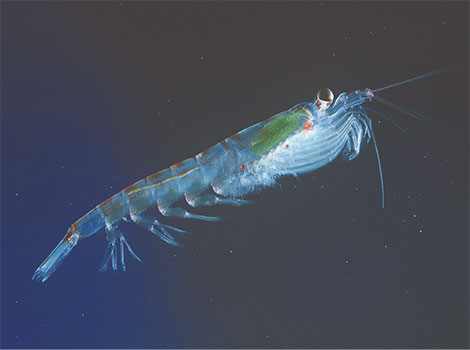
| Attributes | Quick facts |
|---|---|
| Size | Up to 2.4 in (6 cm). |
| Weight | Approximately 0.07 oz (2 grams). |
| Lifespan | Up to 10 years, depending on species. |
| Habitat | Found in oceans worldwide, particularly in the cold waters of the Antarctic and Arctic regions. |
| Diet | Herbivorous; primarily feeds on phytoplankton and algae. |
| Social Structure | Lives in large swarms, sometimes containing thousands of individuals. |
| Conservation | Not Evaluated |
Fun fact: They can reduce their size in response to drastic temperature shifts or food shortages.
95. King Crab
King Crab (Paralithodes camtschaticus) is found in the cold Pacific and Arctic ocean waters surrounding the coasts of Japan, Alaska, Russia, and British Columbia in Canada. The crab is known for its reddish-brown to yellowish-brown color, but they may also be orange, blue, or purple. They have long, spiny legs and two large claws that they use to capture and crush their prey.
The King Crab is one of the largest crabs, weighing up to 11 pounds and reaching a leg span of 5-6 feet. This species is a social creature that lives in large groups, often forming clusters of hundreds or even thousands of individuals. They are nocturnal animals and feed mainly at night when the waters are calm. During the day, the crabs will seek shelter in crevices or burrows to avoid predators.

| Attributes | Quick facts |
|---|---|
| Size | Leg span up to 5.9 ft (1.8 m). |
| Weight | Up to 24 lbs (10.9 kg). |
| Lifespan | Around 20-30 years. |
| Habitat | Cold coastal waters, often on the seafloor; commonly found in the North Pacific Ocean. |
| Diet | Omnivorous; feeds on mollusks, small fish, algae, and detritus. |
| Social Structure | Can be solitary or form groups, particularly during migrations or mating seasons. |
| Conservation | Not Evaluated |
Fun fact: Despite their aquatic habitat, they cannot swim in their adult stage. They traverse by walking on the ocean floor.
96. Kiwa hirsute
Kiwa (Kiwa hirsuta) is a member of the Kiwaidae family. It resides in the South Pacific Ocean, at a depth of 7217ft (2,200 meters) near hydrothermal vents. The Yeti Crab has silky blond setae, which cover its pereiopods and resemble fur and has strongly reduced eyes that lack pigment. This creature is 6 in (15 cm) in length. They use arms to collect toxins from the hydrothermal vents, which contain filamentous bacteria that are believed to be their primary food source

| Attributes | Quick facts |
|---|---|
| Size | Approximately 6 in (15 cm). |
| Weight | Lightweight, exact weight unknown. |
| Lifespan | Unknown, likely several years. |
| Habitat | Deep-sea hydrothermal vents are particularly abundant in the South Pacific Ocean. |
| Diet | Omnivorous; likely feeds on bacteria grown on its hairy claws, as well as small invertebrates. |
| Social Structure | Likely solitary or small groups; limited data available. |
| Conservation | Not Evaluated |
Fun fact: The Yeti Crab cultivates its own food on its arms.
FAQs
What are Big Animals that Start With K?
Here are 5 big animals that begin with the letter K: Killer Whale, Kaluga Sturgeon, Kodiak Bear, Komodo Dragon, and Koala Bear.
- Killer Whale (Orcinus orca): It inhabits all oceans, from the polar ice caps to the Equator, with a preference for cold-water upwelling areas. This marine mammal is easily recognized by its black top and pure white underside, with a white patch behind each eye. Males can grow up to 32.8 feet long and weigh about 9,800 kg, while females are slightly smaller, reaching about 27.8 feet and weighing significantly less.

- Kaluga Sturgeon (Huso dauricus): It is a large, long-lived species found in the Amur River of Russia and China. It inhabits the river from the estuary to the upper reaches and tributaries, as well as marine areas of the Sea of Okhotsk and the Sea of Japan. Mature individuals can exceed 18.5 feet in length and weigh up to 1 ton. It has a gray-green to black coloring on its back and a yellowish-green-white belly.

- Kodiak Bear (Ursus arctos middendorffi): It is a subspecies of brown bear found only on Kodiak Island and nearby islands off the coast of Alaska. It is the world’s largest bear and land carnivore, weighing up to 720 kg (1,600 pounds). A large male can stand over 10 feet tall when on his hind legs, and 5 feet when on all four legs. Its hair colors range from blonde to orange to dark brown.

- Komodo Dragon (Varanus komodoensis): It is a dominant predator residing in the Lesser Sunda Islands of Indonesia. They prefer hot, dry climates and are found in desert, savanna, and tropical forest areas. This impressive creature can reach up to 10 feet in length and weigh between 150 to 300 pounds. It has a long, flat head with a rounded snout, scaly skin, bowed legs, and a muscular tail.

- Koala Bear (Phascolarctos cinereus) is native to the coastal eastern and southern regions of Australia. It thrives in open Eucalyptus woodlands and forests, ranging from tropical to cool temperate climates. The Koala’s body length ranges from 60 to 85 cm (24 to 33 inches), and it weighs up to 14 kg (31 pounds) in the southern part of its range, but only about half that in subtropical Queensland to the north.

What are Small Animals that Start With K?
Here are 5 small animals that begin with the letter K: Khapra Beetle, Kudzu Bug, Killifish, Kissing Bugs, and Kangaroo Rat.
- Khapra Beetle (Trogoderma granarium): It is a small insect that has made its home in many regions of the world, including parts of Asia, Africa, the Middle East, and Europe. It thrives in hot, dry conditions and is often found in places where food and grains are stored. The males are brown or black with reddish-brown markings on their wings, while the females have a lighter coloration.
- Kudzu Bug (Megacopta cribraria): It is native to Asia, specifically India and China. It is an agricultural pest, particularly of lablab beans and other legumes. It has an oblong body shape that is broader at the bottom than the top and is usually olive-green with brown speckles. The Kudzu Bug is known to inhabit kudzu and soybean plants near residential areas.
- Killifish (Aphyosemion striatum): They are freshwater fish. They are found in a variety of habitats, including shallow subtropical and tropical waters, both still and moving. They are also found in temporary pools, swamps, creeks, and brackish estuaries. They have a long torpedo shape with a pointed mouth that is upturned, suitable for snagging insects from the water’s surface.


Killifish (Aphyosemion striatum) thriving in a shallow, tropical stream
- Kissing Bugs (Triatominae): They are typically found in the southern United States, Mexico, Central America, and South America. They often inhabit outdoor settings such as beneath porches, between rocky structures, under cement, in rock, brush piles, etc. Kissing Bugs have a cone-shaped head and a long, oval-shaped body with antennae. Their body color varies from light brown to black, and some species have yellow, red, or tan markings on the body.

- Kangaroo Rat (Dipodomys): It is a small rodent native to North America. They inhabit arid and semi-arid regions with low rainfall and dry heat. These creatures prefer areas with soft, sandy substrate, which makes it easier for them to burrow. Kangaroo Rats have a small, round body, long tails, and small round ears. Their unique hind legs are long, which enables them to hop like kangaroos.

What are Dangerous Animals that Start With K?
Here are 5 dangerous animals that begin with the letter K: King Cobra, Krait Snake, Killer Clown Ball Python, Krait, and Kodiak.
- King Cobra (Ophiophagus hannah): It can be found across the Indian Subcontinent, Southeast Asia, and the southern areas of East Asia. The King Cobra’s skin color varies greatly depending on its habitat. It can be yellow, green, brown, or black, often with yellowish or white crossbars or chevrons. It averages 10 to 12 feet long and can grow up to 18.5 feet tall. The weight of a King Cobra can vary depending on its age, sex, and geographical location, but typically, it weighs around 13 pounds.

- Krait Snake (Bungarus caeruleus): It is a highly venomous species native to the Indian subcontinent. Krait Snake is generally black or bluish-black, with about 40 thin, white crossbars which may be indistinct or absent anteriorly. The average length of the Common Krait is around 0.9 meters, but it can grow up to 1.75 meters.

- Killer Clown Ball Python (Python regius): It is native to the savannahs and grasslands of western Africa. It is known for its unique coloration, featuring a bright yellow or orange base color with bold white and black markings. It has a length of 3-4 feet. The weight of a Killer Clown Ball Python can vary, but one example weighed 90 grams.
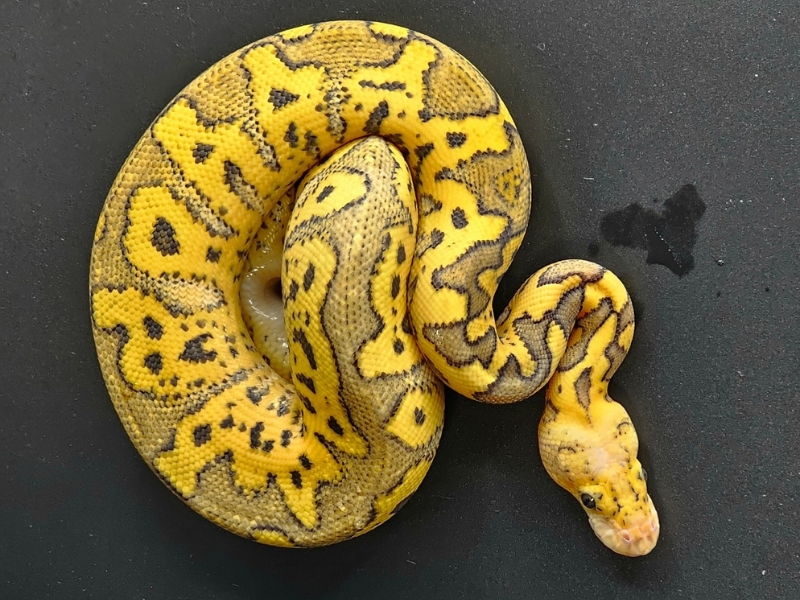
What are Fast Animals that Start With K?
Here are 5 fast animals that begin with the letter K: Kangaroo, Kakapo, Kai Ken, Kagu, and Kakariki
- Kangaroo (Macropus): It is a creature native to Australia. They inhabit a variety of regions such as forests, woodlands, plains, and savannas. Kangaroos are recognized for their large hind legs, long feet, and a large tail used for balance. Their head is relatively small with large, round ears, and they have a small mouth with prominent lips.

- Kākāpō (Strigops habroptilus): It is a parrot species native to New Zealand. It currently resides in protected forest sanctuaries and offshore islands. The Kākāpō is a large, flightless bird with a distinctive owl-like face.

- Kai Ken: It is a rare and intelligent breed, that originates from the mountainous region of Japan near Mount Fuji. Known for its athletic, muscular build, it resembles a mix of a German shepherd and a wolf. Its coat is medium length and comes in colors of brindle, black brindle, or red brindle.

- Kagu (Rhynochetos jubatus): It is a bird native to the forests and shrublands of New Caledonia. It can adapt to different forest types, from rainforests to drier lowland forests. The Kagu is a ground-dwelling bird, measuring 55 cm (21.5 inches) in length. Its weight varies by individual and season, ranging from 700 to 1,100 g (25–39 oz). The Kagu’s plumage is ash-grey and white for a bird of the forest floor. This bird is almost flightless and spends most of its time on or near the ground.

- Kakariki (Cyanoramphus novaezelandia): It is a parrot native to New Zealand. It thrives in varied regional habitats, including open areas like scrubland, grasslands, and forests. Kakariki is a parrot of simple colors, but pretty nonetheless. The primary flight feathers are blue. Adults reach an average length of 11 inches (27 cm). They have a wingspan of about 5 inches. The Kakariki weighs up to 4 ounces (113 grams), which is approximately 65 grams.
What are Ugly Animals that Start With K?
Here are 4 ugly animals that begin with the letter K: Kipunji, Kinabalu Giant Red Leech, Kitefin Shark, Kudzu Bug, and Keelback
- Kipunji (Rungwecebus kipunji): It is native to the highland forests of Tanzania. It thrives in montane forests, found between 1,300 and 2,450 meters above sea level. Adult male Kipunji have an average length of 85 to 90 cm. They are estimated to weigh between 10 and 16 kg. In terms of fur coloration, there seems to be no observable sexual dimorphism among these primates.

- Kinabalu Giant Red Leech (Mimobdella buettikoferi): This leech is endemic to Mount Kinabalu in Borneo. It thrives in the damp leaf litter and soil that often accumulates in fissures. The leech can be found at an elevation of 2,500 to 3,000 meters (8,200 to 9,800 feet) where the trail runs over a rocky outcrop near to the Mempening and Paka Cave shelters.

- Kitefin Shark (Dalatias licha): It inhabits a wide range of oceanic waters worldwide, commonly found in temperate or tropical regions. They are typically found in deep waters, usually between 200-600 meters below sea level. The Kitefin Shark has a moderately long body, with most individuals reaching 3.3–4.6 ft in length.The maximum length recorded for these sharks ranges between 5.2 and 5.9 feet. Typically, they weigh around 18 pounds. Their coloration is consistently gray or brown, and some individuals exhibit black dorsal spots.

- Keelback (Tropidonophis mairii): It is a semi-aquatic snake, predominantly found near freshwater bodies such as lakes, rivers, dams, creeks, and swamps. The Keelback’s color varies from grey to olive-brown or black, with an indistinct banded pattern. Its belly is usually cream with narrow dark bands. An average adult Keelback ranges from 50 to 75 cm in length.

What are Cute Animals that Start With K?
Here are 5 cute animals that begin with the letter K: Kissing Gourami, Kishu, Kiko Goat, Kaua’i ‘Ō‘ō, and Kiwi.
- Kissing Gourami (Helostoma temminkii): It is a freshwater fish native to Southeast Asia, including regions like Thailand, Indonesia, and Vietnam. They inhabit shallow, slow-moving backwaters that are thickly vegetated. They come in three primary colors: silver-green, pink, and mottled. Kissing Gouramis can grow up to 30 cm (12 inches) in length. However, in captivity, they usually reach around 6 inches in length.
- Kishu (Canis lupus): It is a medium-sized dog breed, is native to Japan. This breed is muscular and well-balanced, with a broad face and small, dark eye. The Kishu stands 17 to 22 inches tall and weighs between 30 and 60 pounds. Males are typically larger than females. The Kishu has a short coat that is predominantly white, although other colors such as red, sesame, and black & tan are also seen.

- Kiko Goat (Capra aegagrus hircus): They are medium to large size goats, with does weighing between 100 to 180 pounds (45 to 83 kilograms) and bucks weighing between 200 to 250 pounds (90 to 114 kilograms). They stand between 26 to 30 inches (66 to 76 cm) tall, while bucks are slightly taller, ranging from 30 to 37 inches (76 to 94 cm). Their primary habitat was in New Zealand, where they originated, and in the Southeast region of the United States.

- Kauaʻi ʻōʻō (Moho braccatus): It was a bird species endemic to the island of Kauaʻi, Hawaiʻi. It inhabited the dense ʻōhiʻa forests of the Alakaʻi swamp. This ʻōʻō species was unique in having yellow irises. It had elongated central tail feathers and a small cluster of gray feathers beneath the wing base. The feathers on its legs were a vibrant golden yellow. This bird is now extinct.

- Kiwi (Apteryx): It is a bird native to New Zealand. It thrives in various habitats including temperate and subtropical forests, grasslands, wetlands, and even farmlands. The weight of a Kiwi can range from 1.4 to 5 kilograms, depending on the species. The bird stands about 0.5 to 0.6 meters tall. Despite its small size, the Kiwi lays one of the largest eggs in proportion to its body size, which can weigh up to 20% of the female’s weight.

What are Sea Animals that Start With K?
Here are 5 sea animals that begin with the letter K: Kelp Greenling, King Crab, King Mackerel, Kyuquot Sound Orca, and Koi Fish.
- Kelp Greenling (Hexagrammos decagrammus): It is a marine species found in the eastern Pacific Ocean, from the Aleutian Islands of Alaska to La Jolla in southern California. Males are gray to brownish olive in color, dotted with irregular blue spots over the anterior half to two-thirds of their body. Females are gray to brownish in color but they are marked all over with rust colored or golden spots. The Kelp Greenling can reach a maximum length of 61 cm (24 in) and a maximum weight of 2.1 kg (4.6 lb).

- King Crab (Paralithodes camtschaticus): It inhabits the cold Pacific and Arctic ocean waters, particularly around Japan, Alaska, Russia, and British Columbia. The crab’s habitat extends to shallow, muddy coastal waters, less than 200 ft deep. The King Crab is one of the largest crabs, with long legs reaching up to 6 ft in length. It typically weighs around 11 lbs.

- King Mackerel (Scomberomorus cavalla): It is a coastal pelagic species found in the Atlantic Ocean, from Massachusetts to Brazil, including the Caribbean and Gulf of Mexico. It prefers warm waters and lives in depths ranging from 115 to almost 600 feet. The fish exhibits an iron-gray color on its back, fading to silvery on its sides and belly. It can grow up to 5.5 feet in length and weigh up to 100 pounds.

- Koi Fish (Cyprinus carpio) is a domestic variant of the Amur carp. They are often kept in large fishponds and can survive in wild freshwater habitats such as lakes and ponds. Koi fish are known for their brightly-colored scales with various patterns.

What are Horned Animals that Start With K?
Here are 5 horned animals that begin with the letter K: Klipspringer, Kudu, Kob, Kirk’s Dik-Dik, and Kouprey.
- Klipspringer (Oreotragus oreotragus) is a small, sturdy antelope found across eastern and southern Africa. It has a unique gait, walking on the tips of its cylindrical, blunt hooves. The klipspringer’s coat, yellowish gray to reddish brown, acts as an efficient camouflage in its rocky habitat.

- Kudu (Tragelaphus strepsiceros): It is a large African antelope, and is native to eastern and southern Africa. They prefer habitats with dense vegetation such as forests and savannas. tall and weighs several hundred pounds. Their fur is reddish brown, with thin white stripes along the flanks. The horns of the Kudu are long, pointing upward and slightly back, curling in a corkscrew shape.

- Kob (Kobus kob): It is found in Africa, particularly in regions close to water such as floodplains, savannas, and grasslands. It stands about 3 feet tall at the shoulder. Males, which are more robust than females, have a shoulder height of 90-100 cm and weigh around 94 kg.

- Kirk’s Dik-Dik (Madoqua kirkii): It is a small antelope native to Eastern Africa. They inhabit savanna areas in eastern and southwestern Africa, from southern Somalia to central Tanzania, and northern Namibia to southwestern Angola. These creatures have a pointed snout, large eyes, and ears, with a coat ranging from grey to gray-brown with tan flanks.

- Kouprey (Bos sauveli): It is a wild bovine species native to Southeast Asia. It inhabits open forests and savannas, often near dense monsoon forests. This large ungulate has a tall, narrow body, long legs, a humped back, and long horns.

What are the Extinct Animals that Start With K?
Here are 5 extinct animals that begin with the letter K: Kauaʻi palila, King Island dwarf emu, Kentrosaurus, Kotasaurus, and Kritosaurus.
- Kauaʻi palila (Loxioides kikuchi): It is an extinct species of Hawaiian finch. The bird was described from subfossil remains discovered at the Makauwahi Cave on the south coast of Kauai in the Hawaiian Islands. The Kauaʻi palila was known from a few specimens, found on the island of Kauaʻi.

- King Island dwarf emu (Dromaius novaehollandiae minor): It was a bird species endemic to King Island, located in the Bass Strait between mainland Australia and Tasmania. Their habitat included dense eucalyptus forest in the interior, surrounded by scrub land that led down onto the long sandy beaches.

- Kentrosaurus: It inhabited the Late Jurassic period in the Lindi Region of Tanzania. This herbivore was famous for its array of spikes on its back, tail, and sides. It had a long and narrow skull, and a beak that didn’t contain any teeth.

- Kotasaurus (Kotasaurus yamanpalliensis): It is a sauropod dinosaur from the Early Jurassic period, was discovered in the Kota Formation of Telangana, India. This herbivore had a body length of approximately 9 meters and weighed around 2.5 tonnes. Its body plan was typical of a sauropod, with a long neck and tail, and a large body supported by four sturdy, columnar legs.

- Kritosaurus: It is a herbivorous dinosaur from the Late Cretaceous period, inhabited regions of North America, with fossils discovered in Alberta (Canada), Coahuila (Mexico), and Montana. This large hadrosaurid reached lengths of up to 9 meters (30 feet) and weighed around 4-5 metric tons. Its long, flat tail likely provided balance, and its powerful hind legs enabled swift movement on land.

In conclusion, this article has showcased a fascinating diversity of adaptations and habitats of the animals starting with the letter K. These creatures range from the deep sea to rocky outcrops and wild jungle, thriving in extreme and specialized environments. If you want to explore more unique creatures and the wonder of nature’s variety, please visit Animal Pedia for more details.
If you’re searching for animal names starting with a different letter, explore our other comprehensive articles dedicated to animal names.