Aldabra Giant Tortoises (Aldabrachelys gigantea) are among the largest tortoises in the world, renowned for their immense size and extraordinary longevity [5, 22]. They are part of the family Testudinidae and belong to the order Testudines, class Reptilia, and phylum Chordata, placing them firmly within the vertebrate animal kingdom [5, 2]. These reptiles have an average weight of 550 lbs (250 kg) for males and 350 lbs (159 kg) for females, and they can live for over 150 years [5, 22].
Native to the Aldabra Atoll in the Seychelles, these herbivores graze on grasses, leaves, and woody stems [5, 22]. Their slow terrestrial movement and passive defenses, like shell retraction, define their daily existence [5, 22]. They hold a conservation status of Vulnerable on the IUCN Red List [5, 14].
This comprehensive guide covers the defining characteristics of these animals, from their physical attributes and behavior to their ecological importance and conservation status. Understanding their biology and role in the ecosystem provides insight into the importance of preserving these ancient reptiles.
What Are Aldabra Giant Tortoises?
Aldabra Giant Tortoises are a species of large land tortoise native to the Aldabra Atoll, a remote island in the Seychelles, and they are defined by their impressive size, high-domed carapace, and extended lifespan [5, 22]. The scientific classification places them within the family Testudinidae, which includes all tortoises, under the order Testudines, which encompasses all turtles and tortoises [5, 2].
They are classified as reptiles within the class Reptilia, belonging to the phylum Chordata, and the kingdom Animalia [5, 2]. Other names for the species include Aldabra Tortoise and Giant Tortoise, while the scientific name Aldabrachelys gigantea refers to their habitat and large size, with “gigantea” being a Latin word for “giant” [5, 16]. Historically, some sources referred to them by the now-outdated synonym Geochelone gigantea [5, 11].
Taxonomic relatives include other giant tortoise species, though a 2015 study in Ecology and Evolution found that some proposed subspecies lack sufficient genetic differentiation to be considered distinct species [4]. These tortoises are notable for their varied shell shapes, with both high-domed and flattened “saddleback” morphotypes found in the population [4]. The debate continues among scientists regarding whether these shell forms are driven by genetic factors or by environmental pressures such as diet and habitat [4]. This information provides a base for understanding how these animals look and what their physical forms convey about their lives.

What Do Aldabra Giant Tortoises Look Like?
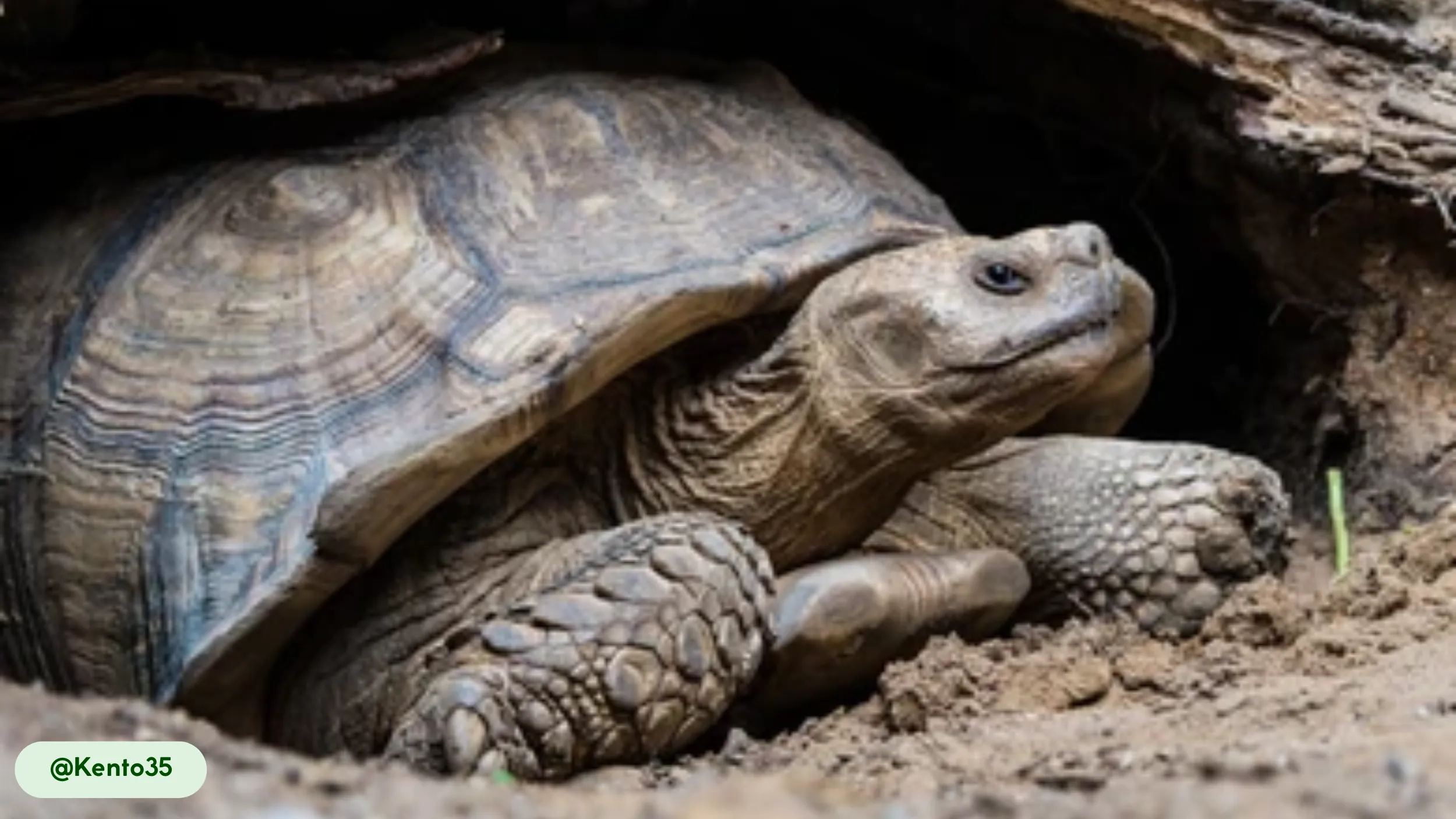
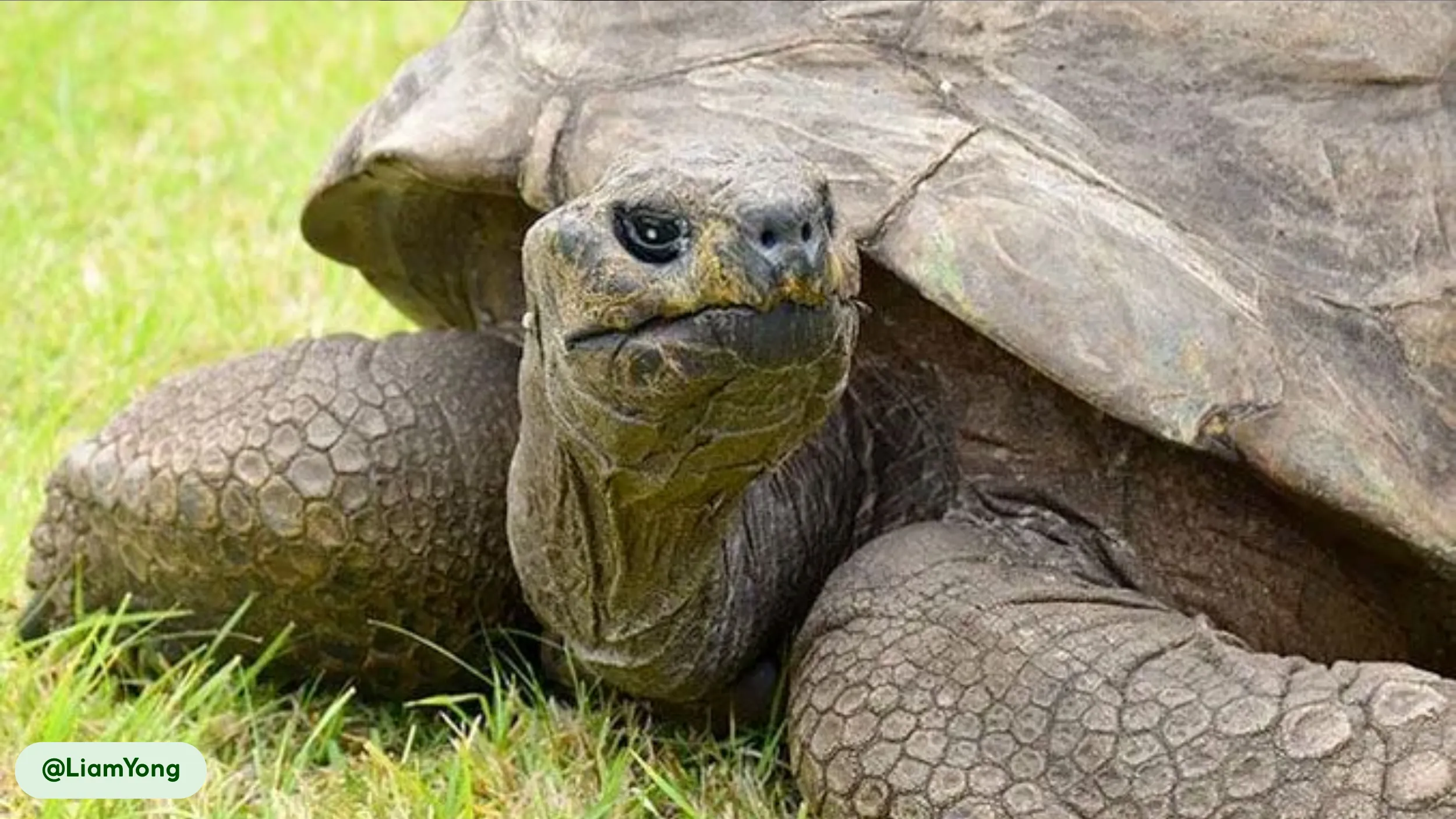
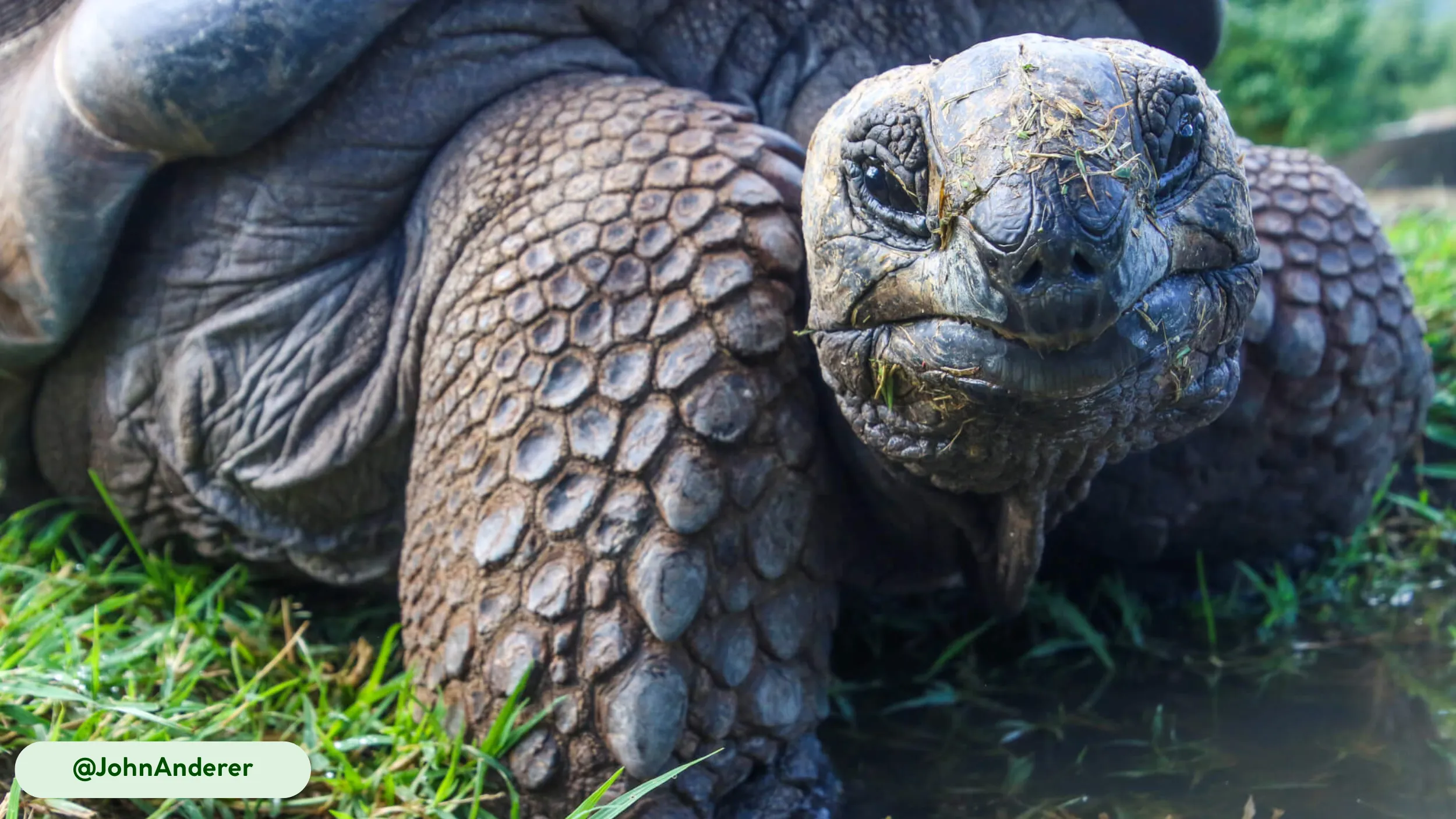
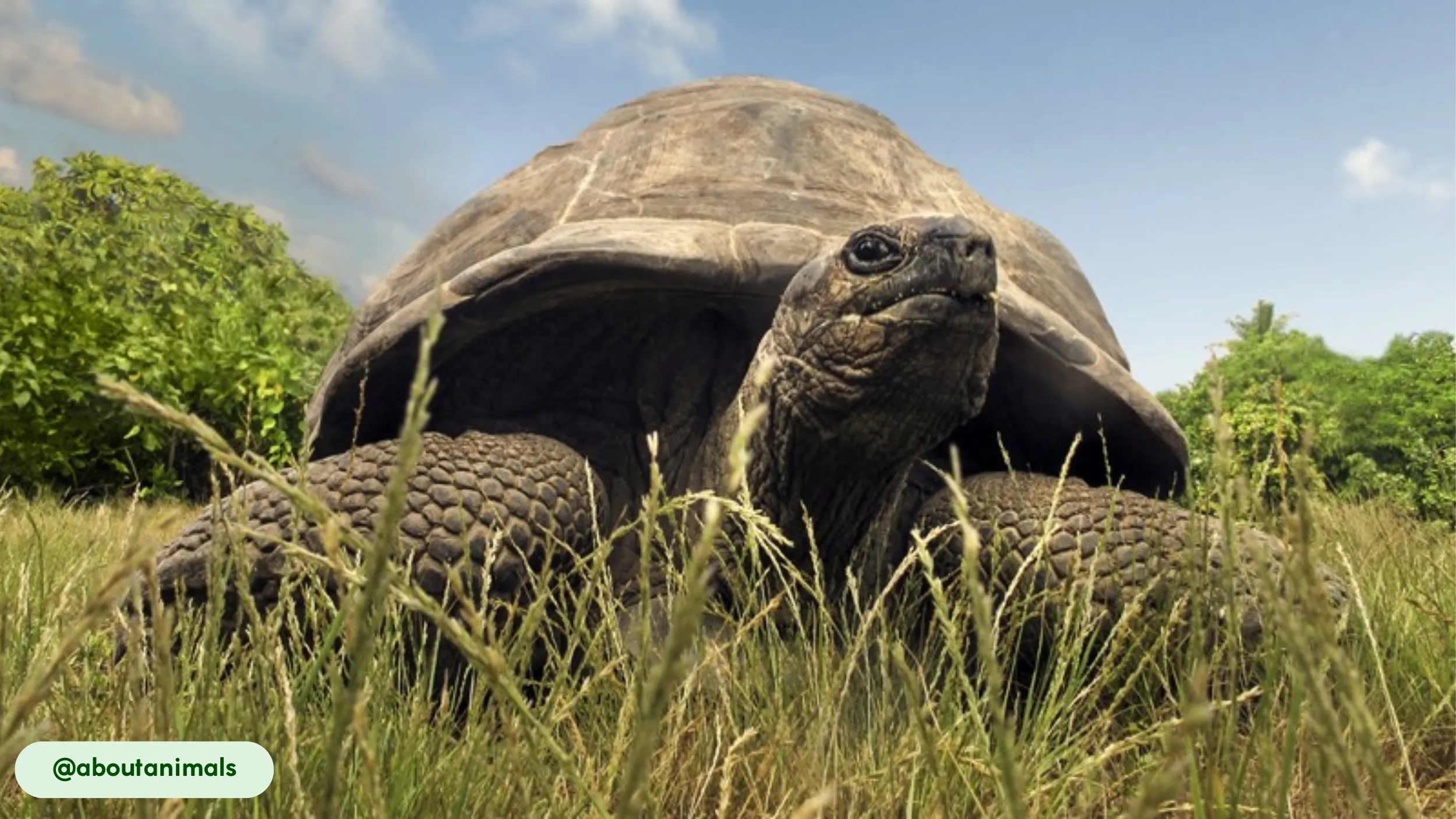
The Aldabra Giant Tortoise has a robust, high-domed body with a thick carapace and dark, scaly skin [5]. Their coloration is typically a brown or tan shell with dark gray to black skin, lacking any distinct patterns like stripes or spots [5, 15]. The thick, scaly skin offers protection against environmental hazards and assists with camouflage in their natural grassy habitats [5, 15]. Their carapace provides insulation and defense [5]. Overall, the tortoise presents a ponderous and armored appearance, shaped by its role as a large, slow-moving herbivore.
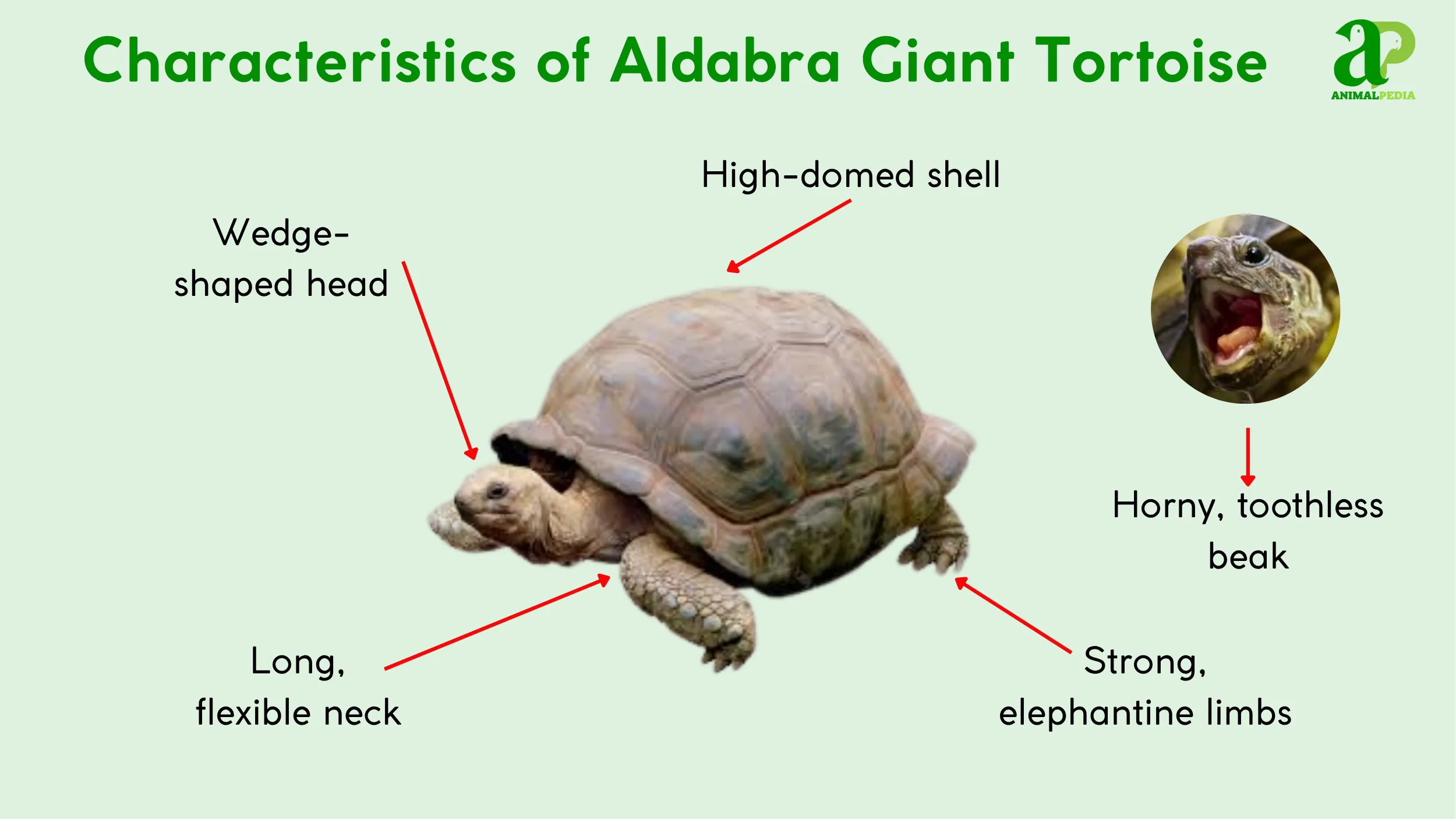
The Aldabra Giant Tortoise has multiple distinctive physical features. These features are essential for its survival and daily functions.
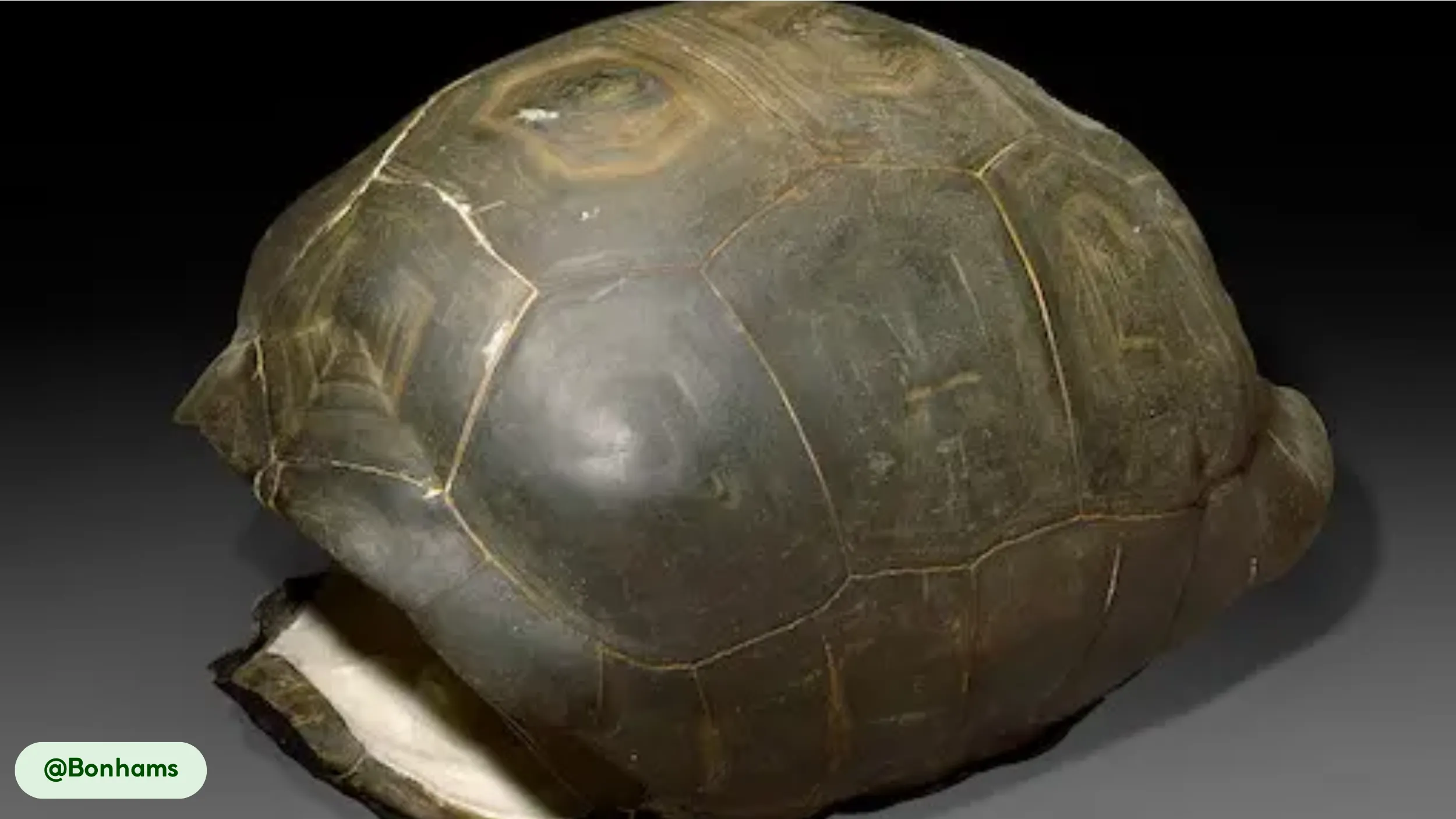
- Protective Carapace: The high-domed shell is a primary defensive structure, protecting the tortoise from predators and environmental damage [5, 22]. A 2018 study in Ecology and Evolution revealed that the carapace also acts as a heat exchanger, aiding in thermoregulation [6].
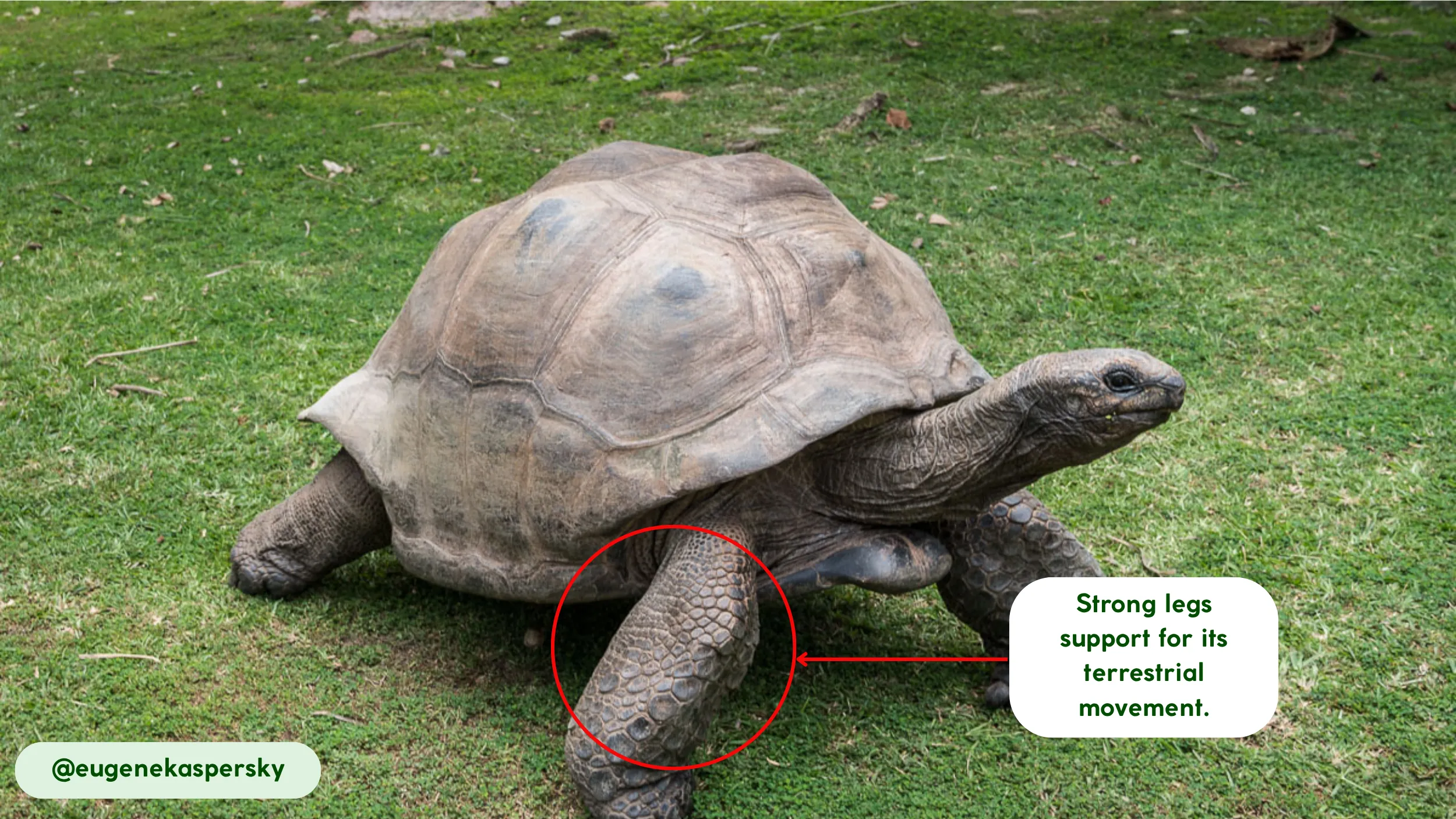
- Strong, Elephantine Limbs: Four short, sturdy limbs support the tortoise’s heavy body [5, 15]. Their hind legs resemble those of an elephant, with thick scales and two-jointed toes that give them traction on sand and other surfaces [5, 15]. These limbs are also used for digging.
- Wedge-Shaped Head: The head is small and pointed, covered in scales [5, 22]. A specialized nasal structure allows the tortoise to drink rainwater from crevices, a critical adaptation for hydration in arid conditions [15].
- Horny, Toothless Beak: Instead of teeth, the tortoise uses a horny beak to tear and crush vegetation [7]. This structure is a powerful tool for grinding tough plant material like woody stems [5, 7].
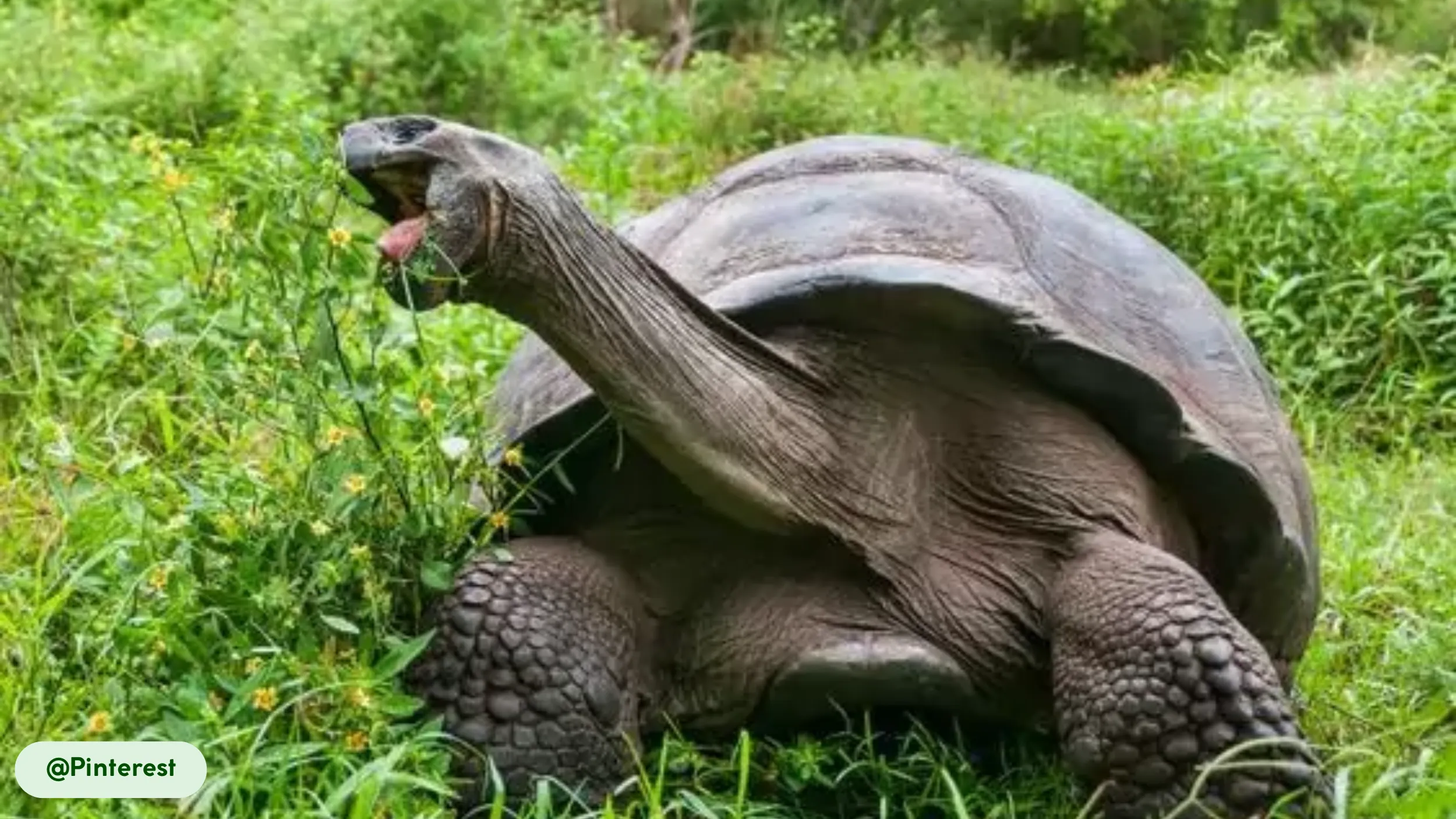
- Long, Flexible Neck: The tortoise’s long neck allows it to reach high vegetation, helping it forage for food that other grazing animals cannot reach [5, 22].
Sexual dimorphism is evident in physical appearance. Adult males are significantly larger than females, both in carapace length and weight [5, 22]. Males also have longer, thicker tails and a concave plastron (the underside of the shell) to aid in mating [5, 25]. Females possess a convex plastron and shorter tails, which helps to differentiate them from males [5, 25].
How Big Are Aldabra Giant Tortoises?
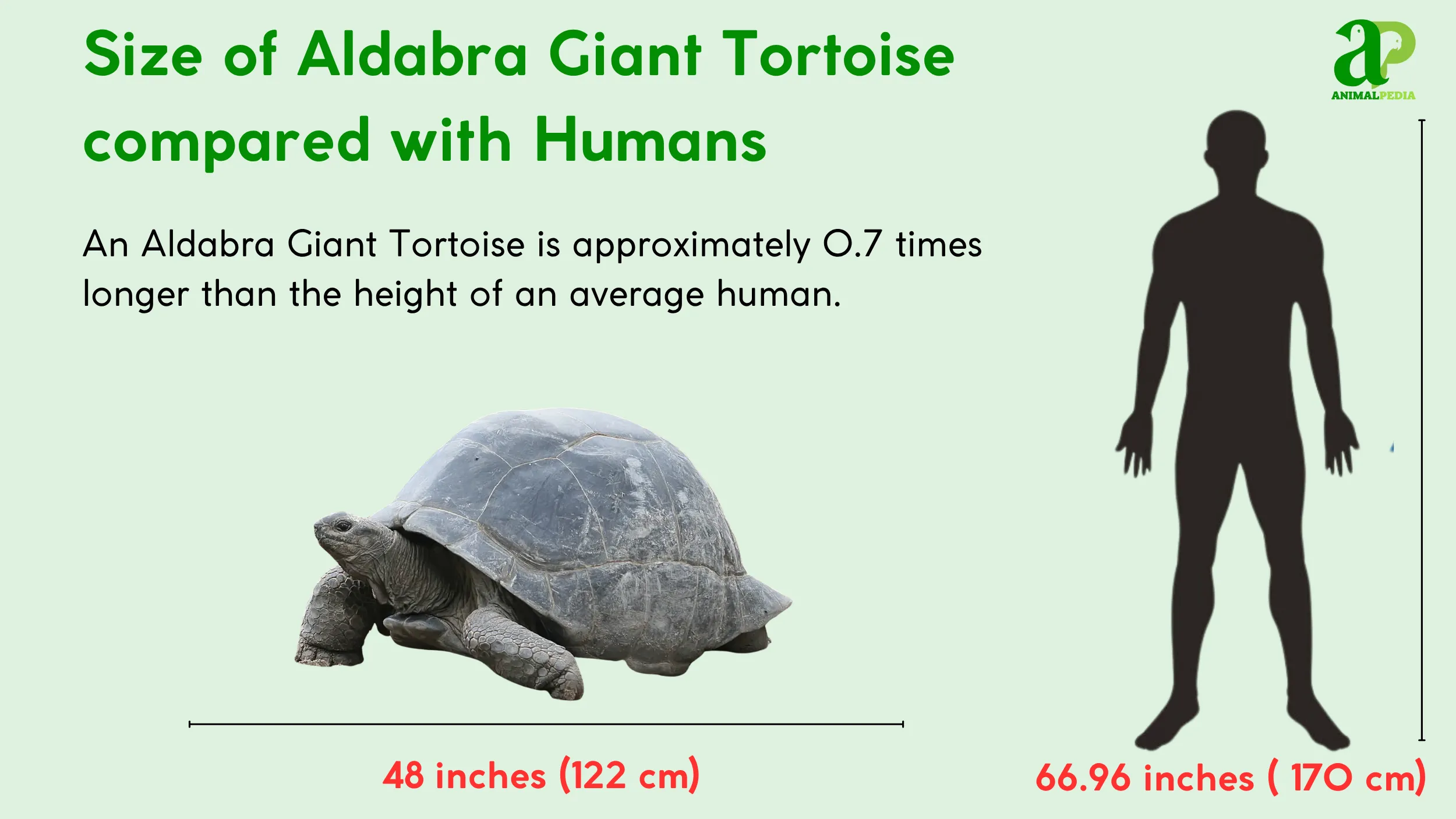
The average size for an adult male Aldabra Giant Tortoise is 48 inches (122 cm) in carapace length and 550 lbs (250 kg) in weight, while an adult female averages 36 inches (91 cm) and 350 lbs (159 kg) [5, 22].
| Male | Female | |
| Length | 48 in (122 cm) | 36 in (91 cm) |
| Weight | 550 lbs (250 kg) | 350 lbs (159 kg) |
| Record Size | up to 880 lbs (400 kg) | up to 550 lbs (250 kg) |
Developmental stages show a clear progression in size. Hatchlings are small, with juveniles reaching about 11 lbs (5 kg) by age five [5, 21]. They are considered mature at around 25 years, having reached roughly half their adult size [5, 21]. Their immense size is comparable to that of a small car, making them one of the largest land reptiles.
Where Do Aldabra Giant Tortoises Live?
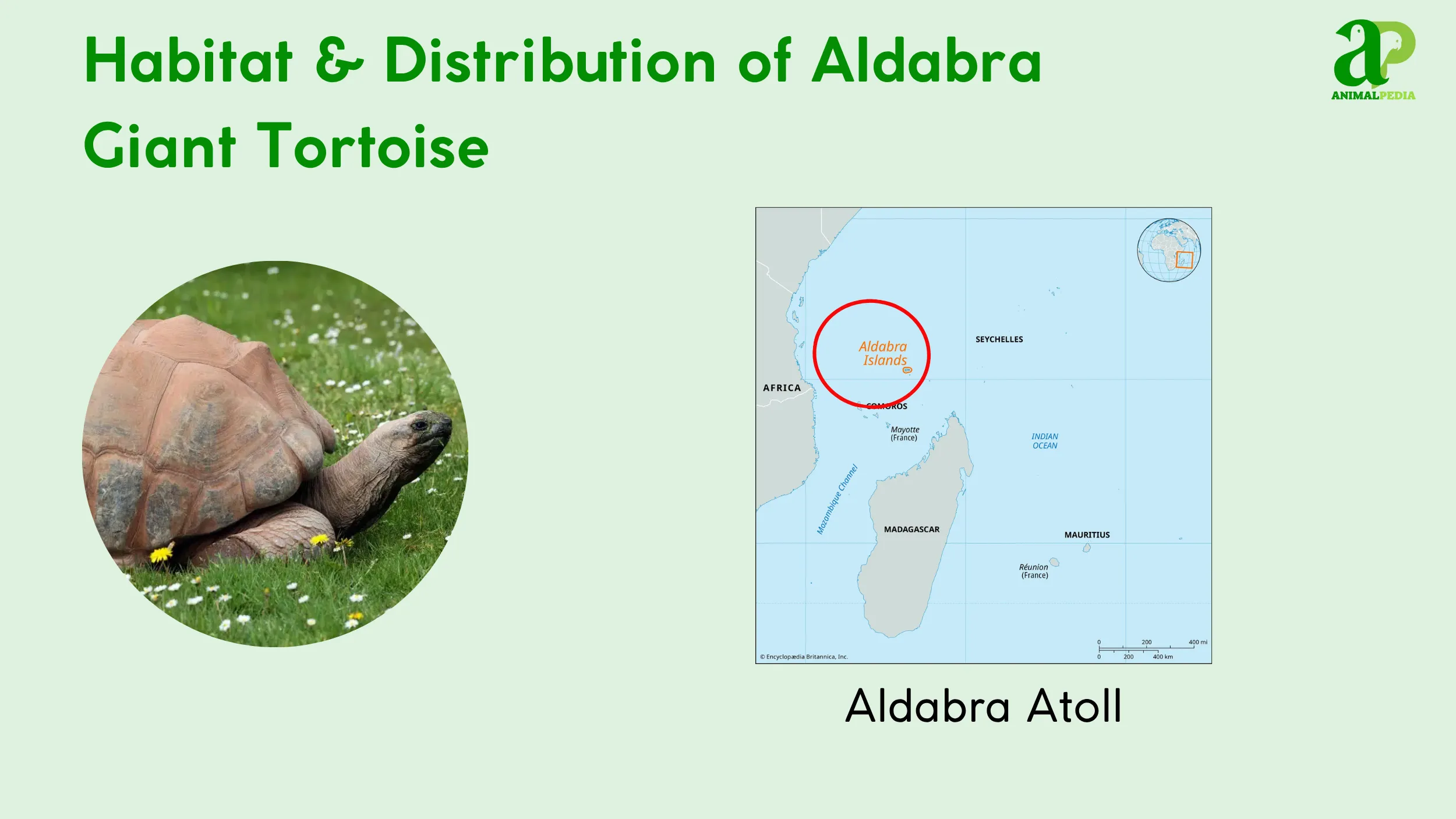
Aldabra Giant Tortoises are native to the Aldabra Atoll, a remote island group in the Seychelles archipelago, located in the Indian Ocean northeast of Madagascar [5, 22, 4]. They have also been introduced to other islands, including Mauritius and Réunion, and various other Seychelles islands like Cerf, Cousine, Frégate, and Mahé [5, 22]. Their preferred habitat includes grasslands, scrub forests, mangrove swamps, and coastal beaches [5, 22].
A 2019 study in Biodiversity and Conservation found that they prefer grasslands for foraging, with random use of other habitats within their home ranges [24]. They thrive in a tropical climate with temperatures between 75-95°F (24-35°C) and adapt to high humidity and seasonal rainfall [15, 6]. Males are known to be territorial, using shell battering to defend breeding grounds [5, 17].
How Do Aldabra Giant Tortoises Behave?
Aldabra Giant Tortoises have a placid demeanor, with behaviors focused on foraging, thermoregulation, and social interaction. These are the main behavioral categories:
Diet and Feeding: They are herbivores that graze on various grasses and leaves, using a strong beak to tear vegetation.
Movement and Abilities: Their slow, deliberate walking is powered by strong limbs, and they possess abilities like digging.
Daily/Seasonal Patterns: These tortoises are most active during the cooler morning hours, seeking shade from the day’s heat. These patterns of activity are a response to their environment and provide insight into their survival strategies.
Diet and Feeding
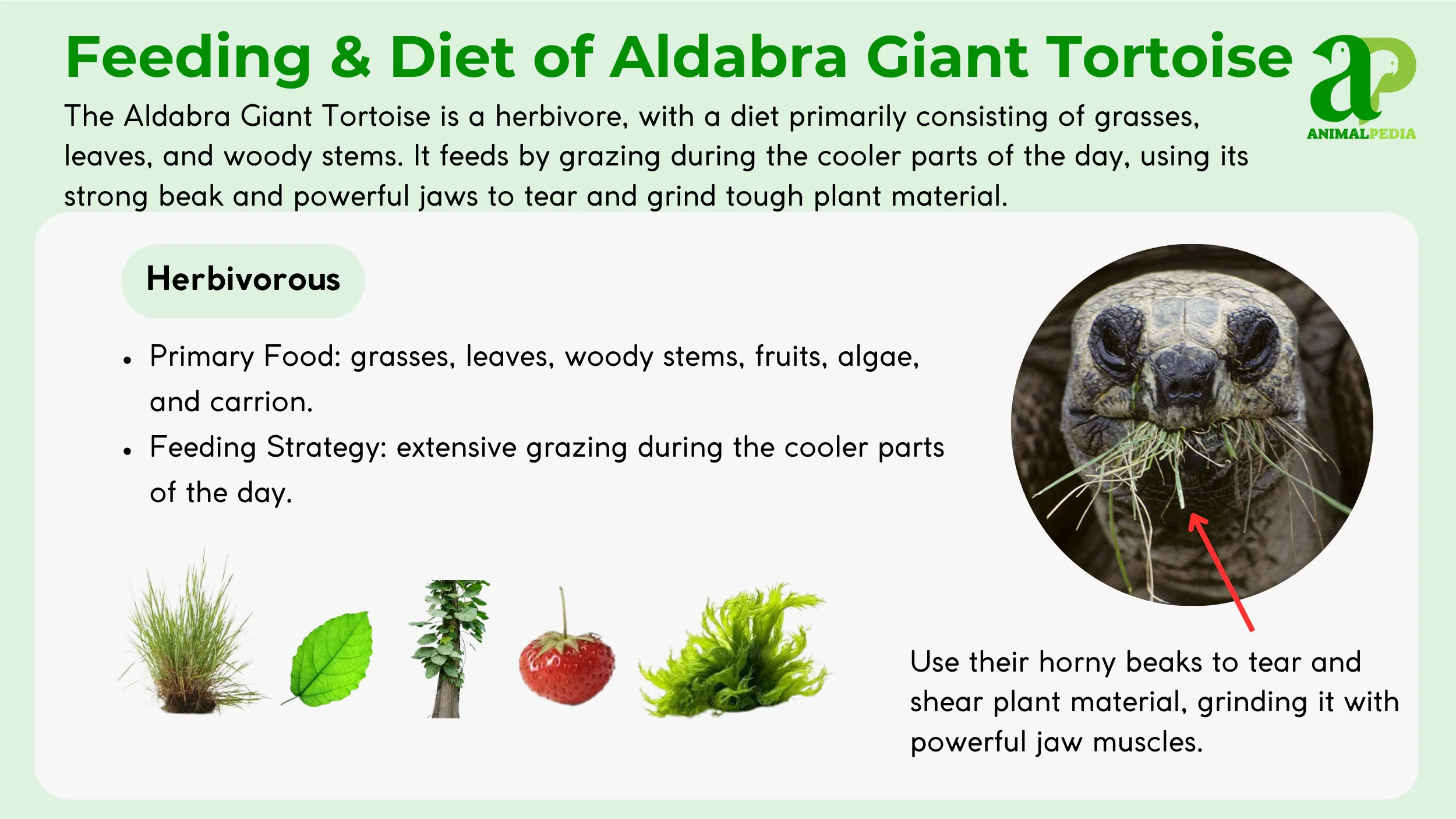
Aldabra Giant Tortoises are herbivores, eating a diet of grasses, leaves, and woody stems [5, 22]. They also consume fruits, algae, and carrion for extra protein and nutrients [22]. Their feeding pattern involves extensive grazing during the cooler parts of the day. The tortoises use their horny beaks to tear and shear plant material, grinding it with powerful jaw muscles [7]. This strong beak is a key adaptation for their coarse diet [5]. They can consume a wide variety of plant life within their habitat.
Movement and Abilities
Aldabra Giant Tortoises are known for their slow, steady terrestrial movement, powered by strong, columnar legs [5]. They do not exhibit high-speed movements, but their physical capabilities are suited for their massive size. Their primary movement is a deliberate walk, which serves their foraging and daily routines [5].
Their strength allows them to push over small trees to access leaves [22]. A notable ability is their digging behavior, which they use to create shallow depressions for resting and thermoregulation. Their sturdy limbs and claws assist in this [5, 15]. These physical capabilities highlight their adaptation to their island home.
Daily/Seasonal Patterns
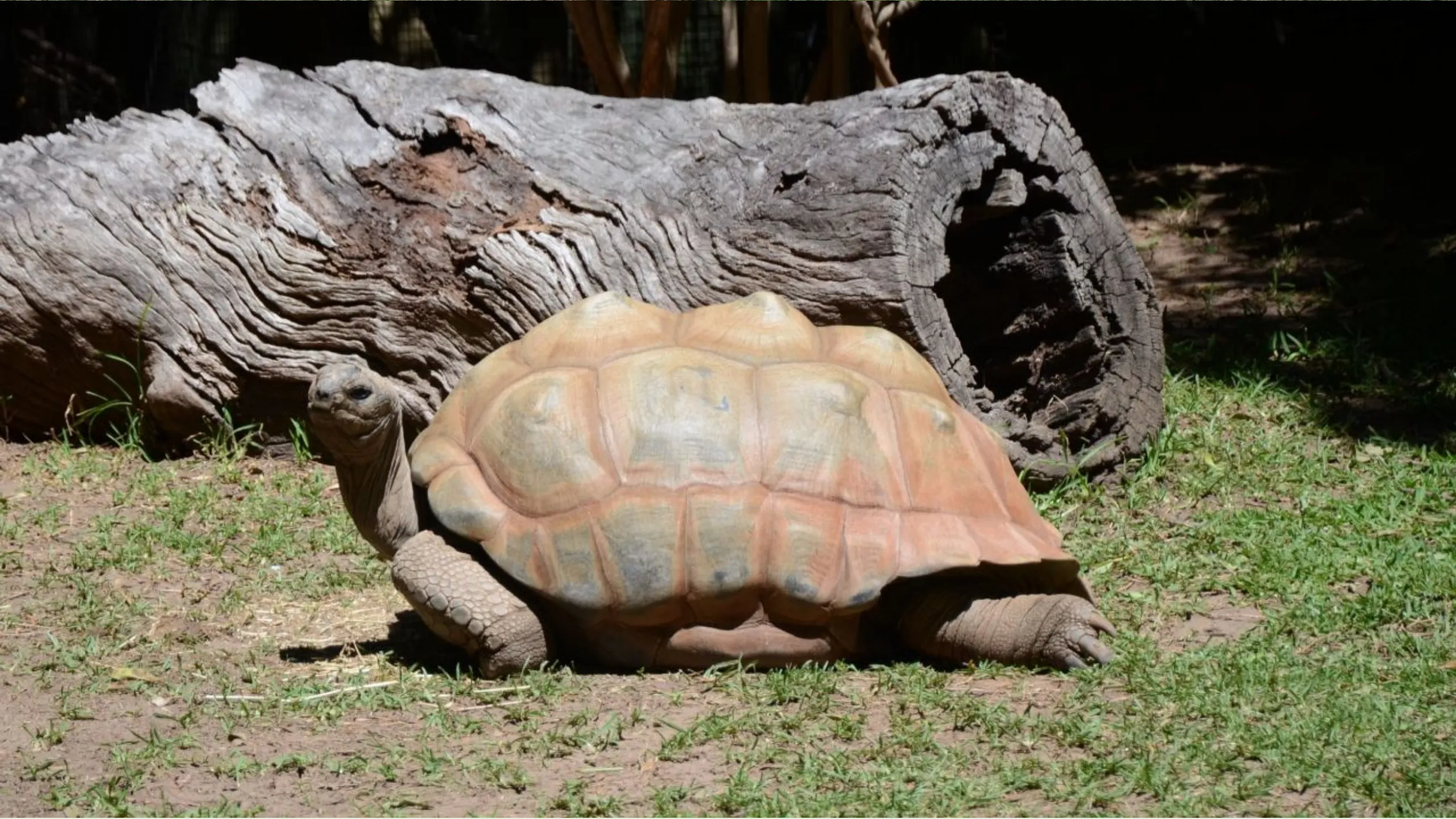
Aldabra Giant Tortoises are most active in the morning and late afternoon, when temperatures are cooler [22]. They spend the hottest part of the day resting to avoid overheating. Their daily routine typically involves basking in the sun in the early morning to warm up, followed by foraging. During the midday heat, they retreat to the shade of bushes or trees to rest. In the late afternoon, they resume grazing and other activities [22].
Seasonal patterns influence their behavior. During the dry season, they may spend more time seeking water and shade [5]. A 2019 study showed their habitat use is influenced by the availability of food and water sources [24]. These tortoises do not have a formal migratory season. Their movements are localized, driven by the search for food, water, and suitable breeding grounds within their home range.
How Do Aldabra Giant Tortoises Reproduce?
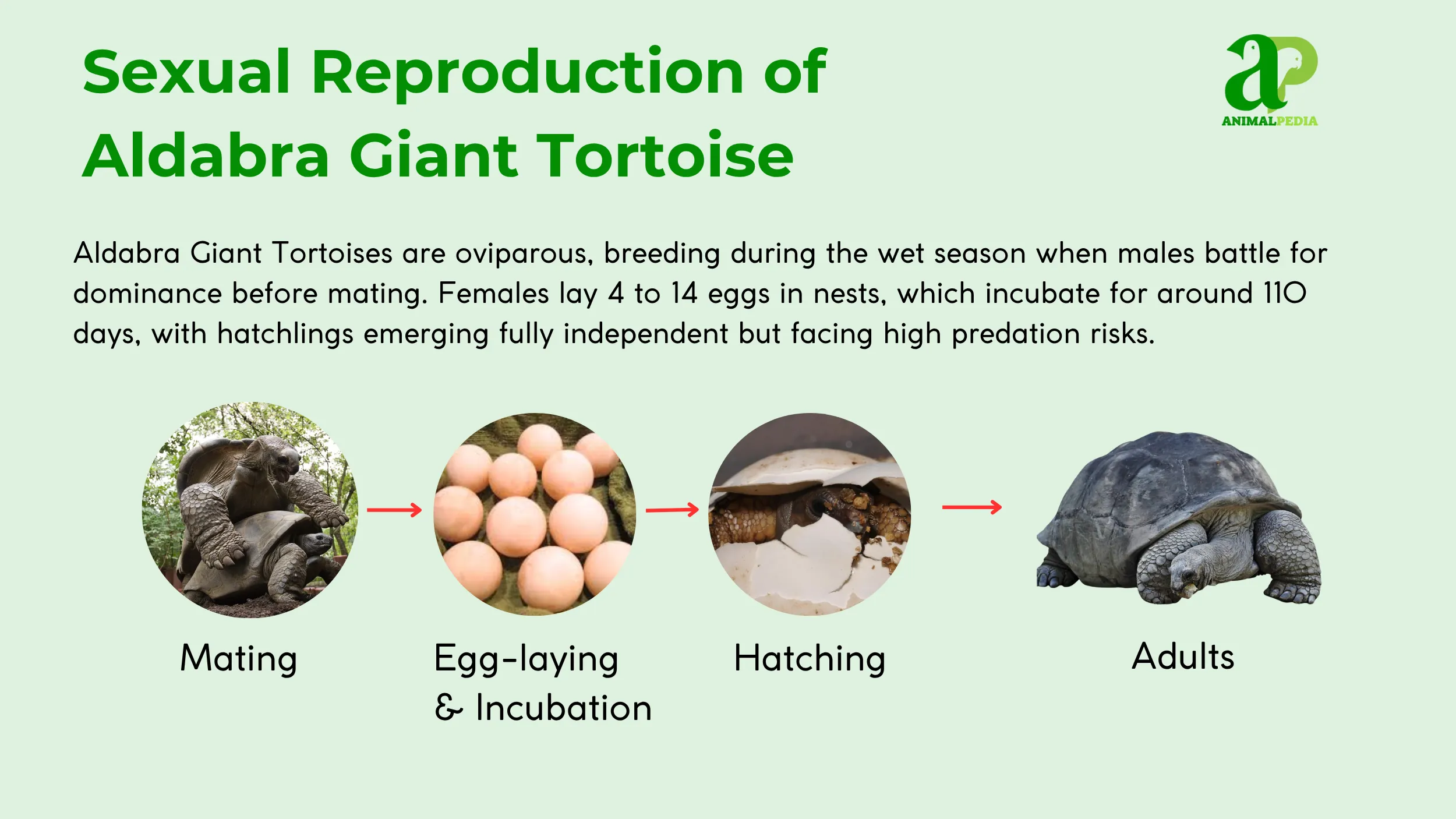
Aldabra Giant Tortoises are an oviparous species, with reproduction occurring primarily during the wet season. The mating season typically takes place from February to May. Male tortoises compete for breeding rights, engaging in territorial displays that can involve aggressive shell battering to assert dominance [5, 17].
Once a male establishes dominance, courtship involves the male following the female, making low calls, and eventually mounting the female for copulation [5, 22]. A 2024 study on reproductive hormone patterns in both wild and captive tortoises provides further insight into the biological triggers of these behaviors [10].
Following a successful mating, the female tortoise digs a nest and lays a clutch of between 4 and 14 eggs. The incubation period lasts about 110 days, after which the hatchlings emerge. The young tortoises are left to fend for themselves, as parental care is absent in this species. While a large number of eggs are laid, survival rates for hatchlings in the wild are low due to predation.
How Long Do Aldabra Giant Tortoises Live?
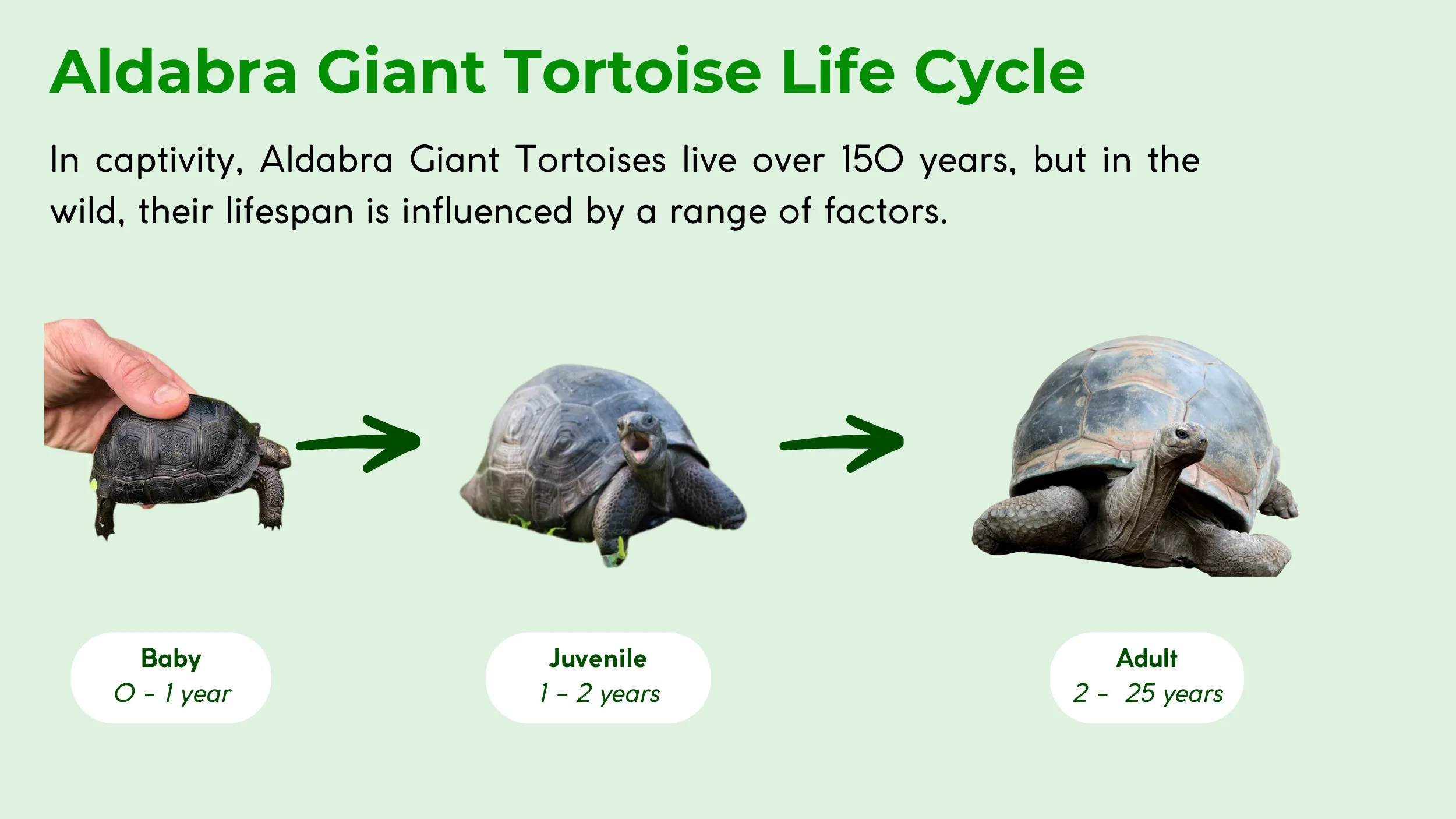
Aldabra Giant Tortoises live over 150 years on average. The lifespan of a tortoise depends on its environment, with a distinction between wild and captive populations. In the wild, longevity is influenced by a range of factors, including food availability, habitat quality, and predation pressure on younger animals. Captive tortoises often live longer than their wild counterparts due to consistent access to food, veterinary care, and an absence of natural predators.
These tortoises reach sexual maturity at a late age, around 25 years [5, 21]. They can continue to reproduce well into old age. This long maturation process contributes to their extended lifespan, as they grow slowly and steadily for many decades before reaching full size and reproductive capability.
Are Aldabra Giant Tortoises Beneficial to Humans?
Aldabra Giant Tortoises are beneficial to humans due to their role as ecosystem engineers and their contribution to the ecotourism industry. As a keystone herbivore, the tortoise shapes its environment by grazing on vegetation, which helps to maintain open grasslands and disperses seeds across the atoll [12]. This role creates and maintains habitat for other native species, supporting the overall biodiversity of the ecosystem.
The tortoises’ immense size and placid nature make them a popular attraction, contributing to a sustainable ecotourism economy in the Seychelles. This economic benefit helps to support the local community and fund ongoing conservation efforts. Additionally, the tortoises serve as a powerful symbol for conservation, raising awareness for the importance of preserving ancient and unique species.

Are Aldabra Giant Tortoises Endangered?
Aldabra Giant Tortoises are not endangered, but they are classified as Vulnerable on the IUCN Red List. Their population size is estimated to be over 100,000 individuals, a recovery from near extinction in the 19th century [14, 22]. While their population is stable, threats persist, including habitat degradation from invasive species and the potential effects of climate change, such as sea-level rise, on their low-lying island habitat.
Conservation efforts are focused on protecting their habitat and managing introduced predators. The sequencing of the Aldabra Giant Tortoise genome has also allowed for the monitoring of the population’s genetic health [8]. Individuals can assist in conservation by supporting organizations that protect the tortoises’ natural habitat and help fund breeding programs and research.
Now that we have covered the key aspects of these reptiles, we can explore some lesser-known details. Their history and behaviors hold surprising secrets that highlight their unique position in the animal kingdom.

Frequently Asked Questions About Aldabra Giant Tortoises
Do Aldabra Giant Tortoises Migrate Seasonally?
Aldabra Giant Tortoises do not migrate. Their movements are localized within their home range, which is driven by the search for food, water, and suitable breeding grounds rather than by any long-distance seasonal travel [24]. While they do not undertake long journeys, their day-to-day activities are a careful balance of instinct and environmental response. A look into their preferred resting habits gives more insight into these daily rhythms.
What Is Their Preferred Resting Behavior?
Their preferred resting behavior is to find shelter in the shade of bushes or trees to avoid the midday sun. They also create shallow depressions, or wallows, in the ground where they can rest to help lower their body temperature. The ability to regulate body temperature is essential for survival. However, other challenges, like parasites, also require the tortoise to adapt to its surroundings.
Are Aldabra Giant Tortoises Affected By Parasites?
Aldabra Giant Tortoises are affected by parasites. A 2023 study found that captive and wild populations can carry a range of intestinal parasites, which require management to maintain the health of the tortoise and prevent the spread of diseases within the population [23]. The health of these tortoises is complex, extending from internal issues like parasites to the very structures they carry. Their shells, which define their form, have their own growth patterns.
How Do Their Shells Grow Over Time?
A tortoise’s shell grows from the individual bony plates, called scutes, that make up the carapace. New layers of bone and keratin are added beneath these scutes over time, causing the shell to expand as the tortoise grows, which results in visible growth rings [9]. The shell is a protective armor that grows over a lifetime, but what about their relationships with other inhabitants of their ecosystem? Their presence affects many species around them.
How Do They Interact With Other Species In Their Habitat?
They interact with other species primarily as herbivores and ecosystem engineers. By grazing, they help maintain open grasslands, and by dispersing seeds in their waste, they help to cultivate new plant life, supporting a biodiverse environment for other creatures [12].
The Aldabra Giant Tortoise stands as a monument to resilience and adaptation, a living part of its island ecosystem. This species, with its immense size and serene longevity, reminds us of the delicate balance in nature. At Animal Pedia, we believe that understanding these magnificent animals is the first step toward preserving them for future generations. We have detailed the unique biology and behavior of this species, and encourage you to explore our comprehensive resources and dive deeper into the world of amazing animals.