
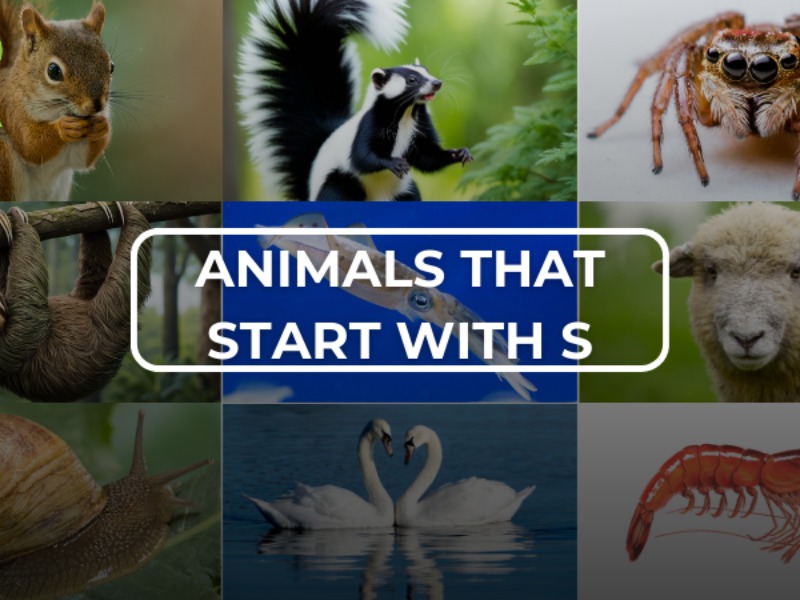
Most Popular Animals Start With S
The animal kingdom is brimming with fascinating creatures, and exploring them in new and exciting ways never gets old. This time, let’s spotlight animals whose names start with the letter ‘S.’
From the sleek swordfish to the stealthy snow leopard and the charming seahorse, this collection showcases some of the most remarkable examples of nature’s diversity. Ideal for secondary school students eager to learn, explore, or simply satisfy their curiosity, here are 20 stunning animals beginning with ‘S’ to spark your imagination and expand your knowledge!
| Sheep | Squirrel | Skunk |
| Smooth Green Snake | Stork | Sand Cat |
| Scorpions | Swordfish | Shrimp |
| Squid | Snails | Starfish |
| Salmon | Sparrow | Swans |
| Sea Snake | Snow Leopard | Sloth |
| Salamander |
1. Sheep
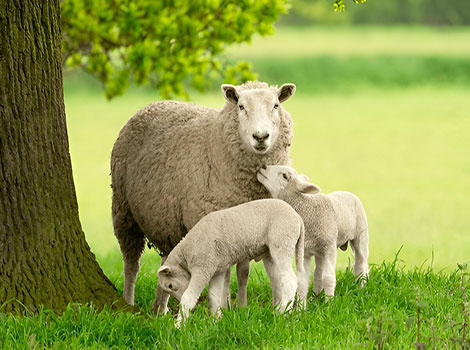
The Sheep (Domestic Sheep) was domesticated from wild sheep (Ovis orientalis) around 10,000 to 11,000 years ago in the Near East, specifically in Mesopotamia and the Zagros Mountains. This herbivore grazes on grass and hay. They have a wide field of vision, allowing them to see predators from afar.
Sheep are mammals, belonging to the Bovidae family, with a moderate body, a small head, big eyes, a short nose, and large, drooping ears. An adult male sheep, or ram, stands about 3 feet tall and weighs 180 pounds, while an adult female, or ewe, weighs about 145 pounds.
| Attributes | Quick facts |
|---|---|
| Weight | 110–350 lbs (50–160 kg), depending on breed |
| Lifespan | 10–12 years in the wild |
| Habitat | Grasslands and mountainous regions worldwide |
| Diet | Herbivorous; primarily eats grasses and shrubs |
| Social Structure | Highly social, forms flocks |
| Conservation | Domesticated species |
Fun fact: They have the memory and brain capacity to recognize and remember up to 50 different members of their flock.
2. Squirrel
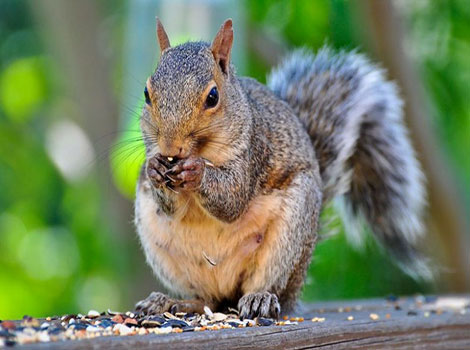
The Squirrel (Grey Squirrel) is a diverse group consisting of approximately 279 species and 51 genera. They are found on every continent except Antarctica and Australia. Squirrels range in body size from mouse-sized African pygmy squirrels to robust red giant flying squirrels of Asia, weighing up to 3 kilograms.
They vary greatly in geographic range and habitat. Squirrels are largely herbivorous, eating seeds, nuts, fruits, fungi, and other plant matter. Average squirrels grow in size from 15 to 20 inches (38 to 51 cm) in length. Their tails add an extra 6 to 9.5 inches (15 to 24 cm) to their length. Typically, they weigh about 1 to 1.5 pounds (450 to 680 grams).
| Attributes | Quick Facts |
|---|---|
| Size | 15 to 20 inches (38 to 51 cm) + tail (6 to 9.5 inches / 15 to 24 cm) |
| Weight | 0.5–1.5 lbs (0.2–0.7 kg), depending on species |
| Lifespan | 5–10 years in the wild |
| Habitat | Found in forests, grasslands, and urban areas worldwide |
| Diet | Omnivorous; primarily eats nuts, seeds, fruits, and occasionally insects |
| Social Structure | Social or solitary, depending on species |
| Conservation | Least Concern |
Fun fact: They can leap 10 times their body length and turn their ankles 180 degrees to face any direction when climbing.
3. Skunk
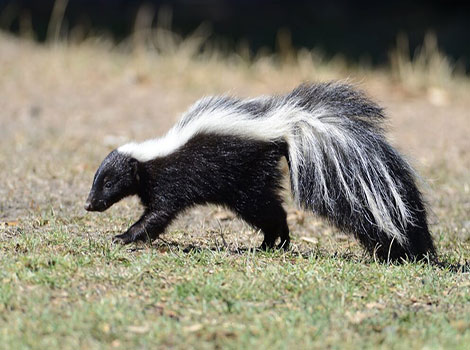
The Skunk (Mephitidae) is a black-and-white mammal, found primarily in the Western Hemisphere, that uses extremely well-developed scent glands to release a noxious odor in defense. The common striped skunk is about 8 to 19 inches in length, with a tail of 5 to 15 inches, and weighs between 7 ounces to 14 pounds. They are known for their bravery and toughness, often protecting farms from pests such as foxes, badgers, and otters.
| Attributes | Quick facts |
|---|---|
| Size | 8–19 inches (body), 5–15 inches (tail) |
| Weight | 4–10 lbs (1.8–4.5 kg) |
| Lifespan | 2–4 years in the wild; up to 10 years in captivity |
| Habitat | Grasslands, forests, and urban areas in North and Central America |
| Diet | Omnivorous; eats insects, small mammals, eggs, fruits, and plants |
| Social Structure | Solitary, except during breeding season |
| Conservation | Least Concern |
Fun fact: They need to “reload” after a single spray, leaving them helpless for nearly 10 days.
4. Smooth Green Snake
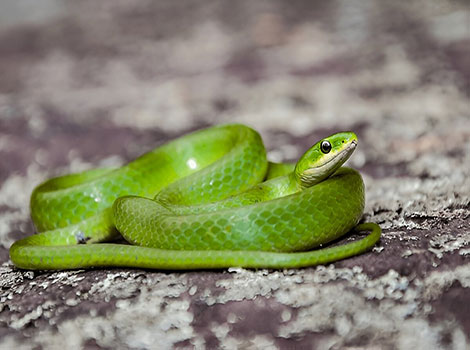
The Smooth Green Snake (Opheodrys vernalis) is a non-venomous snake native to North America. It is known for its vibrant green coloration and smooth scales. The snake is uniformly light green on its back, with a yellow or white belly. It reaches a maximum length of 26 inches.
This snake is generally solitary and tends to be active both day and night during the warmer months. In the colder winter months, they hibernate, often gathering in large numbers in burrows, ant hills, and other dug-out underground areas.
| Attributes | Quick facts |
|---|---|
| Size | Up to 26 inches |
| Weight | 0.5–1.5 oz (14–43 g) |
| Lifespan | 6–8 years in the wild |
| Habitat | Grasslands, forests, and marshes in North America |
| Diet | Insectivorous; eats spiders, crickets, and caterpillars |
| Social Structure | Solitary |
| Conservation | Least Concern |
Fun fact: They are known to hibernate in large groups.
5. Stork
The Stork (Ciconiidae) is a large bird known for its long legs, neck, and bill. The color of their plumage varies by species, and some have a gular pouch or sac on their necks. These birds can grow quite large, with several species reaching heights of up to 5 ft. and weighing up to 20 lbs. Their wingspans range from 8 – 10 ft. across at the largest.
Storks live in a variety of different ecosystems and habitats, many of which rely on aquatic habitats to catch prey, but some forage in dry regions as well. They are commonly associated with wetland environments, such as marshes, swamps, and river deltas.

| Attributes | Quick facts |
|---|---|
| Size | Up to 5 ft. tall |
| Weight | 5.5–14 lbs (2.5–6.5 kg) |
| Lifespan | 20–30 years in the wild |
| Habitat | Wetlands, grasslands, and savannas in Europe, Africa, and Asia |
| Diet | Carnivorous; eats fish, amphibians, and small mammals |
| Social Structure | Social, often forms colonies |
| Conservation | Least Concern |
Fun fact: They can’t sing like other birds.
6. Sand Cat
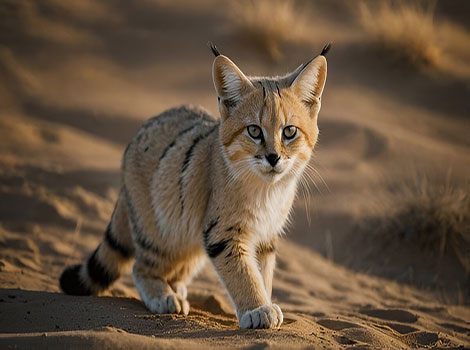
The Sand Cat (Desert Cat) is a small, solitary feline native to deserts in Africa and Asia. They have a broad head, large eyes, and low-set ears. Their body length ranges from 18 to 22.5 inches (45 to 57 centimeters), with the tail adding an extra 11 to 14 inches (28 to 35 centimeters).
Adult sand cats weigh between 3 and 7.5 pounds (1 and 3.5 kilograms). They have a pale sandy to grey-brown coat, slightly darker on the back and paler on the belly, with occasional stripes on the legs. Conditions are extreme in the desert, with temperatures reaching 124º F during the day and 31º F at night. While they don’t socialize with other cats, they will occasionally share burrows.
| Attributes | Quick facts |
|---|---|
| Size | 18–22.5 inches (body), 11–14 inches (tail) |
| Weight | 4.5–7.5 lbs (2–3.5 kg) |
| Lifespan | 10–12 years in the wild; up to 16 years in captivity |
| Habitat | Deserts in North Africa, the Middle East, and Central Asia |
| Diet | Carnivorous; feeds on rodents, birds, and reptiles |
| Social Structure | Solitary |
| Conservation | Least Concern |
Fun fact: They have so much fur on their feet that they don’t leave behind footprints.
7. Scorpions
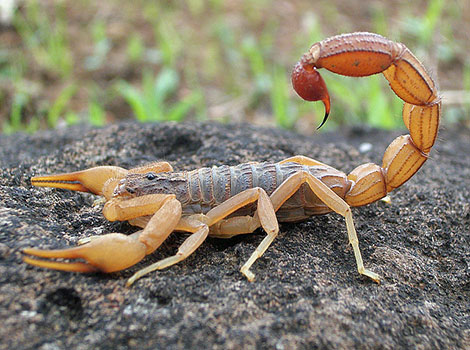
Scorpions (Scorpiones) are a predatory species of arachnid with 8 legs and a long tail with a stinger at the end. Their exoskeletons have fluorescent chemicals that glow in ultraviolet light. They are well distributed worldwide and live on every continent except Antarctica. There are over 2,600 species of scorpions. Most scorpion species are not a serious threat to humans. Scorpions are primarily nocturnal predators, known for their venomous sting used for offense and defense.
| Attributes | Quick facts |
|---|---|
| Size | Varies by species |
| Weight | 0.1–0.2 oz (3–6 g) |
| Lifespan | 4–6 years in the wild |
| Habitat | Found in deserts, grasslands, and forests worldwide |
| Diet | Carnivorous; eats insects and small invertebrates |
| Social Structure | Solitary |
| Conservation | Least Concern |
Fun fact: Scorpions can change the size of their scales when they feel threatened.
8. Swordfish
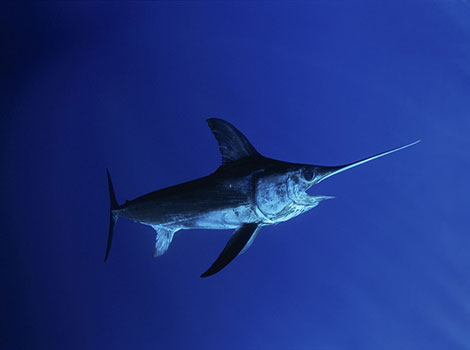
The Swordfish (Xiphias gladius), also known as broadbills in some countries, is a large, highly migratory, predatory fish characterized by a long, flat, pointed bill. They are a popular sport fish in the billfish category, though they are elusive. Swordfish are elongated, round-bodied, and lose all teeth and scales by adulthood.
They commonly reach 10 ft (3 m) in length, with a maximum reported length of 14 ft 11 in (4.55 m) and a maximum weight of 1,430 lb (650 kg). They are found in tropical and temperate waters in the Atlantic, Pacific, and Indian Oceans
| Attributes | Quick facts |
|---|---|
| Size | Up to 14 ft 11 in (4.55 m) |
| Weight | 200–1,400 lbs (90–635 kg) |
| Lifespan | 9–15 years in the wild |
| Habitat | Open oceans worldwide |
| Diet | Carnivorous; feeds on fish and squid |
| Social Structure | Solitary |
| Conservation | Least Concern |
Fun fact: They are known for their incredible swimming ability and are among the fastest fish in existence.
9. Shrimp
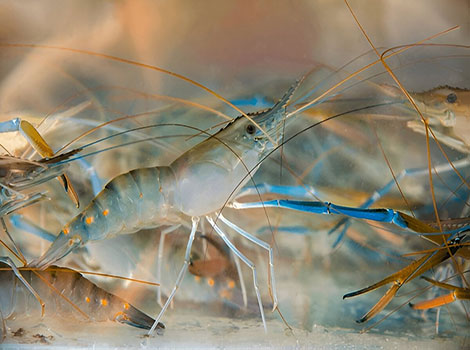
Shrimp (Caridea) are found in all oceans, in both shallow and deep water, and also in freshwater lakes and streams. They have a semitransparent body, flattened from side to side, and a flexible abdomen that terminates in a fanlike tail.
Shrimp range in length from a few millimeters to more than 8 inches (20 cm), with an average length of 1.5 to 3 inches (4 to 8 cm). They feed mostly on small plants and animals, although some shrimp feed on carrion. The female shrimp may lay from 1,500 to 14,000 eggs, which are attached to the swimming legs.
| Attributes | Quick facts |
|---|---|
| Size | 1.5–3 inches (4–8 cm) |
| Weight | 0.07–0.5 oz (2–14 g) |
| Lifespan | 1–6 years |
| Habitat | Oceans, rivers, and estuaries worldwide |
| Diet | Omnivorous; eats algae, plankton, and detritus |
| Social Structure | Forms large groups in some species |
| Conservation | Least Concern |
Fun fact: They swim backward by rapidly flexing the abdomen and tail.
10. Squid
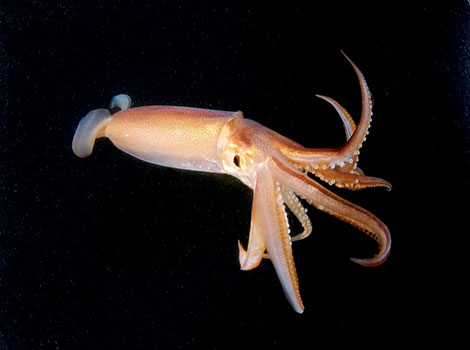
Squid (Giant Squid) are found in every ocean, where they can live alone or in schools. They have elongated tubular bodies and short compact heads. Squid range in size from 0.8 inches to 16 feet long on average. They are swift swimmers and part of the drifting sea life (plankton). Squid have short life spans and usually die soon after mating, at around one year old.
| Attributes | Quick facts |
|---|---|
| Size | 0.8 inches to 16 feet |
| Weight | 0.5 oz–1,100 lbs (14 g–500 kg) |
| Lifespan | 1–2 years |
| Habitat | Oceans worldwide, from shallow waters to deep seas |
| Diet | Carnivorous; eats fish, crustaceans, and other squids |
| Social Structure | Solitary or small groups |
| Conservation | Least Concern |
Fun fact: They are masters of deception, relying on their wiles to survive.
11. Snails
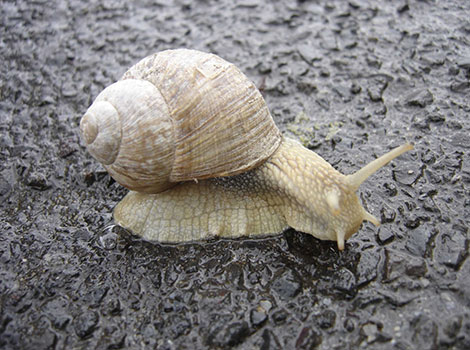
Snails (Gastropoda) are found in diverse habitats worldwide, from deserts to frigid climates. They have a soft body and a hard shell, which can range in size from 0.02-27 in (0.68mm to 70cm). The shell, often brown or yellow, protects the snail’s body and internal organs. Snails are most active at night and during humid weather. They can be either solitary or territorial, depending on the species.
| Attributes | Quick facts |
|---|---|
| Size | 0.02–27 in (0.68 mm–70 cm) |
| Weight | 0.07–0.3 oz (2–8 g) |
| Lifespan | 2–5 years |
| Habitat | Forests, grasslands, and gardens worldwide |
| Diet | Herbivorous; feeds on plants, algae, and detritus |
| Social Structure | Solitary |
| Conservation | Least Concern |
Fun fact: A snail’s mouth may be the size of a pin, but it can have up to 20,000 teeth.
12. Starfish
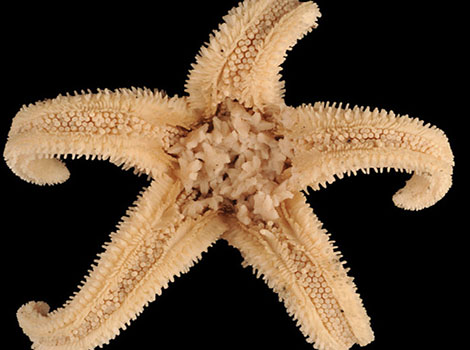
Starfish (Sea Stars) are marine animals with broad fins running the full length of their bodies, giving them a flat, roundish shape. They can be found in all the world’s oceans, from tropical habitats to the cold seafloor. They can reach up to 6.5 feet in length and weigh up to 11 pounds. They feed by attaching to prey and extending their stomach out through their mouth.
| Attributes | Quick facts |
|---|---|
| Size | Up to 6.5 feet |
| Weight | 0.2–11 lbs (0.1–5 kg) |
| Lifespan | 5–35 years in the wild |
| Habitat | Oceans worldwide, primarily on the seafloor |
| Diet | Carnivorous; feeds on mollusks and small invertebrates |
| Social Structure | Solitary |
| Conservation | Least Concern |
Fun fact: They can regenerate limbs, and in some cases, entire bodies.
13. Salmon
Salmon (Atlantic Salmon) are anadromous fish, meaning they live in both fresh and salt water. They are born in freshwater, where they spend a few months to a few years before moving out to the ocean. When it’s time to spawn, they return to freshwater. Their scales are typically silver, and some also have red coloration. Depending on the species, these fish average about 2 feet in length. Salmon can weigh up to 126 pounds.

| Attributes | Quick facts |
|---|---|
| Size | About 2 feet long |
| Weight | 4–100 lbs (2–45 kg) |
| Lifespan | 3–8 years in the wild |
| Habitat | Rivers and oceans in the Northern Hemisphere |
| Diet | Omnivorous; eats insects, plankton, and small fish |
| Social Structure | Solitary except during migration |
| Conservation | Least Concern |
Fun fact: They can smell one drop of scent in an area the equivalent of ten Olympic-sized pools.
14. Sparrow
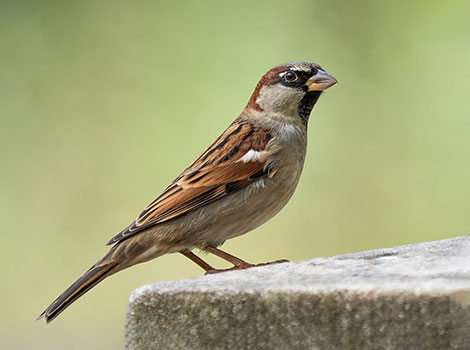
The Sparrow (House Sparrow) is a small bird that has a typical length of about 5.5–6.3 in (14–16 centimeters) in length. They have thick fur with two layers: a soft inner down layer and a sturdy outer feather layer. It is native to most of Europe, the Mediterranean Basin, and a large part of Asia. Sparrows are strongly associated with human habitation and can live in urban or rural settings. They typically avoid extensive woodlands, grasslands, polar regions, and hot, deserts far away from human development.
| Attributes | Quick facts |
|---|---|
| Size | 5.5–6.3 in (14–16 cm) |
| Weight | 0.9–1.4 oz (27–40 g) |
| Lifespan | 3–5 years in the wild |
| Habitat | Urban areas, forests, and grasslands worldwide |
| Diet | Omnivorous; eats seeds, fruits, and insects |
| Social Structure | Social, forms flocks |
| Conservation | Least Concern |
Fun fact: They have an extra bone in their tongues so that it can be used to hold seeds.
15. Swans
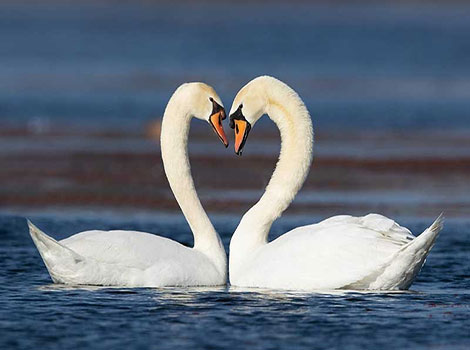
Swans (Cygnus) are the largest members of the Anatidae family. At their largest, their wingspan grows up to 10 ft. across. They also weigh up to 30 lbs at their largest, though most weigh around 15 lbs. Swans are waterfowl and rely very heavily on water bodies in their environment. They live in a variety of environments, including lakes, ponds, slow-moving rivers and streams, wetlands, marshes, and more.
| Attributes | Quick facts |
|---|---|
| Size | Up to 10 ft wingspan |
| Weight | 15–33 lbs (7–15 kg), depending on species |
| Lifespan | 10–20 years in the wild |
| Habitat | Wetlands, rivers, and lakes in temperate regions worldwide |
| Diet | Herbivorous; eats aquatic plants, grasses, and algae |
| Social Structure | Monogamous pairs or family groups |
| Conservation | Least Concern |
Fun fact: Swans are some of the largest flying birds.
16. Sea Snake
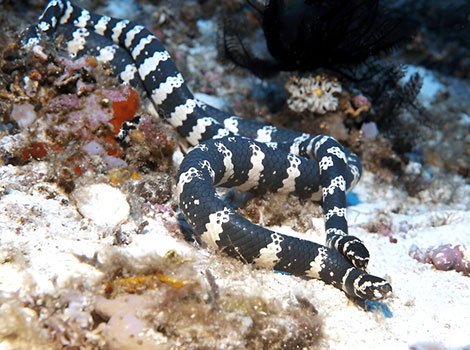
The Sea Snake (Hydrophiinae) primarily inhabits marine environments for most or all of their lives. They are extensively adapted to a fully aquatic life and are unable to move on land. Their bodies are laterally compressed, giving them an eel-like appearance. They have paddle-like tails and small eyes with a round pupil. Adult sea snakes typically grow between 4 and 5 ft (120 and 150 cm) in length. They are venomous and feed mostly on fish eggs.
| Attributes | Quick facts |
|---|---|
| Size | 4–5 ft (120–150 cm) |
| Weight | 1–6 lbs (0.5–2.7 kg), depending on species |
| Lifespan | 5–10 years in the wild |
| Habitat | Warm coastal waters in the Indo-Pacific region |
| Diet | Carnivorous; feeds on fish and eels |
| Social Structure | Solitary |
| Conservation | Least Concern |
Fun fact: They can breathe through their skin.
17. Snow Leopard
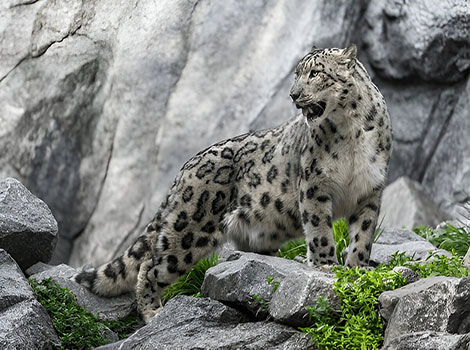
The Snow Leopard (Ounce) is a medium-sized cat native to the mountain ranges of Central Asia. They are usually found between 9842 and 17716 ft (3,000 and 5,400 meters) above sea level. They have large, triangular ears, a golden-yellow to buff coat spotted and striped with black, and a short, black-tipped tail.
Their fur is incredibly thick, up to five inches, to better insulate them in the snow. Snow Leopards are shy, elusive cats known for their solitary nature. They are most active at dawn and dusk, which is called a “crepuscular activity pattern” by scientists.
| Attributes | Quick facts |
|---|---|
| Size | Up to 5 inches thick fur |
| Weight | 55–165 lbs (25–75 kg) |
| Lifespan | 10–12 years in the wild; up to 20 years in captivity |
| Habitat | Mountain ranges in Central and South Asia |
| Diet | Carnivorous; preys on sheep, goats, and small mammals |
| Social Structure | Solitary |
| Conservation | Vulnerable |
Fun fact: They can travel over an incredible 25 miles in a single night.
18. Sloth
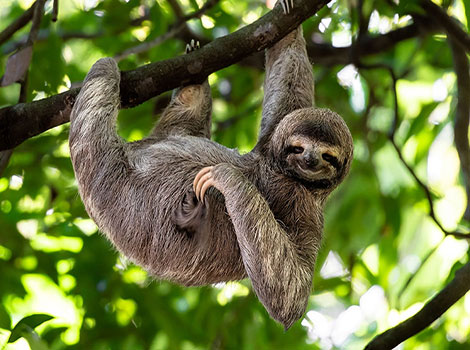
The Sloth (Three-toed Sloth) is a tree-dwelling mammal noted for its slowness of movement. They live in the lowland tropical forests of South and Central America. They have long legs, stumpy tails, and rounded heads with inconspicuous ears.
Although they possess color vision, their eyesight and hearing are not very acute; orientation is mainly by touch. The limbs are adapted for suspending the body rather than supporting it. As a result, sloths are completely helpless on the ground unless there is something to grasp. Generally, sloths do not grow more than 10 ft (3 m) long and rarely weigh more than 200 pounds (90 kg).
| Attributes | Quick facts |
|---|---|
| Size | Up to 3 m (10 ft) in length |
| Weight | 8–17 lbs (3.5–8 kg), depending on species |
| Lifespan | 20–30 years in the wild |
| Habitat | Tropical rainforests in Central and South America |
| Diet | Herbivorous; primarily eats leaves, flowers, and fruits |
| Social Structure | Solitary |
| Conservation | Vulnerable or Endangered |
Fun fact: They are so incredibly sluggish that algae grows on their fur.
19. Salamander
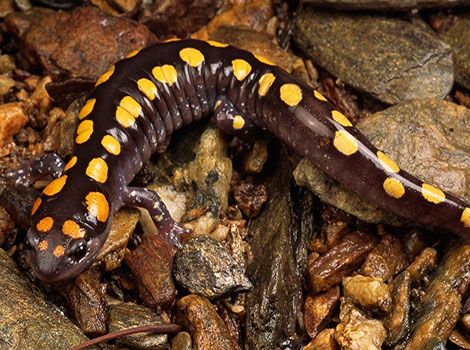
Salamanders (Fire Salamander) are common amphibians found in forests throughout Europe. They have black bodies with yellow spots or stripes of varying sizes; some individuals are almost completely black, while others are predominantly yellow. They often live in mountain streams, hiding in logs or underneath rocks and gravel. Their size varies depending on the species, ranging from 1-9in (2.5 cm to 20 cm). However, Chinese Giant salamanders can grow up to 6 feet (1.8m) in length.
| Attributes | Quick facts |
|---|---|
| Size | 1-9 in (2.5 cm to 20 cm), up to 6 ft (1.8m) for giant species |
| Weight | 0.1–8 oz (3–227 g), depending on species |
| Lifespan | 5–20 years in the wild |
| Habitat | Forests, wetlands, and near freshwater sources across North America, Europe, and Asia |
| Diet | Carnivorous; eats insects, worms, slugs, and small aquatic organisms |
| Social Structure | Solitary except during breeding season |
| Conservation | Critically Endangered |
Fun fact: The earliest Salamander species lived before the dinosaurs.
Now that we’ve explored some of the most popular animals starting with the letter S, let’s dive deeper into a specific category: mammals—warm-blooded creatures that captivate us with their diversity and unique characteristics.
Mammals that start with S
Here is a list of fascinating mammals that start with the letter S, each showcasing unique traits that set them apart in the animal kingdom.
| Saanen Goat | Small Indian Civet | Siberian Ibex |
| Springbok | Snowshoe Hare | Sika Deer |
| Sable Antelope | Spotted Skunk | Southern White Rhinoceros |
| Spotted Hyena | Sun Bear | Siberian Tiger |
| Sumatran Tiger |
20. Saanen Goat
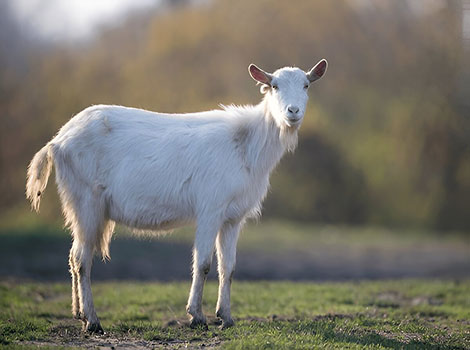
The Saanen Goat (Swiss Saanen Goat) is the largest among all the dairy goat breeds, standing nearly 4 feet tall and weighing over 300 pounds. Originating from the Saanen Valley of Switzerland, they are highly valued for their consistency in producing large amounts of milk. Their white skin and short white coat are distinctive features. Saanen Goats are docile temperament, and adaptable to a wide range of climates.
| Attributes | Quick facts |
|---|---|
| Weight | 121–176 lbs (55–80 kg) |
| Lifespan | 10–15 years |
| Habitat | Domesticated; found in temperate regions worldwide |
| Diet | Herbivorous; consumes grasses, shrubs, and hay |
| Social Structure | Highly social, often living in herds |
| Conservation | Domesticated |
Fun fact: They can produce 3 gallons of milk a day.
21. Small Indian Civet
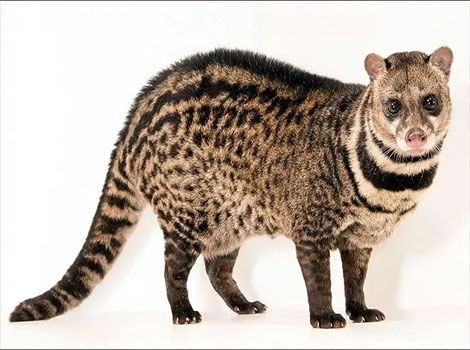
The Small Indian Civet (Malabar Large-spotted Civet) is a civet native to South and Southeast Asia. It has a rather coarse fur that is brownish grey to pale yellowish brown, with usually several longitudinal black or brown bands on the back and longitudinal rows of spots on the sides. They are nocturnal and mostly terrestrial animals.
| Attributes | Quick facts |
|---|---|
| Size | Not specified |
| Weight | 2.2–11 lbs (1–5 kg) |
| Lifespan | 5–12 years |
| Habitat | Forests, grasslands, and urban areas in South and Southeast Asia |
| Diet | Omnivorous; eats fruits, small animals, and insects |
| Social Structure | Solitary and nocturnal |
| Conservation | Least Concern |
Fun fact: They can dig their own burrows, but also occupy abandoned burrows of other species.
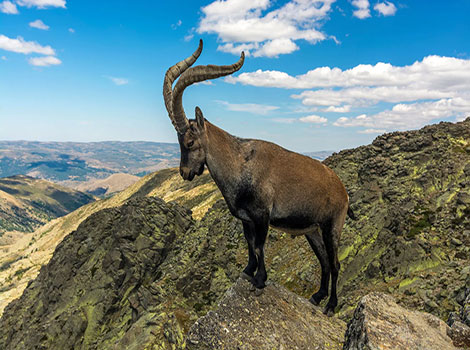
22. Siberian Ibex
The Siberian Ibex (Capra sibirica) is the largest species of goat. They are native to Central Asia. Males can be 4.26 to 5.41 feet long, stand 2.62 to 3.28 inches high at the shoulder, and weigh 176 to 220 pounds. They are known for their straight muzzles and backs. Siberian Ibex, principally a diurnal animal, live at high elevations and often climb up to the vegetation line at 5,000 meters, but they usually seek out lower slopes during the winter.
| Attributes | Quick facts |
|---|---|
| Size | Male: 4.26–5.41 ft long, 2.62–3.28 ft high |
| Weight | 65–250 lbs (30–113 kg) |
| Lifespan | 10–20 years |
| Habitat | Rocky mountains and cliffs of Central Asia |
| Diet | Herbivorous; feeds on grasses, shrubs, and lichens |
| Social Structure | Lives in herds, especially females and young; males are more solitary |
| Conservation | Least Concern |
Fun fact: They typically molt between April and July, developing their paler summer coat.
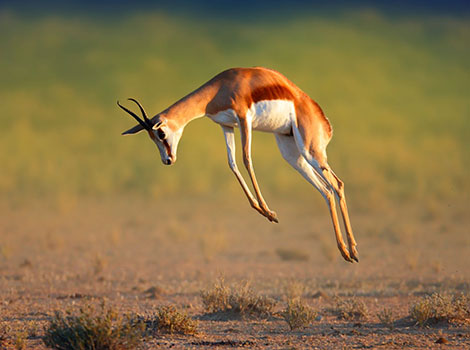
23. Springbok
The Springbok (Antidorcas marsupialis) is a medium-sized antelope that stands about 30-34 inches high and weighs between 60-106 lbs. It has a reddish-brown coat with a pale underside and a dark brown stripe running from each eye to their upper lip. They inhabit the dry areas of south and southwestern Africa, primarily in the Savannah Biome. Springboks are herbivores, feeding on leaves and grasses depending on the season. They are known for their ability to survive without drinking water for years, meeting their requirements through eating succulent vegetation.
| Attributes | Quick facts |
|---|---|
| Size | 30–34 inches high |
| Weight | 66–105 lbs (30–48 kg) |
| Lifespan | 7–10 years in the wild; up to 15 years in captivity |
| Habitat | Grasslands and savannas of southern Africa |
| Diet | Herbivorous; feeds on grasses and shrubs |
| Social Structure | Lives in herds; exhibits high-speed leaps when startled |
| Conservation | Least Concern |
Fun fact: They can reach speeds of up to 55 mph.
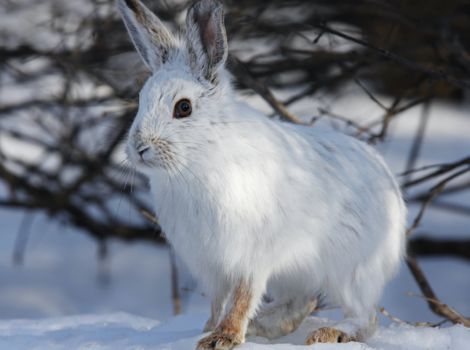
24. Snowshoe Hare
The Snowshoe Hare (Varying Hare) is a secretive forest-dwelling mammal found only in North America. It has large hind feet, hence the name “snowshoe”. Their fur is rusty brown in the spring and summer, and white in the winter. They are about 16 to 20 inches in size and weigh between 2 to 4 pounds. Snowshoe hares are nocturnal, feeding at night on trees and shrubs, grasses, and plants.
| Attributes | Quick facts |
|---|---|
| Size | 16–20 inches |
| Weight | 2–4 lbs (0.9–1.8 kg) |
| Lifespan | 1–5 years in the wild |
| Habitat | Boreal forests and tundra in North America |
| Diet | Herbivorous; eats grasses, leaves, and bark |
| Social Structure | Solitary but can form loose aggregations during mating season |
| Conservation | Least Concern |
Fun fact: They have a snow-white winter coat that turns brown when the snow melts each spring.
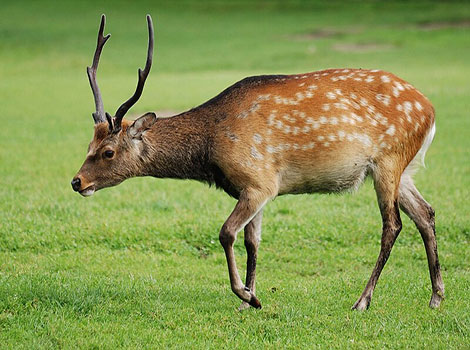
25. Sika Deer
The Sika Deer (Spotted Deer) is a species of deer native to East Asia but can also be found in parts of Europe and North America. Depending on the subspecies, Sika Deer can vary in height from 20 to 43 inches at the shoulder, and 37 to 71 inches in head-and-body length. Their weight varies between subspecies, with the average adult weight being 92 lbs. Sika Deer are herbivores, and their diet consists of a variety of plant material, including grasses, leaves, and bark.
| Attributes | Quick facts |
|---|---|
| Size | 20 to 43 inches at the shoulder |
| Weight | 70–130 lbs (32–59 kg) |
| Lifespan | 15–18 years |
| Habitat | Forests, grasslands, and marshes in East Asia and parts of Europe |
| Diet | Herbivorous; eats grasses, leaves, and twigs |
| Social Structure | Lives in herds with strong seasonal migrations |
| Conservation | Least Concern |
Fun fact: They bounce on all fours like gazelles when they run away.
26. Sable Antelope
The Sable Antelope (Hippotragus niger) inhabits wooded savanna in East and Southern Africa. It has a robust build, a thick neck, and tough skin. Adult males are larger than females, measuring about 46-55 inches in height and weighing around 485-518 lbs. The general coloration is rich chestnut to black. They are important grazers and browsers in their habitats.
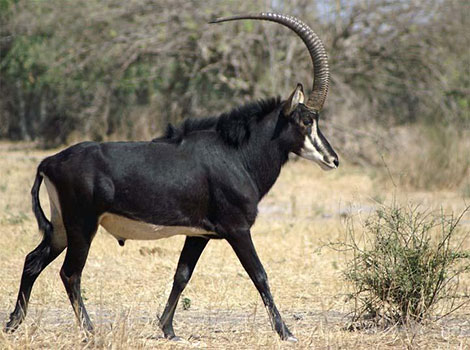
| Attributes | Quick facts |
|---|---|
| Size | 46-55 inches in height |
| Weight | 400–600 lbs (180–270 kg) |
| Lifespan | 16–20 years |
| Habitat | Savannas and woodlands of sub-Saharan Africa |
| Diet | Herbivorous; grazes on grass and leaves |
| Social Structure | Lives in herds with dominant males |
| Conservation | Least Concern |
Fun fact: They are known for their large necks with an upright mane.
27. Spotted Skunk
The Spotted Skunk (Spilogale) are found throughout the western United States, northern Mexico, and southwestern British Columbia. It is a medium-sized, slender mammal with a small head, short legs, and a prominent, long-haired tail. The fur is rather long, soft, and glossy. The overall color is black with conspicuous white stripes and spots. They are largely nocturnal, medium-sized omnivores.
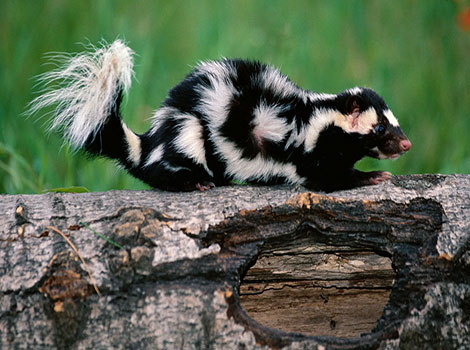
| Attributes | Quick facts |
|---|---|
| Size | Medium-sized, slender body |
| Weight | 1–3 lbs (0.5–1.4 kg) |
| Lifespan | 3–4 years in the wild; up to 10 years in captivity |
| Habitat | Forests, grasslands, and rocky areas of North and Central America |
| Diet | Omnivorous; eats insects, fruits, and small animals |
| Social Structure | Solitary; nocturnal |
| Conservation | Least Concern |
Fun fact: They perform handstands before spraying their enemies.
28. Southern White Rhinoceros
The Southern White Rhinoceros (Ceratotherium simum simum) is one of the largest and heaviest land animals in the world. They are found almost exclusively in southern Africa, from Angola and Namibia eastward through Botswana, Zimbabwe, South Africa, Eswatini, and Mozambique. Females weigh around 3,527–3,748 lbs and males around 4,409–5,071 lbs. The head-and-body length is 11–13 feet with a shoulder height of 5.2–6.1 feet. They have two horns on their snout. Southern White Rhinos are semi-social and territorial. They stay together in herds on the grassy plains and mark their territory with strategically placed deposits of dung.
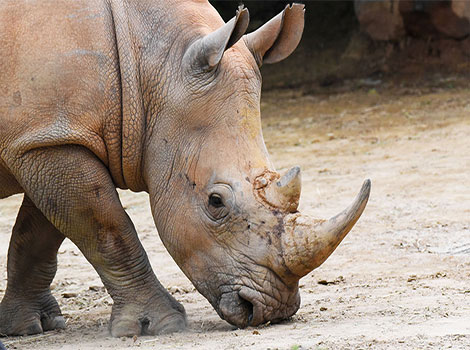
| Attributes | Quick facts |
|---|---|
| Size | 11–13 feet in length; 5.2–6.1 feet shoulder height |
| Weight | 4,000–6,000 lbs (1,800–2,700 kg) |
| Lifespan | 40–50 years |
| Habitat | Grasslands and savannas of southern Africa |
| Diet | Herbivorous; grazes on grasses |
| Social Structure | Social; forms small groups |
| Conservation | Near Threatened |
Fun fact: They can live up to 35 years in the wild and 40 in captivity.
29. Spotted Hyena
The Spotted Hyena (Laughing Hyena) is native to sub-Saharan Africa, inhabiting savannahs, grasslands, and woodlands. It has a sandy, ginger-colored coat with black markings on its body and legs. The body can grow almost 6.5 feet long, with a dark, bushy tail measuring 10-12 inches long. Females, which are heavier than males, can weigh up to 181 lbs. They are social mammals, living in structured groups called clans, with females ranking higher than males.
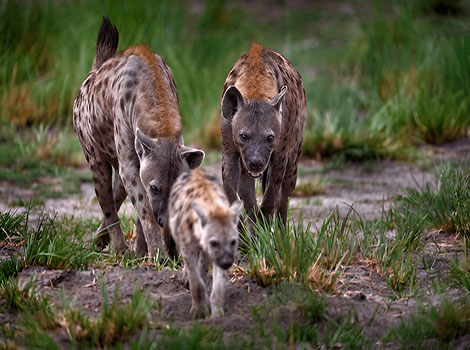
| Attributes | Quick facts |
|---|---|
| Size | Up to 6.5 feet in length |
| Weight | 88–190 lbs (40–86 kg) |
| Lifespan | 12–25 years |
| Habitat | Savannas, grasslands, and woodlands of Africa |
| Diet | Carnivorous; scavenger and predator |
| Social Structure | Highly social; lives in clans led by females |
| Conservation | Least Concern |
Fun fact: They are the most vocal mammals in Africa, with over 11 different sounds recorded.
30. Sun Bear
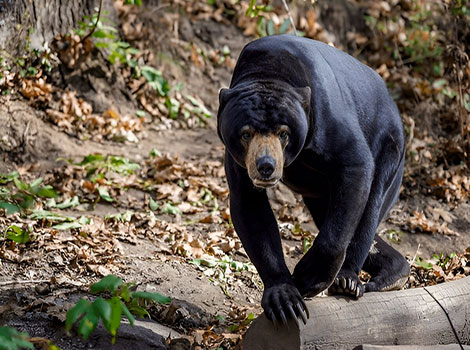
The Sun Bear (Honey Bear) is the smallest member of the bear family, living in the dense lowland forests of Southeast Asia. Males, slightly larger than females, are about 5 feet in length and weigh up to 150 pounds. They have a stocky, muscular build, small ears, and a short muzzle, which has earned them the nickname “dog bear”. They are excellent climbers and have been observed making sleeping platforms high above the ground out of branches and leaves. They are omnivorous, feeding on fruits, berries, roots, insects, small birds, lizards, and rodents.
| Attributes | Quick facts |
|---|---|
| Weight | 55–143 lbs (25–65 kg) |
| Lifespan | 20–25 years in the wild |
| Habitat | Tropical forests of Southeast Asia |
| Diet | Omnivorous; eats fruits, insects, and small mammals |
| Social Structure | Solitary except during mating season |
| Conservation | Vulnerable |
Fun fact: They have a long tongue for extracting honey from bee nests, giving them their other nickname, “honey bear”.
31. Siberian Tiger
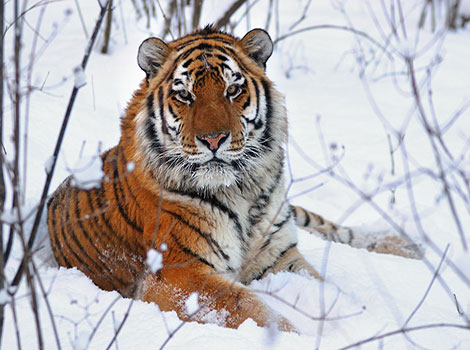
The Siberian Tiger (Amur Tiger) is the largest subspecies of tiger originating from the Korean Peninsula, the north-eastern parts of China, and eastern Siberia. Siberian Tigers have a shoulder height between 30”-42” (75-107 cm), body length of 5’7”-6’10” (170-208 cm), and weight in the range of 260-700 lb (118-318 kg). The tail of a Siberian Tiger is 35”-40” (89-102 cm) in length.
| Attributes | Quick facts |
|---|---|
| Weight | 200–600 lbs (90–272 kg) |
| Lifespan | 10–15 years in the wild |
| Habitat | Forests of Siberia and the Russian Far East |
| Diet | Carnivorous; hunts large prey like deer and boar |
| Social Structure | Solitary |
| Conservation | Endangered |
Fun fact: A hungry tiger can eat as much as 60 pounds in 1 night.
32. Sumatran Tiger
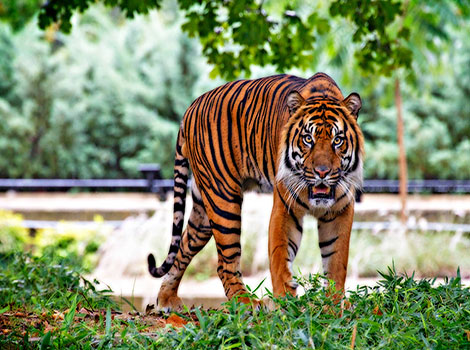
The Sumatran Tiger (Sunda Island Tiger) is a native species of the Indonesian island of Sumatra. It thrives in the dense tropical rainforests, from lowland forests to mountainous terrains. This species is the smallest among tigers, with weight of about 260 pounds. Its fur is a darker shade of orange with closely spaced camouflage black stripes, providing excellent in its habitat. It’s an ambush predator, hunting at night and preying on a variety of animals.
| Attributes | Quick facts |
|---|---|
| Size | Smallest among tigers |
| Weight | 220–310 lbs (100–140 kg) |
| Lifespan | 10–15 years |
| Habitat | Tropical rainforests, swamps, and lowland forests of Sumatra |
| Diet | Carnivorous; preys on deer, wild boar, and small mammals |
| Social Structure | Solitary; establishes large territories |
| Conservation | Critically Endangered |
Fun fact: They can cover distances up to 18 miles in search of food.
Reptiles that start with S
Explore a variety of reptiles that start with the letter S, from powerful predators to intriguing species, each offering a glimpse into the diverse world of these cold-blooded creatures.
33. Spider-Tailed Horned Viper
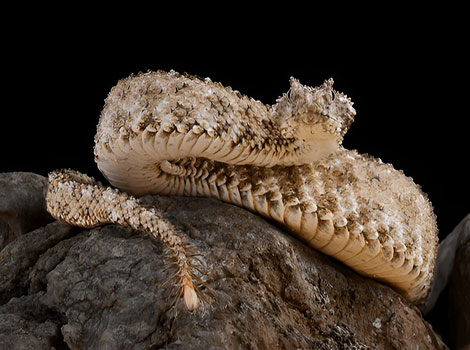
The Spider-Tailed Horned Viper (Pseudocerastes urarachnoides) is a venomous snake endemic to western Iran and over the border region with Iraq. It has a unique tail with a bulb-like end that is bordered by long drooping scales that give it the appearance of a spider. The tail tip is waved around and used to lure insectivorous birds to within striking range.
| Attributes | Quick facts |
|---|---|
| Size | Up to 1.5 lbs (0.7 kg) |
| Weight | Up to 1.5 lbs (0.7 kg) |
| Lifespan | 10–20 years |
| Habitat | Rocky regions of western Iran |
| Diet | Carnivorous; primarily feeds on birds and lizards |
| Social Structure | Solitary |
| Conservation | Data Deficient |
Fun fact: They like to hide in crevices on the sides of cliffs, waiting for prey.
34. Spotted Python
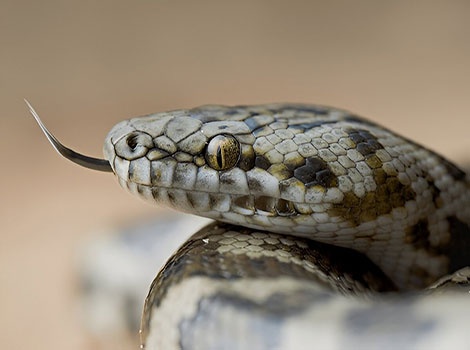
The Spotted Python (Antaresia maculosa) is a python species found in northern Australia and New Guinea. Adults average about 39–55 in (100–140 centimetres) in length, though a record exists of a 69 in (180 cm) specimen. It has an irregular, blotched color pattern throughout its life. The blotches have ragged edges because the dark pigmentation occurs only on complete scales. They are primarily nocturnal, and are semi-arboreal with younger animals preferring to utilize elevated hiding spots more than adults. They inhabit various habitats, including forest edges, oak woodlands, chaparral, shrubland, meadows, and pastures.
| Attributes | Quick facts |
|---|---|
| Size | 39–55 inches (100–140 cm) |
| Weight | 2.2–11 lbs (1–5 kg) |
| Lifespan | 20–30 years |
| Habitat | Grasslands, woodlands, and rocky outcrops in Australia |
| Diet | Carnivorous; eats small mammals, birds, and reptiles |
| Social Structure | Solitary |
| Conservation | Least Concern |
Fun fact: They hang from cave entrances to catch bats as they fly by.
35. Spiny bush viper
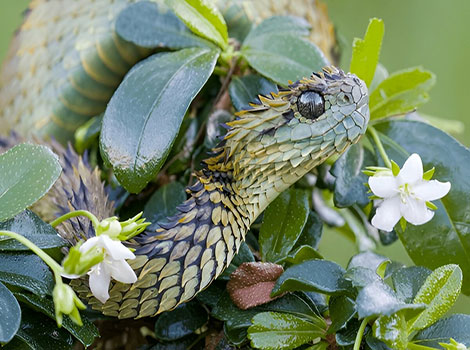
The Spiny bush viper (Atheris hispida) is a venomous snake native to Central Africa. It is known for its extremely keeled dorsal scales that give it a bristly appearance. The scales around the head and neck are the longest, decreasing posteriorly. Spiny bush vipers vary in color and can be green, olive green, bluish, or brownish with a yellow or pale olive belly. Their length is 22.8 to 28.7 inches. The males of this species are surprisingly long and slender compared to the females. They are nocturnal creatures that spend the daytime basking on top of flowering bushy plants. They are also capable of climbing reeds and stalks and hanging upside down from tree branches.
| Attributes | Quick facts |
|---|---|
| Size | 22.8–28.7 inches |
| Weight | 0.2–0.3 lbs (100–150 g) |
| Lifespan | 10–15 years |
| Habitat | Tropical rainforests in central Africa |
| Diet | Carnivorous; eats small mammals and birds |
| Social Structure | Solitary |
| Conservation | Least Concern |
Fun fact: They have excellent senses of smell, eyesight, and vibration that they use to avoid predators and find food.
36. Spectacled Caiman
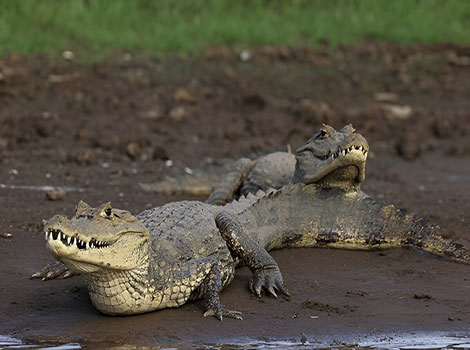
The Spectacled Caiman (Common Caiman) is a crocodilian reptile found in much of Central and South America. It has a large, upward-facing mouth in a large head, with eyes on top of its head. It usually buries itself in sand and leaps upwards to ambush prey.
Learn more: Caiman: Fierce Aquatic Reptile, Facts, Habitat & Conservation
| Attributes | Quick facts |
|---|---|
| Size | Varies |
| Weight | 13–88 lbs (6–40 kg) |
| Lifespan | 30–40 years |
| Habitat | Freshwater rivers, lakes, and marshes in Central and South America |
| Diet | Carnivorous; eats fish, insects, and small mammals |
| Social Structure | Solitary but gathers in groups during droughts |
| Conservation | Least Concern |
Fun fact: It uses an electric shock to stun its prey.
37. Stinkpot Turtle
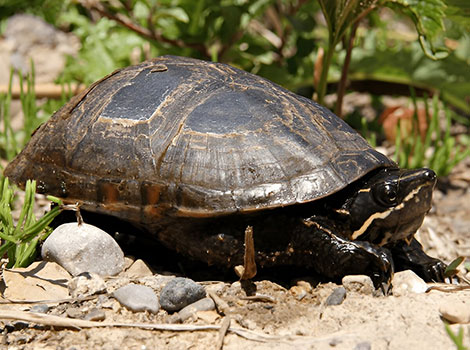
The Stinkpot Turtle (Common Musk Turtle) is a small aquatic species native to southeastern Canada and much of the Eastern United States. They inhabit slow-moving waters with smooth bottoms, such as ponds, lakes, rivers, and swamps. Their shell, which is highly domed in young turtles and flattens out as they age, is dark and measures about 3-5 inches long.
They have a pair of bright stripes running beneath their eyes. These turtles are not strong swimmers and prefer shallow waters. They are primarily active at night. If threatened, they can emit a strong, repellent, foul-smelling odor from their scent glands.
| Attributes | Quick facts |
|---|---|
| Size | 3-5 inches long |
| Weight | 1–2 lbs (0.45–0.9 kg) |
| Lifespan | 20–50 years |
| Habitat | Freshwater ponds, rivers, and marshes in North America |
| Diet | Omnivorous; eats aquatic vegetation, insects, and fish |
| Social Structure | Solitary |
| Conservation | Least Concern |
Fun fact: Despite being aquatic, they sometimes climb trees up to 6 feet high.
38. Skink Lizard
The Skink Lizard (Scincidae) is one of the most diverse families of lizards. Most skinks have tiny limbs or no limbs at all while other lizards have larger limbs. Smaller species are usually 3 inches long, while large species can reach up to 14 inches in length. They are found in different habitats except arctic and subarctic regions. Skink Lizards are known for their terrestrial lifestyle, often preferring to live on the ground or burrow underground, although some species are arboreal or aquatic.
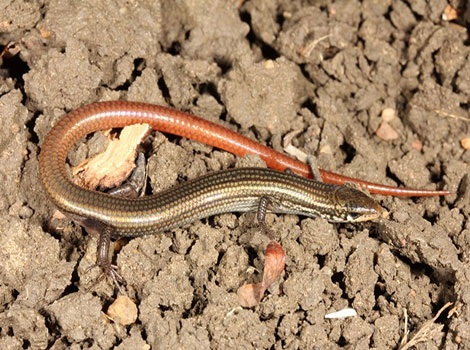
| Attributes | Quick facts |
|---|---|
| Size | 3–14 inches |
| Weight | 0.03–1.3 lbs (15–600 g) |
| Lifespan | 5–20 years |
| Habitat | Forests, grasslands, and deserts worldwide |
| Diet | Omnivorous; eats insects, fruits, and small vertebrates |
| Social Structure | Solitary |
| Conservation | Least Concern |
Fun fact: They can shed and regrow their tails to distract predators
39. Scarlet Kingsnake
The Scarlet Kingsnake (Lampropeltis elapsoides) is a species of kingsnake found in the southeastern and eastern portions of the United States. Like all kingsnakes, they are nonvenomous. They are found in pine flatwoods, hydric hammocks, pine savannas, mesic pine-oak forests, prairies, cultivated fields, and a variety of suburban habitats. Scarlet Kingsnakes are characterized by their tricolored pattern of black, red, and white bands, and they lead a secretive, fossorial lifestyle, often hiding underneath the loose bark on rotting pines and in decaying wood
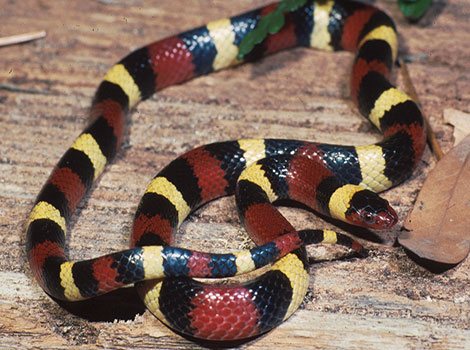
| Attributes | Quick facts |
|---|---|
| Size | Up to 2 lbs (0.9 kg) |
| Weight | Up to 2 lbs (0.9 kg) |
| Lifespan | 15–20 years |
| Habitat | Forests, grasslands, and wetlands in the southeastern United States |
| Diet | Carnivorous; eats other snakes, lizards, and small mammals |
| Social Structure | Solitary |
| Conservation | Least Concern |
Fun fact: Its colors mimic those of the coral snake, which is venomous.
40. Savannah Monitor
The Savannah Monitor (Varanus exanthematicus) is a medium-sized species of monitor lizard native to Africa. A full-grown Savannah Monitor can reach a maximum length of 3.5-5.0 ft (105-155 cm) and weigh between 11 to 13 lbs. They are primarily ground-dwelling creatures that shelter in burrows.
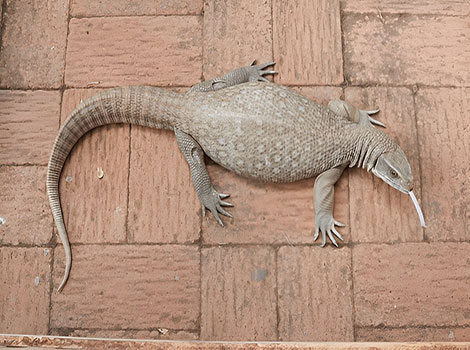
| Attributes | Quick facts |
|---|---|
| Size | 3.5-5.0 ft (105-155 cm) |
| Weight | 6–13 lbs (2.7–6 kg) |
| Lifespan | 10–20 years |
| Habitat | Grasslands and savannahs in Africa |
| Diet | Carnivorous; eats insects, small mammals, and eggs |
| Social Structure | Solitary |
| Conservation | Least Concern |
Fun fact: They are very good climbers and excellent diggers.
41. Smooth-fronted Caiman
The Smooth-fronted Caiman (Paleosuchus trigonatus) is a crocodilian native to the Amazon and Orinoco Basins in South America. This creature, one of the smallest species of the Alligatoridae family, has a robust build and is strong for its size. It has a dark greyish-brown color with mid-brown eyes. The head, lacking the ridge between the eyes seen in other caiman species, is similar to that of the spectacled caiman. The scutes on the back of the neck and tail are large, triangular, and sharp. This caiman is primarily nocturnal and terrestrial. It spends most of its time on land, often hiding in underwater burrows during the day. At night, it comes out to patrol its territories and feed.
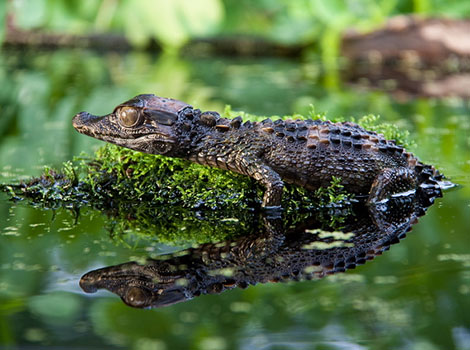
| Attributes | Quick facts |
|---|---|
| Size | Varies |
| Weight | 26–62 lbs (12–28 kg) |
| Lifespan | 25–40 years |
| Habitat | Freshwater rivers and marshes in South America |
| Diet | Carnivorous; eats fish, amphibians, and small mammals |
| Social Structure | Solitary |
| Conservation | Least Concern |
Fun fact: They can swallow their prey whole thanks to their strong stomach acid and small stones in their stomachs.
42. Spiny Softshell Turtle
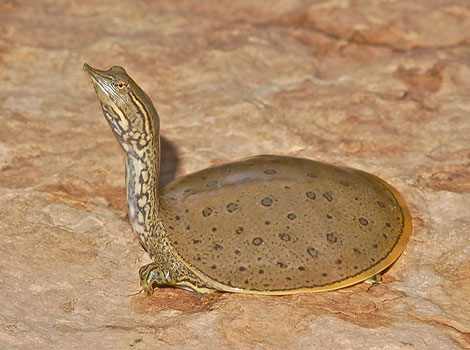
The Spiny Softshell Turtle (Apalone spinifera) is a species of turtle known for its soft, flat, and flexible leathery shell. Adult females can measure 7 to 19 inches (18 to 48 centimeters) in length, while males are smaller, measuring 5 to 10 inches (13 to 25 centimeters). This species is native to North America and is found in rivers, ponds, streams, and lakes with sandy or muddy bottoms and relatively little vegetation. The Spiny Softshell Turtle is a carnivorous species that spends most of its life in the water.
| Attributes | Quick facts |
|---|---|
| Size | 5–19 inches |
| Weight | 5–25 lbs (2.3–11.3 kg) |
| Lifespan | 20–50 years |
| Habitat | Rivers, lakes, and wetlands in North America |
| Diet | Omnivorous; eats insects, fish, and aquatic vegetation |
| Social Structure | Solitary |
| Conservation | Least Concern |
Fun fact: They are known to be excellent swimmers due to their webbed feet.
43. Saltwater Crocodile
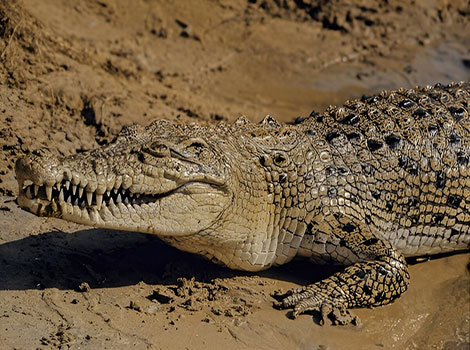
The Saltwater Crocodile (Crocodylus porosus) is a formidable creature that inhabits a variety of aquatic environments, from the brackish wetlands of India’s east coast to Southeast Asia and northern Australia. It has a broad body and a large triangular head, with teeth that can reach up to 3.5 inches. This species is known for its solitary nature and excellent swimming abilities. They are nocturnal hunters, spending their days moving through water or basking in the sun. Their hunting strategy involves stealth and ambush, and they use their immense jaw strength to overpower their prey.
| Attributes | Quick facts |
|---|---|
| Size | Males: 900–2,200 lbs (408–1,000 kg); Females: 300–700 lbs (136–318 kg) |
| Weight | Males: 900–2,200 lbs (408–1,000 kg); Females: 300–700 lbs (136–318 kg) |
| Lifespan | 70–100 years |
| Habitat | Estuaries, rivers, and coastal waters in Southeast Asia and Australia |
| Diet | Carnivorous; eats fish, birds, and mammals |
| Social Structure | Solitary |
| Conservation | Least Concern |
Fun fact: They can stay submerged for over an hour.
44. Spectacled Cobra
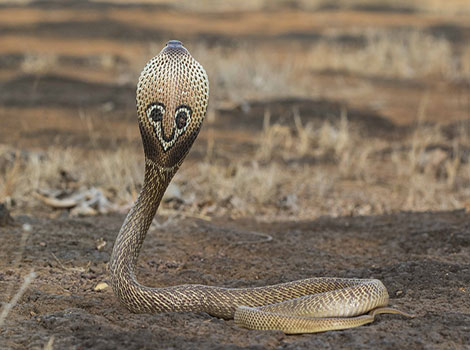
The Spectacled Cobra (Indian Cobra) is a venomous snake native to the Indian subcontinent, including India, Nepal, Bangladesh, Sri Lanka, and Pakistan. It is characterized by distinctive spectacle-like markings on its hood. This medium-sized snake can reach lengths of up to 6 feet or even longer in some cases. The Spectacled Cobra is mainly active during the day and often basks in the sun to regulate its body temperature. When threatened, they raise their hoods, spread their neck ribs, hiss loudly, and make aggressive movements to intimidate their opponent.
| Attributes | Quick facts |
|---|---|
| Size | Up to 6 feet |
| Weight | 2.2–6.6 lbs (1–3 kg) |
| Lifespan | 20–25 years |
| Habitat | Forests, grasslands, and urban areas in South Asia |
| Diet | Carnivorous; eats rodents, birds, and frogs |
| Social Structure | Solitary |
| Conservation | Least Concern |
Fun fact: They are one of the most venomous snakes in the world, with venom that is primarily neurotoxic, affecting the victim’s nervous system.
45. Snapping Turtle
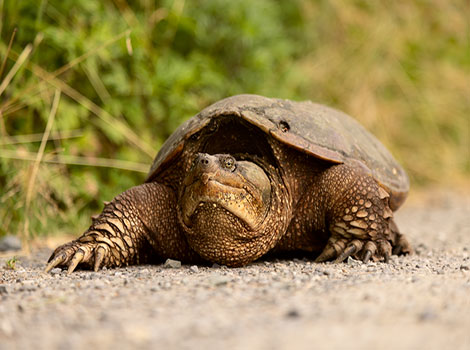
The Snapping Turtle (Chelydra serpentina) is a large freshwater turtle known for its combative disposition when out of the water. It has a rugged, muscular build with a ridged carapace (upper shell), although ridges tend to be more pronounced in younger individuals. The Snapping Turtle is found in freshwater habitats throughout Central America. Snapping Turtles are known for their ambush-predator behavior, spending long periods standing still and then making short bursts to capture prey.
| Attributes | Quick facts |
|---|---|
| Size | Varies |
| Weight | 10–35 lbs (4.5–16 kg) |
| Lifespan | 30–50 years |
| Habitat | Freshwater rivers, lakes, and swamps in North America |
| Diet | Omnivorous; eats fish, plants, and small mammals |
| Social Structure | Solitary |
| Conservation | Least Concern |
Fun fact: They can live for a very long time, with some individuals living up to 100 years.
46. Sharp-Tailed Snake
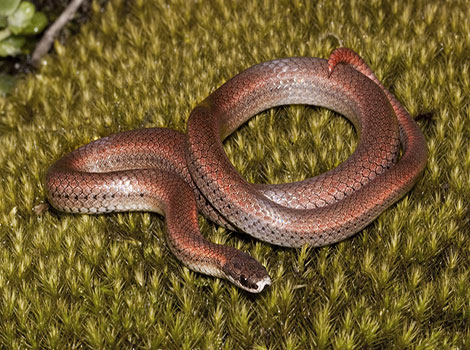
The Sharp-Tailed Snake (Contia tenuis) is a small nonvenomous snake in the family Colubridae. It has an average total length (including tail) of 12 to 18 inches as an adult. It is distinguished by its sharp tail spine, which is the protruding tip of the last tail vertebra. The spine is not toxic and cannot injure humans. Rather, the tail is used to stabilize small prey, such as slugs, for consumption. The dorsal surface ranges in color from grayish brown to brown to brick red, with bubble-gum pink and peachy-orange specimens occasionally found. The ventral surface is a striking series of black and white crossbars. They are shy, secretive creatures that often hide under rocks and logs, and are rarely found in the open.
| Attributes | Quick facts |
|---|---|
| Size | 12 to 18 inches |
| Weight | 0.1–0.3 oz (3–9 g) |
| Lifespan | 10–15 years |
| Habitat | Forests and rocky areas in western North America |
| Diet | Carnivorous; eats slugs and insects |
| Social Structure | Solitary |
| Conservation | Least Concern |
Fun fact: They use their sharp tail to steady themselves when capturing prey.
47. Slow Worm
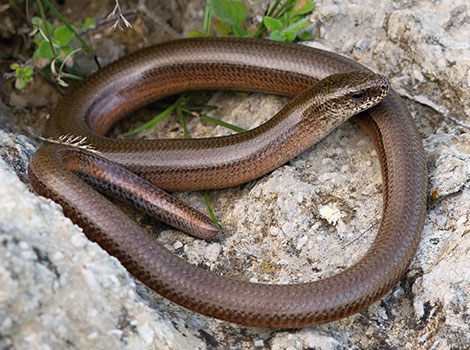
The Slow Worm (Anguis fragilis) is a legless lizard found in Europe and western Asia. They measure 11.8 to 19.7 inches in length and weigh between 0.7 to 3.5 oz. Their body is covered with smooth scales which assist them with burrowing. They are often confused for snakes but can be distinguished due to their moveable eyelid. They are carnivores, feeding on invertebrates.
| Attributes | Quick facts |
|---|---|
| Size | 11.8 to 19.7 inches |
| Weight | 0.1–0.5 lbs (50–200 g) |
| Lifespan | 20–30 years |
| Habitat | Grasslands, forests, and gardens in Europe and western Asia |
| Diet | Carnivorous; eats slugs, insects, and spiders |
| Social Structure | Solitary |
| Conservation | Least Concern |
Fun fact: They can eat up to 20 slugs in just about 20 minutes.
48. Speckled Kingsnake
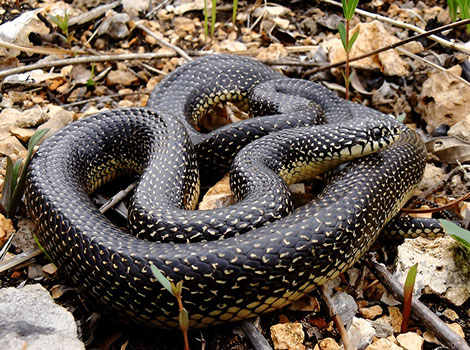
The Speckled Kingsnake (Lampropeltis holbrooki) is found in the United States, from southern Iowa to the Gulf of Mexico. They inhabit wet habitats, like swamps and rivers, but they do commonly venture to dry areas like woodlands and grassy fields. The Speckled kingsnake usually grows up to 48 in (120 cm) in total length (including tail), but the record total length is 72 in (180 cm).
| Attributes | Quick facts |
|---|---|
| Size | Up to 48 inches (120 cm) |
| Weight | 2–4 lbs (1–2 kg) |
| Lifespan | 20–25 years |
| Habitat | Grasslands, woodlands, and wetlands in North America |
| Diet | Carnivorous; eats snakes, lizards, and small mammals |
| Social Structure | Solitary |
| Conservation | Least Concern |
Fun fact: They use constriction to kill their prey.
49. Southern Pacific Rattlesnake
The Southern Pacific Rattlesnake (Crotalus helleri) is found in the United States in southern California, and Mexico in northern Baja California, west of the desert. They inhabit mountain forests, rocky areas, hillsides, canyons, chaparral, shrubby coastal dunes, grasslands, and agricultural areas. Their length is 24 to 54.7 inches. The color pattern of this snake consists of a pale brown, gray-brown, or yellowish brown ground color overlaid with a series of large, dark brown dorsal blotches.

| Attributes | Quick facts |
|---|---|
| Size | 24 to 54.7 inches |
| Weight | 1–4 lbs (0.5–1.8 kg) |
| Lifespan | 10–20 years |
| Habitat | Grasslands, woodlands, and deserts in southwestern USA |
| Diet | Carnivorous; eats rodents, birds, and lizards |
| Social Structure | Solitary |
| Conservation | Least Concern |
Fun fact: They hunt by night using their heat-sensing organs to locate prey.
50. Sand Viper
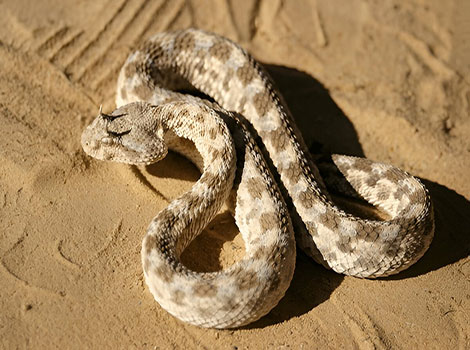
The Sand Viper (Cerastes vipera) is a venomous snake found in the deserts of North Africa and the Sinai Peninsula. They have stout bodies, broad triangular heads, with eyes with elliptical pupils and a pair of small horns above each eye. It has a tan skin type with scales and measures between 7.9 to 19.7 inches in length. The Sand Viper is a solitary creature, primarily preying on lizards, geckos, and small mammals. It’s known for its ability to burrow into the sand and strike directly from its hiding place.
| Attributes | Quick facts |
|---|---|
| Size | 7.9 to 19.7 inches |
| Weight | 0.3–0.5 lbs (150–230 g) |
| Lifespan | 10–20 years |
| Habitat | Rocky and sandy regions in southern Europe and the Middle East |
| Diet | Carnivorous; eats small mammals, birds, and reptiles |
| Social Structure | Solitary |
| Conservation | Least Concern |
Fun fact: They are known to employ active hunting methods leading up to periods of brumation.
51. Satanic Leaf-Tailed Gecko
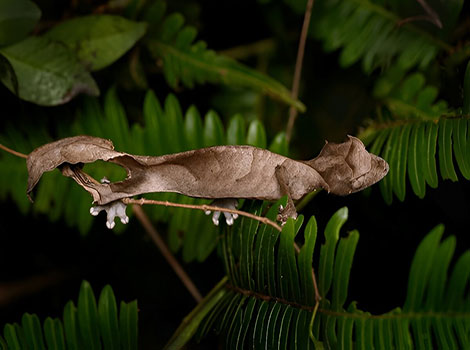
The Satanic Leaf-Tailed Gecko (Uroplatus phantasticus) is native to Madagascar. It is the smallest in body of the Uroplatus geckos, measuring up to 3.5 inches in length and weighing between 0.4 to 1 oz. It has a leaf-like tail and an eyelash-like projection above each eye. These adaptations help the gecko blend into its surroundings and hunt for prey by providing camouflage.
| Attributes | Quick facts |
|---|---|
| Size | Up to 3.5 inches |
| Weight | 0.07–0.14 oz (2–4 g) |
| Lifespan | 5–10 years |
| Habitat | Rainforests in Madagascar |
| Diet | Insectivorous; eats moths and crickets |
| Social Structure | Solitary |
| Conservation | Near Threatened |
Fun fact: They can shed their tail to trick predators.
52. Sulcata Tortoise
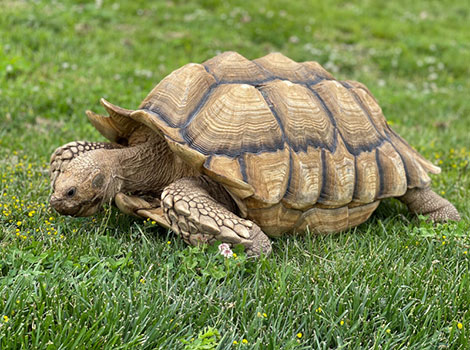
The Sulcata Tortoise (African Spurred Tortoise) is the largest mainland species of tortoise in Africa. They inhabit deserts and semiarid regions in northern Africa. They can be up to 32.7 inches long and weigh up to 231 lbs. Their shells are large and domed, and their skin is thick and leathery. The Sulcata Tortoise is known for its burrowing behavior, often creating burrows up to 10 feet long.
| Attributes | Quick facts |
|---|---|
| Size | Up to 32.7 inches |
| Weight | 70–110 lbs (32–50 kg) |
| Lifespan | 50–70 years |
| Habitat | Arid and semi-arid regions of Africa |
| Diet | Herbivorous; eats grasses, leaves, and cacti |
| Social Structure | Solitary |
| Conservation | Vulnerable |
Fun fact: They can drink up to 15 percent of their body weight when they find a water source.
53. Sea Turtle
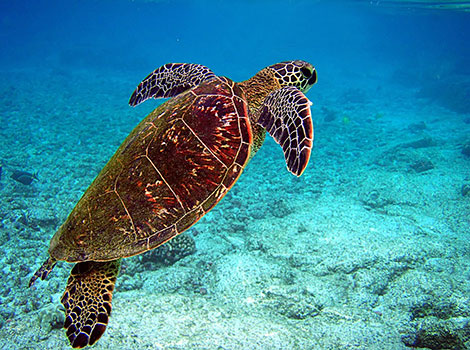
The Sea Turtle (Cheloniidae) is a marine reptile that lives in almost every ocean basin worldwide, nesting on tropical and subtropical beaches. They migrate long distances to feed, often crossing entire oceans. Sea turtles have a hard shell called a carapace, flipper-like limbs, and a streamlined body shape.
| Attributes | Quick facts |
|---|---|
| Size | Varies by species |
| Weight | 80–1,500 lbs (36–680 kg) depending on species |
| Lifespan | 50–100 years |
| Habitat | Oceans worldwide, primarily in tropical and subtropical waters |
| Diet | Omnivorous; varies by species (jellyfish, seagrass, algae) |
| Social Structure | Solitary |
| Conservation | Critically Endangered |
Fun fact: They can stay underwater for long periods of time.
After exploring the fascinating reptiles that start with S, let’s dive into the aquatic world and discover some intriguing fish species that also begin with this letter.
Fish that start with S
Let’s dive into the underwater world and explore the fascinating fish species that start with the letter S.
54. Sailfish
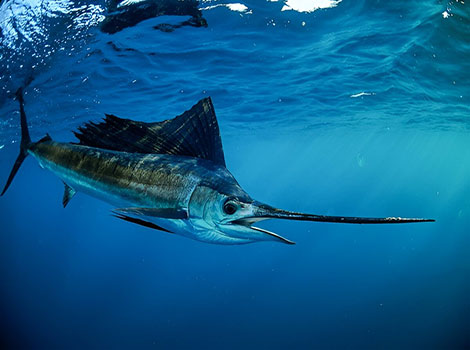
The Sailfish (Atlantic Sailfish) widely distributed in the world’s oceans, including the Atlantic, Pacific, Indian Oceans and Mediterranean. They are often found in offshore waters, far from continents and archipelagos. They are predominantly blue to gray and have a characteristically large dorsal fin known as the sail, which often stretches the entire length of the back. Another notable characteristic is the elongated rostrum (bill) consistent with that of other marlins and swordfish. Sailfish live in colder pelagic waters of all Earth’s oceans and hold the record for the highest speed of any marine animal. Generally, sailfish do not grow to more than 11 ft in length and rarely weigh 220 lbs.
| Attributes | Quick facts |
|---|---|
| Size | Up to 11 feet |
| Weight | 120–220 lbs (54–100 kg) |
| Lifespan | 4–5 years |
| Habitat | Warm and temperate waters of the Atlantic and Indo-Pacific Oceans |
| Diet | Carnivorous; primarily feeds on squid and small fish |
| Social Structure | Solitary or small groups |
| Conservation | Least Concern |
Fun fact: Sailfish are one of the fastest fish in the sea, swimming over 60 MPH.
55. Stingrays
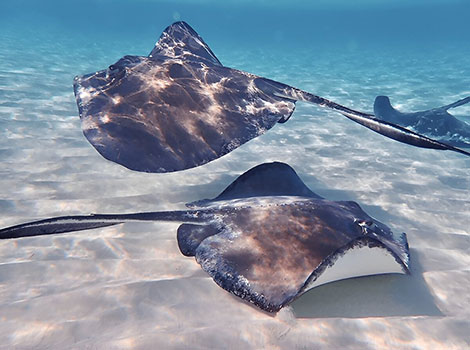
Stingrays, members of the order Myliobatiformes, include various species, many of which belong to the family Dasyatidae. They vary greatly in size, with weights ranging from 10–800 lbs (4.5–363 kg) and widths spanning 1–6.5 feet (0.3–2 m) or more for species like the Giant Freshwater Stingray. Found in coastal waters, oceans, and freshwater rivers worldwide, they thrive in tropical, subtropical, and temperate climates. Some species migrate seasonally in search of food or breeding grounds.
Stingrays are solitary and carnivorous, preying on crustaceans, mollusks, and small fish. Using their flat bodies, they ambush prey or dig into sand to uncover food. Females give birth to 2–6 live young that are fully independent at birth, with no parental care.
| Attributes | Quick facts |
|---|---|
| Size | 1–6.5 feet (0.3–2 m), varies by species |
| Weight | 10–800 lbs (4.5–363 kg), depending on species |
| Lifespan | 15–25 years |
| Habitat | Coastal and open waters, as well as freshwater rivers worldwide |
| Diet | Carnivorous; eats crustaceans, mollusks, and small fish |
| Social Structure | Solitary |
| Conservation | Least Concern |
Fun fact: They swim by undulating their bodies like a wave.
56. Salmon Shark
The Salmon Shark (Pacific Salmon Shark) is a species that resides in the northern Pacific Ocean, particularly near Japan. They have a grey-black skin coloring with dark blotches and a white underside. Salmon Sharks have a total length between 6.5’-10’ (2-3 m) and overall weight in the range of 485-1000 lb (220-454 kg). They are known for their speed and agility in the water.

| Attributes | Quick facts |
|---|---|
| Size | 6.5’–10’ (2–3 meters) |
| Weight | 200–485 lbs (91–220 kg) |
| Lifespan | 20–30 years |
| Habitat | Cold waters of the North Pacific Ocean |
| Diet | Carnivorous; eats salmon, squid, and other fish |
| Social Structure | Solitary |
| Conservation | Least Concern |
Fun fact: They can maintain a body temperature higher than the surrounding water, which is unusual for sharks.
57. Scorpion Fish
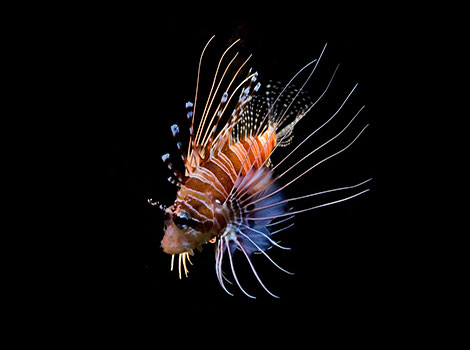
The Scorpion Fish (Scorpaenidae) is a large family of fishes that are venomous and can sting predators to defend themselves. They usually exist at a depth of around 2,625 feet (800 meters) in the littoral zone and are often known to be motionless around rocks and algae. They are found in the Indian Ocean, Pacific Ocean, and Indonesia. The sting from this fish can cause intense pain and can also cause swelling. Scorpion Fish are generally sedentary and carnivorous, often lying quietly at the bottom of the sea and blending closely with their surroundings to ambush their prey.
| Attributes | Quick facts |
|---|---|
| Size | Varies |
| Weight | 1–8 lbs (0.5–3.6 kg) |
| Lifespan | 10–15 years |
| Habitat | Coral reefs and rocky areas in tropical and temperate seas |
| Diet | Carnivorous; eats small fish and crustaceans |
| Social Structure | Solitary |
| Conservation | Least Concern |
Fun fact: They are some of the most poisonous sea creatures because of their sharp venomous spines.
58. Silver Dollar Fish
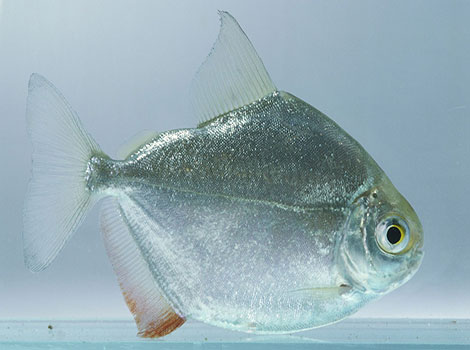
The Silver Dollar Fish (Metynnis) is a popular freshwater fish species among aquarists due to their unique appearance and calm attitude. They are between 6 inches (15 cm) in length and weigh between 35 to 130 kg. They are native to South America, specifically the Amazon River basin and other river systems in Brazil, Peru, and Bolivia. They are omnivorous, feeding on algae, plants, small invertebrates, and flake/pellet foods.
| Attributes | Quick facts |
|---|---|
| Size | Up to 6 inches (15 cm) |
| Weight | 0.07–0.35 lbs (30–160 g) |
| Lifespan | 10–12 years |
| Habitat | Freshwater rivers in South America |
| Diet | Herbivorous; eats plants, algae, and vegetables |
| Social Structure | Schooling |
| Conservation | Least Concern |
Fun fact: They are one of the best choices for topwater schooling fish.
59. Shiner
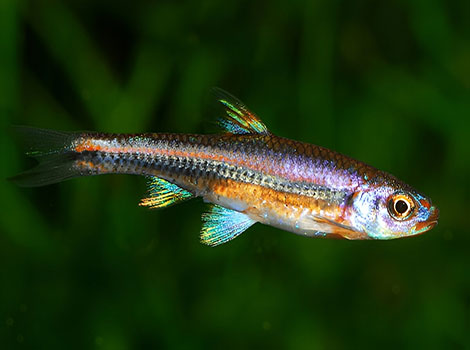
Shiner (Notropis) is a cyprinid fish native to eastern North America. It is the sole member of its genus and is often used as a bait fish. The golden shiner is usually between 2.95 and 4.92 inches (7.5 and 12.5 cm) long. The body is laterally compressed (deep-bodied). The back is dark green or olive, and the belly is silvery white. The sides are silver in smaller individuals, but golden in larger ones. Shiners are active swimmers, often seen near the surface of the water, and are known for their schooling behavior and omnivorous diet, feeding on aquatic and terrestrial insects, bottom ooze, and diatoms.
| Attributes | Quick facts |
|---|---|
| Size | 2.95–4.92 inches (7.5–12.5 cm) |
| Weight | 0.01–0.1 lbs (5–50 g) |
| Lifespan | 3–5 years |
| Habitat | Freshwater streams and rivers in North America |
| Diet | Omnivorous; eats algae, insects, and small invertebrates |
| Social Structure | Schooling |
| Conservation | Least Concern |
Fun fact: They contain a special chemical in their skin cells that alerts other nearby shiners of potential danger.
60. Scad
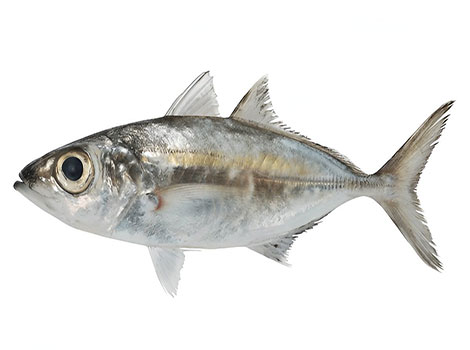
Scad (Decapterus) are marine creatures that inhabit the Atlantic coast of the Americas. They are characterized by their deeply forked tails and mackerel-shaped bodies. Their bodies are streamlined, with the top half being bluish or blue-gray and the bottom half silvery. Scads, which generally reach lengths of about 9.84 to 11.81 inches (25-30 cm), are known to consume other fishes and invertebrates.
| Attributes | Quick facts |
|---|---|
| Size | 9.84–11.81 inches (25–30 cm) |
| Weight | 0.1–3 lbs (0.05–1.4 kg), depending on species |
| Lifespan | 5–10 years |
| Habitat | Coastal waters and open seas in tropical and temperate regions |
| Diet | Carnivorous; feeds on plankton, small fish, and crustaceans |
| Social Structure | Schooling |
| Conservation | Least Concern |
Fun fact: They can reach speeds that make them nearly invisible to the naked eye.
61. Sea Star
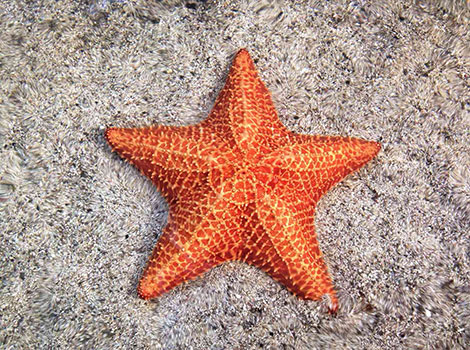
Sea Star (Asteroidea) is a marine invertebrate found in all the world’s oceans, from warm, tropical zones to cold seafloor. They typically have a central disc and usually five arms, though some species have a larger number of arms. The average size of a sea star is between 4.7 to 9.4 inches. Sea Stars are carnivorous and prey on mollusks, including clams, mussels, and oysters, which they pry open with their suction-cupped feet.
| Attributes | Quick facts |
|---|---|
| Size | 4.7 to 9.4 inches |
| Weight | 0.2–11 lbs (0.1–5 kg), depending on species |
| Lifespan | 5–35 years |
| Habitat | Ocean floors worldwide, including coral reefs, rocky shores, and mud flats |
| Diet | Carnivorous; feeds on mollusks and decomposing organisms |
| Social Structure | Solitary |
| Conservation | Least Concern |
Fun fact: They can consume prey outside their bodies.
62. Squirrelfish
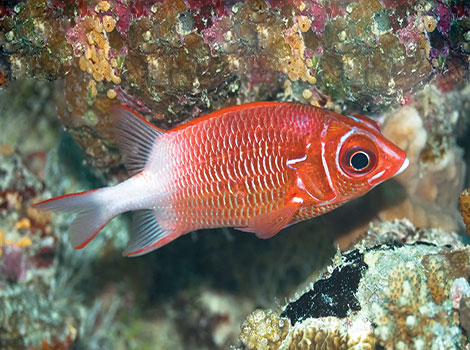
The Squirrelfish (Holocentridae) are found in both deeper offshore waters and over shallow coral reefs. It is a large-eyed, colorful, tropical reef fish. It has spiny fins and rough, prickly scales. Most Squirrelfish are red, and many are marked with yellow, white, or black. The largest species can grow about 23.6 inches (60 cm) long. They are carnivorous and nocturnal, hiding by day among the reefs.
| Attributes | Quick facts |
|---|---|
| Size | Up to 23.6 inches (60 cm) |
| Weight | Up to 2.2 lbs (1 kg) |
| Lifespan | 5–7 years |
| Habitat | Coral reefs and rocky shores in tropical waters |
| Diet | Carnivorous; feeds on crustaceans and small invertebrates |
| Social Structure | Solitary or small groups |
| Conservation | Least Concern |
Fun fact: They produce a distinct ‘clicking’ noise by vibrating their swim bladders as a defense mechanism against potential predators.
63. Suckerfish
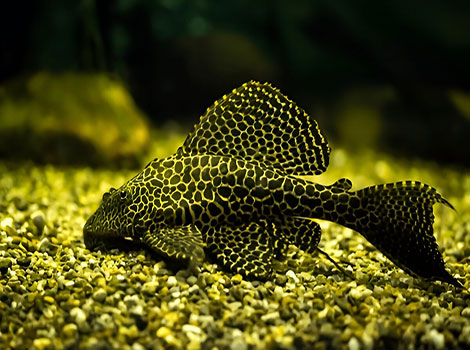
The Suckerfish (Remora) are freshwater fish found mostly in North America. They get their name from their suction-cup-like mouths, which they use to attach themselves to rocks and other surfaces in the water. Suckerfish are brown or grey, and they have small scales that are barely visible to the naked eye. Suckerfish are peaceful and social creatures, often found in groups in the wild.
| Attributes | Quick facts |
|---|---|
| Size | Varies |
| Weight | 1–5 lbs (0.5–2.3 kg) |
| Lifespan | 10–20 years |
| Habitat | Oceans worldwide, often attached to larger marine animals |
| Diet | Omnivorous; eats plankton, fish scraps, and parasites on hosts |
| Social Structure | Solitary or in groups |
| Conservation | Least Concern |
Fun fact: A suckerfish named the bigmouth buffalo is believed to be the longest-living freshwater fish on Earth.
64. Sailfin Molly
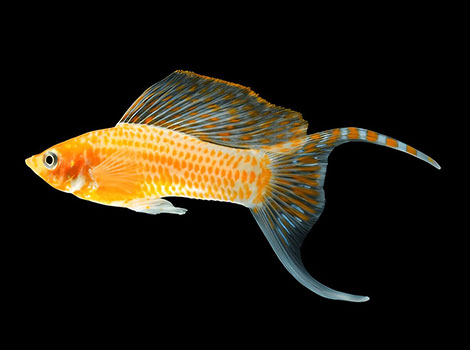
The Sailfin Molly (Mollies) is a fish native to the East Coast of the United States, from North Carolina south to Florida, and around the Gulf of Mexico to Texas, and south to the Yucatán Peninsula of México. It is typically found in both freshwater and brackish waterways. This species has an upturned mouth with between five and seven rows of dark brown spots, and iridescent yellow flecks on the side. The body size for adults is typically less than 0.4 inches (1 cm) long, but some reach lengths of 19.7 inches (50 cm) or more.
| Attributes | Quick facts |
|---|---|
| Size | Up to 19.7 inches (50 cm) |
| Weight | 0.1–0.2 lbs (0.05–0.09 kg) |
| Lifespan | 1–3 years |
| Habitat | Freshwater rivers and brackish coastal waters in the Americas |
| Diet | Omnivorous; eats algae and small invertebrates |
| Social Structure | Schooling |
| Conservation | Least Concern |
Fun fact: They are one of the most popular feeder fish due to high growth rate, birth size, reproduction, and brood number.
65. Siamese Fighting Fish
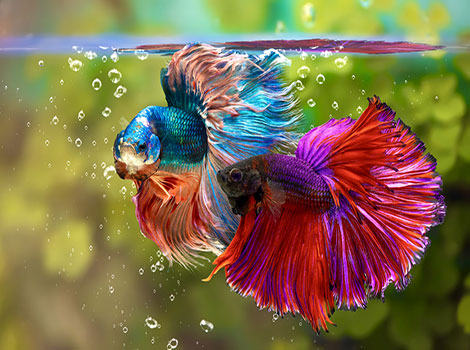
The Siamese Fighting Fish (Betta splendens) is a freshwater fish native to Southeast Asia, particularly in regions like Cambodia, Laos, Myanmar, Malaysia, Indonesia, Thailand, and Vietnam. This fish is known for its vibrant colors and long, flowing fins. Adult Siamese Fighting Fish typically measure between 2.4 to 3.1 inches (6 to 8 cm) in length. They are highly territorial, especially the males, and are known to engage in aggressive displays when encountering another of their kind.
| Attributes | Quick facts |
|---|---|
| Size | 2.4 to 3.1 inches (6 to 8 cm) |
| Weight | Up to 0.005 lbs (2 g) |
| Lifespan | 2–5 years |
| Habitat | Freshwater ponds and streams in Southeast Asia |
| Diet | Carnivorous; eats insects and larvae |
| Social Structure | Territorial and solitary |
| Conservation | Least Concern |
Fun fact: They were initially bred for aggression and subject to gambling matches akin to cockfighting.
66. Sockeye Salmon
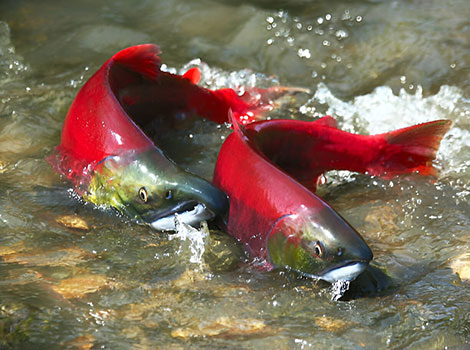
The Sockeye Salmon (Blueback Salmon) is native to the North Pacific Ocean and its tributaries, including freshwater rivers and lakes from the Aleutian Islands in Alaska to Hokkaido, Japan. They are one of the smaller species of Pacific salmon, measuring 1.5 to 2.5 feet in length and weighing 4 to 15 pounds. Their bodies are iridescent silver with a metallic green-blue top, giving them their “blueback” name. Sockeye Salmon live in groups called binds or runs. They stay in their natal habitat for up to three years, more than any other salmon.
| Attributes | Quick facts |
|---|---|
| Size | 1.5 to 2.5 feet |
| Weight | 4–15 lbs (1.8–6.8 kg) |
| Lifespan | 4–7 years |
| Habitat | Freshwater rivers and the Pacific Ocean |
| Diet | Omnivorous; eats zooplankton, insects, and crustaceans |
| Social Structure | Migratory and solitary |
| Conservation | Least Concern |
Fun fact: They require a lake nearby to rear in.
67. Sleeper Shark
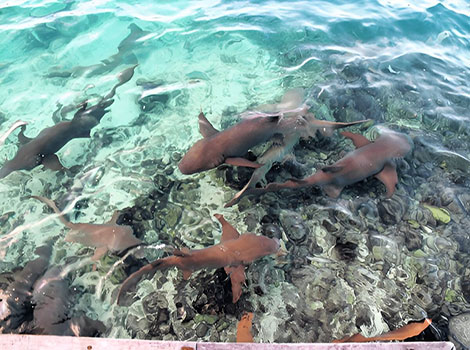
The Sleeper Shark (Somniosus) is a deepwater shark, relatively common in the North Pacific Ocean. The species attains a maximum length of at least 14.4 feet (440 cm) with unconfirmed records of up to 22.9 feet (700 cm) total length. Adult females measure from 12.1 to 14.1 feet (370 to 430 cm). They are slow swimmers, with low activity levels, and a perceived non-aggressive nature.
| Attributes | Quick facts |
|---|---|
| Size | 12.1–22.9 feet (370–700 cm) |
| Weight | 800–2,200 lbs (360–1,000 kg) |
| Lifespan | Over 200 years |
| Habitat | Deep, cold ocean waters in the Arctic and North Atlantic |
| Diet | Carnivorous; eats fish, carrion, and cephalopods |
| Social Structure | Solitary |
| Conservation | Near Threatened |
Fun fact: They are opportunistic predators with a slow metabolism and can go for long periods without food.
68. Spoonbill Catfish
The Spoonbill Catfish (American Paddlefish) is native to North America, particularly in the Southern region where the waters are warm year-round. It is found in long rivers with a slow current. The body size for adults is 43.3 to 62.9 inches (1,100-1,600 mm) in total length. This species is considered endangered due to overfishing and habitat loss.
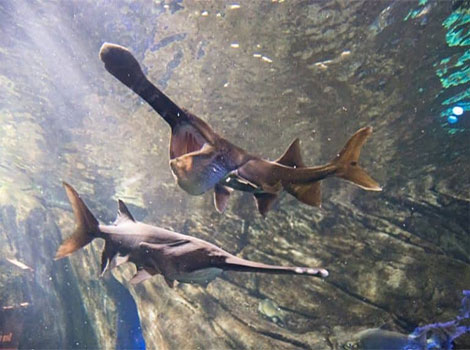
| Attributes | Quick facts |
|---|---|
| Size | 43.3–62.9 inches (1,100–1,600 mm) |
| Weight | 30–100 lbs (14–45 kg) |
| Lifespan | 20–50 years |
| Habitat | Freshwater rivers and lakes in North America |
| Diet | Omnivorous; filters plankton and small aquatic organisms |
| Social Structure | Solitary |
| Conservation | Vulnerable |
Fun fact: They are the oldest surviving animal species in North America.
69. Spiny Dogfish
The Spiny Dogfish (Squalus acanthias) is found in both cold and warm temperate oceans. It is also one of the largest sharks that feed on prey other than plankton. This shark gets its name from the fact that it has 6 gill slits, unlike most other sharks which have only five. The Spiny Dogfish has dorsal fins, no anal fin, and white spots along its back. This shark is known to hunt in packs.
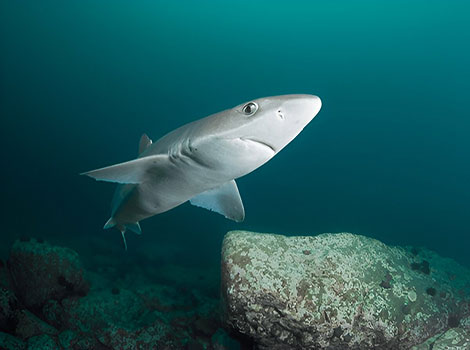
| Attributes | Quick facts |
|---|---|
| Size | Varies |
| Weight | 6.5–20 lbs (3–9 kg) |
| Lifespan | 25–100 years |
| Habitat | Coastal and open ocean waters worldwide |
| Diet | Carnivorous; eats fish, squid, and crustaceans |
| Social Structure | Schooling |
| Conservation | Vulnerable |
Fun fact: They can form schools of over a thousand individuals.
70. Silky Shark
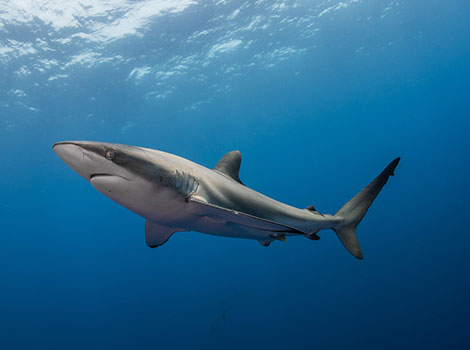
The Silky Shark (Carcharhinus falciformis) is a species that thrives in tropical and warm temperate seas worldwide. They are often found near the edges of continental shelves and over deepwater reefs. This species has a slender, streamlined body, typically growing to a length of 8.2 feet (2.5 m).
Their skin is smooth to the touch, with a deep, metallic bronze-gray color above and white below. Silky Sharks are highly mobile and migratory. They are swift, inquisitive, and persistent hunters. Their diet mainly consists of bony fishes and cephalopods. They are known for their quick and aggressive behavior.
| Attributes | Quick facts |
|---|---|
| Size | Up to 8.2 feet (2.5 m) |
| Weight | 150–880 lbs (68–400 kg) |
| Lifespan | 15–25 years |
| Habitat | Warm, open ocean waters in tropical and subtropical regions |
| Diet | Carnivorous; eats fish, squid, and crustaceans |
| Social Structure | Solitary or in small groups |
| Conservation | Vulnerable |
Fun fact: They have an extremely strong sense of hearing.
71. Shortfin Mako Shark
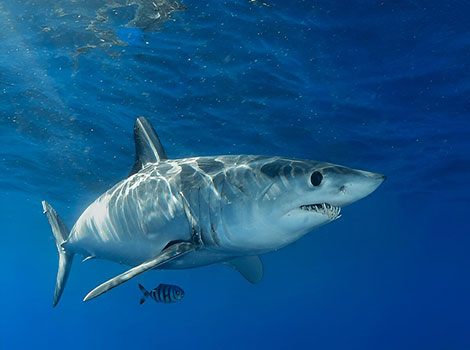
The Shortfin Mako Shark (Isurus oxyrinchus) is one of the fastest sharks in the ocean, and at top speed, they can swim 43 mph (69 km/h). They are streamlined and relatively slender and have pointed snouts, crescent-shaped tails, and long slender teeth.
The Shortfin Mako Shark can reach a size of 13.1 feet (4 m) in length and weigh 1,257 lbs (570 kg). Shortfin Mako Sharks are known for their aggressive behavior, high-speed swimming, unique hunting techniques, and diverse diet.
| Attributes | Quick facts |
|---|---|
| Size | Up to 13.1 feet (4 m) |
| Weight | 130–1,300 lbs (60–590 kg) |
| Lifespan | 30–40 years |
| Habitat | Warm, open ocean waters worldwide |
| Diet | Carnivorous; eats fish and squid |
| Social Structure | Solitary |
| Conservation | Endangered |
Fun fact: Shortfin Mako sharks can jump 20 feet above the water.
72. Sawfish
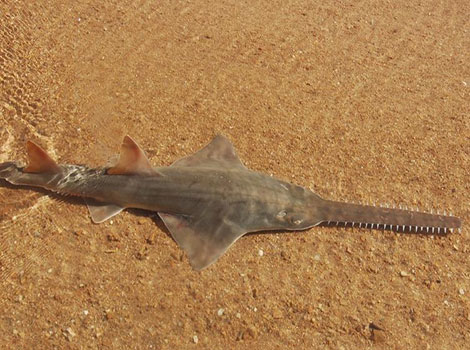
The Sawfish (Pristidae) are part of the Rajiformes order and are closely related to sharks. They are found in the Gulf of Mexico and along the borders of southern states. They have a long snout edged with special teeth. The largetooth sawfish can grow up to 23 feet (7 meters) and a smalltooth sawfish averages 18 feet (5.5 meters) in length.
Sawfish are carnivorous and use their saw-like rostrum to detect and capture prey, including fish and invertebrates, often by slashing their saw back and forth.
| Attributes | Quick facts |
|---|---|
| Size | Up to 23 feet (7 meters) |
| Weight | 200–1,100 lbs (91–500 kg) |
| Lifespan | 30–50 years |
| Habitat | Coastal and estuarine waters in tropical and subtropical regions |
| Diet | Carnivorous; eats small fish, mollusks, and crustaceans |
| Social Structure | Solitary |
| Conservation | Critically Endangered |
Fun fact: They can replace their teeth if they are worn down or lost.
73. Sturgeon
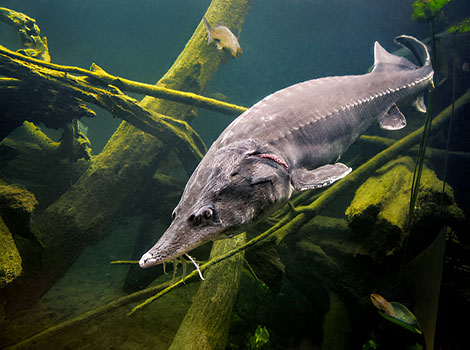
Sturgeon (Alantic Sturgeon) are primarily freshwater fish. They have large, stout bodies and skin protected with several rows of bony plates. Most species grow to impressive lengths, with some reaching lengths of 20 ft. or more and weighing over 3,000 pounds. Sturgeon have short life spans and usually die soon after mating, at around one year old.
| Attributes | Quick facts |
|---|---|
| Size | Up to 20 feet (6 meters) |
| Weight | 100–2,000 lbs (45–900 kg) |
| Lifespan | 50–100 years |
| Habitat | Freshwater rivers and lakes, some species migrate to the ocean |
| Diet | Omnivorous; eats crustaceans, mollusks, and small fish |
| Social Structure | Solitary |
| Conservation | Critically Endangered |
Fun fact: They are sometimes referred to as “living fossils” because they have not changed over millions of years of evolution.
After exploring the diverse fish species, let’s hop onto land and discover the intriguing amphibians that start with the letter S.
Amphibians that start with S
Now, let’s dive into the intriguing world of amphibians, highlighting those species whose names begin with the letter S.
| Surinam Toad | Southern Leopard Frog | Spring Peeper |
| Striped Rocket Frog | Santa Cruz Long-toed Salamander | Scrotum Frog |
74. Surinam Toad
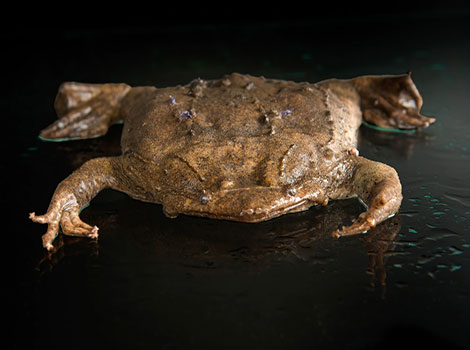
The Surinam Toad (Pipa pipa) is a flat-bodied amphibian with a triangle-shaped head and tiny eyes. It is known for its unique birth method, in which babies emerge from a cluster of tiny holes in their mother’s back. This species is found in slow-moving water sources, such as rainforest pools and moist leaf litter throughout eastern Trinidad and Tobago and much of the Amazon Basin.
| Attributes | Quick facts |
|---|---|
| Size | Varies |
| Weight | 0.5–1 lb (225–450 g) |
| Lifespan | 8–12 years in the wild |
| Habitat | Slow-moving rivers, ponds, and marshes in South America |
| Diet | Carnivorous; feeds on small fish, insects, and invertebrates |
| Social Structure | Solitary, but gathers during breeding seasons |
| Conservation | Least Concern |
Fun fact: Their babies erupt from holes in their mother’s back.
75. Southern Leopard Frog
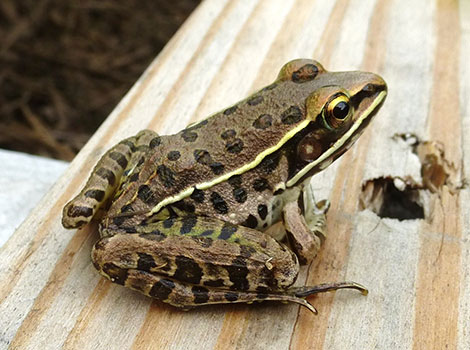
The Southern Leopard Frog (Meadow Frog) is a medium-sized anuran native to eastern North America. They inhabit shallow freshwater bodies, such as bottomland swamps, floodplains, and brackish ponds, in hardwood forests.
They are also urbanized and can live in man-made ponds, canals, and ditches. They are relatively slender-bodied and long-legged, with pointed snouts, and range in head-body length from about 2 to 4 inches (6 to 10 cm). They are primarily nocturnal, often found near water.
| Attributes | Quick facts |
|---|---|
| Size | 2–4 inches (6–10 cm) |
| Weight | 0.5–1.2 oz (14–34 g) |
| Lifespan | 2–4 years in the wild |
| Habitat | Freshwater wetlands, ponds, and marshes in the southeastern United States |
| Diet | Carnivorous; eats insects, spiders, and small aquatic animals |
| Social Structure | Solitary but forms groups during breeding seasons |
| Conservation | Least Concern |
Fun fact: They can evade predators by diving into water and making a sharp turn before surfacing amid vegetation.
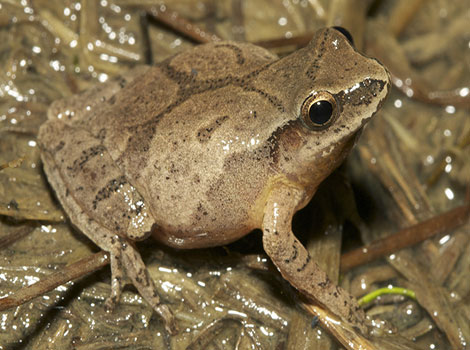
76. Spring Peeper
The Spring Peeper (Pseudacris crucifer) is a small tree frog known for its distinctive “peeping” call that marks the beginning of spring. Adults measure 0.78-1 in (2–2.5 cm) in length and weigh 0.1-0.2 oz (3–5 g).
They can be tan, grey, olive, or brown, with a darker X-shaped marking on their backs and dark crossbands on their hind legs. Spring Peepers are found throughout the eastern United States and Canada. They are nocturnal and feed on insects.
| Attributes | Quick facts |
|---|---|
| Size | 0.78–1 in (2–2.5 cm) |
| Weight | 0.1–0.2 oz (3–5 g) |
| Lifespan | 3–4 years in the wild |
| Habitat | Forests, wetlands, and marshes in eastern North America |
| Diet | Carnivorous; eats small insects and spiders |
| Social Structure | Solitary but vocal during the breeding season |
| Conservation | Least Concern |
Fun fact: They are known for their ability to survive freezing temperatures.
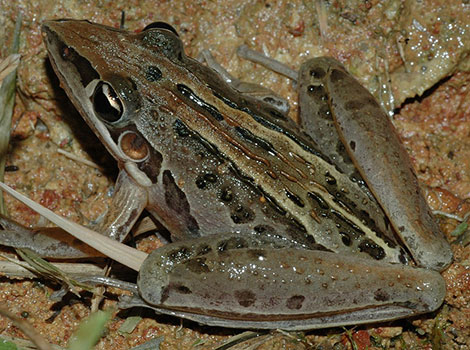
77. Striped Rocket Frog
The Striped Rocket Frog (Litoria nasuta) is a species that thrives in the tropical forests of Australia. It is a ground-dwelling creature that is widely dispersed during the wet season.
The Striped Rocket Frog has a long body and a pointed nose with only a little webbing on its feet. Its coloration ranges from brown to black with stripes and other markings. Females are known to lay from 50-100 eggs per clutch.
| Attributes | Quick facts |
|---|---|
| Size | Varies |
| Weight | 0.1–0.2 oz (3–5 g) |
| Lifespan | 2–3 years |
| Habitat | Wetlands and grasslands in Australia and nearby islands |
| Diet | Carnivorous; feeds on insects and small invertebrates |
| Social Structure | Solitary except during breeding periods |
| Conservation | Least Concern |
Fun fact: They can leap approximately 6.5 feet into the air, almost 40 times their body length.
78. Santa Cruz Long-toed Salamander
The Santa Cruz Long-toed Salamander (Ambystoma macrodactylum croceum) is found in a few isolated ponds in Santa Cruz and Monterey Counties in California. This salamander has a black body with irregular patches of dull orange or metallic yellow markings on its dorsal side.
It spends most of its life underground in animal burrows or chambers dug along the root systems of shrubs and woody plants. The salamander is omnivorous, feeding on insects, eggs, larvae, plant matter, and sometimes smaller salamanders.
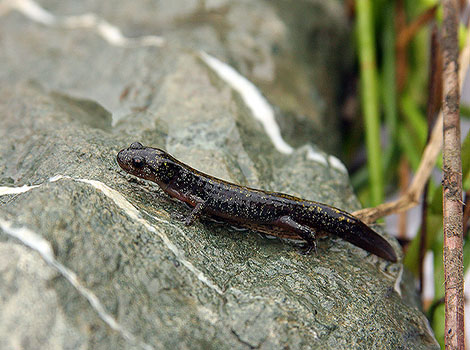
| Attributes | Quick facts |
|---|---|
| Size | Varies |
| Weight | 0.3–0.4 oz (8–12 g) |
| Lifespan | 10–15 years |
| Habitat | Coastal wetlands and marshes in California, USA |
| Diet | Carnivorous; eats insects, worms, and small crustaceans |
| Social Structure | Solitary |
| Conservation | Endangered |
Fun fact: They migrate to breeding ponds only during periods of sustained nighttime rainfall.
79. Scrotum Frog
The Scrotum Frog (Telmatobius culeus) is a large, entirely aquatic frog that resides in the Lake Titicaca basin, including rivers that flow into it and smaller connected lakes, in the Andean highlands of Bolivia and Peru. This frog has a distinctive appearance due to its many folds of wrinkly skin, which serve a crucial purpose.
These folds are adaptations that allow the frog to absorb oxygen without having to surface. The frog’s color varies from brown to grey to green. It can grow up to 8 inches in length, with hind legs twice as long. The Scrotum Frog is solitary and primarily nocturnal. Its diet consists of aquatic animals such as water fleas and insect larvae.
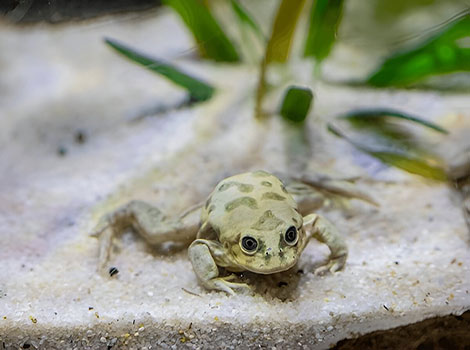
| Attributes | Quick facts |
|---|---|
| Size | Up to 8 inches (20 cm) |
| Weight | 2–4 lbs (0.9–1.8 kg) |
| Lifespan | 10–15 years |
| Habitat | High-altitude lakes and rivers of the Andes Mountains, particularly Lake Titicaca |
| Diet | Carnivorous; consumes aquatic invertebrates and small fish |
| Social Structure | Solitary |
| Conservation | Critically Endangered |
Fun fact: They don’t need to come up for air due to their skin folds that function as gills.
Having explored the diverse amphibians that start with S, let’s now shift our focus to the fascinating world of insects beginning with the same letter.
Insects that start with S
Next, we explore the fascinating realm of insects, featuring those with names that begin with the letter S.
80. Silkworm
The Silkworm (Bombyx mori) is a small creature measuring only a few millimeters when it first hatches. Despite their name, they are not worms but the larval stage of the silk moth. They are native to northern China and are entirely dependent on humans. Silkworms feed on mulberry leaves or can be fed an artificial diet. After spending time in a cocoon, the silkworm morphs into a scaly, four-winged moth.
| Attributes | Quick facts |
|---|---|
| Size | Varies |
| Weight | 0.01–0.02 oz (0.3–0.6 g) |
| Lifespan | 6–8 weeks |
| Habitat | Domesticated; raised for silk production |
| Diet | Feeds on mulberry leaves |
| Social Structure | Grouped in cultivation |
| Conservation | Domesticated |
Fun fact: They are entirely dependent on humans for survival.
81. Squash Bee
The Squash Bee (Peponapis) is a species of solitary bee native to North America. It measures 0.43-0.55 in (11 to 14 millimeters) long and 0.15-0.21 in (4 to 5.5 millimeters) wide at the abdomen. This bee is black with whitish bands on the abdomen and is coated in yellowish hairs.
It specializes in a few host plants, the squashes, and gourds of genus Cucurbita. Females dig a nest in the ground near their host plants. They are specialized pollinators, meaning they only focus on collecting pollen from plants in the Pumpkin family such as pumpkins, gourds, and luffa.
| Attributes | Quick facts |
|---|---|
| Size | 0.43-0.55 in (11–14 mm) |
| Weight | 0.02–0.04 oz (0.5–1 g) |
| Lifespan | A few weeks during the summer |
| Habitat | Fields, gardens, and farmlands across North America |
| Diet | Nectar and pollen, primarily from squash, pumpkin, and gourd plants |
| Social Structure | Solitary, with females building nests in the soil |
| Conservation | Least Concern |
Fun fact: They have evolved a matinal daily activity cycle, flying before sunrise.
82. Scarab Beetle
The Scarab Beetle (Dung Beetle) is a diverse family of beetle found in every part of the world except in the oceans and on Antarctica. The smallest grow to about 0.08 inches while the Hercules beetle can reach a palm-covering 6.7 inches in length.
They can weigh up to 3.5 ounces. Some consume live plants and are considered agricultural pests. Some eat fruit, fungi, carrion, or insects. The most well-known diet item is consumed by the scarabs called dung beetles.
| Attributes | Quick facts |
|---|---|
| Size | Varies |
| Weight | 0.1–0.3 oz (3–9 g) |
| Lifespan | 1–2 years |
| Habitat | Forests, grasslands, and deserts worldwide |
| Diet | Diverse; some feed on dung, while others eat decaying plant material or roots |
| Social Structure | Solitary |
| Conservation | Least Concern |
Fun fact: They can roll dung balls with their hind legs, often over large distances.
83. Stinkbug
The Stinkbug (Brown Marmorated Stink Bug) is named for the foul-smelling secretions they produce. They generally range between 0.2 and 0.5 inch (5 and 12 mm) in length. As nymphs, stinkbugs inhabit cold, fast-flowing streams in pristine condition. Adult stinkbugs are terrestrial but tend to stay close to the streams from which they emerge.
| Attributes | Quick facts |
|---|---|
| Size | 0.2–0.5 inches (5–12 mm) |
| Weight | 0.01–0.03 oz (0.3–0.8 g) |
| Lifespan | 6–8 months |
| Habitat | Gardens, fields, and forests worldwide |
| Diet | Omnivorous; feeds on plant sap and small insects |
| Social Structure | Solitary but can form aggregations during winter |
| Conservation | Least Concern |
Fun fact: They release a pungent substance when threatened, repelling nearly any predator that has a sense of smell.
84. Stonefly
The Stonefly (Plecoptera) is a group of aquatic insects well known to fishermen and biologists worldwide. They have long, threadlike antennae, and a pair of cerci extends from the abdomen. As nymphs, stoneflies inhabit cold, fast-flowing streams in pristine condition. Adult stoneflies are terrestrial but tend to stay close to the streams from which they emerge.
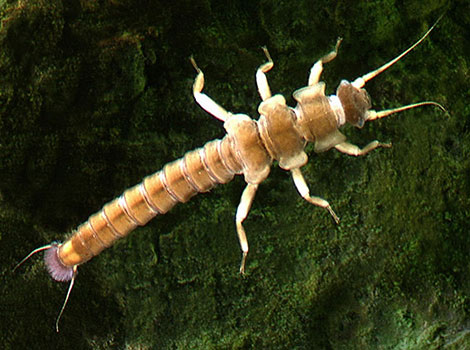
| Attributes | Quick facts |
|---|---|
| Size | Varies |
| Weight | 0.001–0.003 oz (0.03–0.09 g) |
| Lifespan | 1–3 weeks as an adult |
| Habitat | Clean, fast-moving freshwater streams and rivers |
| Diet | Larvae are detritivores or predators; adults may not feed |
| Social Structure | Solitary |
| Conservation | Least Concern |
Fun fact: Stonefly nymphs develop slowly, taking 1 to 3 years to molt repeatedly before emerging as adults.
85. Spider Beetle
The Spider Beetle (Ptinidae) has round bodies with long, slender legs. They are typically a few millimeters long. Spider beetles are insects in the family Ptinidae. They are scavengers usually found indoors, living in pantries, warehouses, museums, and food processing facilities.
| Attributes | Quick facts |
|---|---|
| Size | A few millimeters |
| Weight | 0.002–0.01 oz (0.06–0.3 g) |
| Lifespan | 6–12 months |
| Habitat | Stored food products and dark, damp areas |
| Diet | Scavenger; feeds on dried plant and animal material |
| Social Structure | Solitary |
| Conservation | Least Concern |
Fun fact: Spider beetles have globular bodies, which makes them look like spiders.
86. Squash Beetle
The Squash Beetle (Cucumber Beetle) is a common vegetable pest in the eastern US, with a strong preference for cucurbits. It has a beautiful orange and yellow shell, featuring a specific arrangement of spots along its back.
The average lifespan of these insects is just 2-6 months. They are about 3/8 inch in length. Squash Beetles are herbivorous insects that feed on cucurbit plants like zucchini.
| Attributes | Quick facts |
|---|---|
| Size | 3/8 inch (9 mm) |
| Weight | 0.01–0.03 oz (0.3–0.8 g) |
| Lifespan | 2–3 months |
| Habitat | Gardens and fields with squash, pumpkin, and gourd plants |
| Diet | Herbivorous; feeds on the leaves of cucurbit plants |
| Social Structure | Solitary |
| Conservation | Least Concern |
Fun fact: They carry a bacterium in their saliva that can damage gardens.
87. Soldier Beetle
The Soldier Beetle (Leatherwing) is an outdoor insect that may be found indoors occasionally as accidental invaders. They have soft, clothlike wings, which are often brightly colored. Soldier beetles are harmless and beneficial insects because they predate on small insect pests and may also help pollinate flowers because they feed on nectar and pollen.
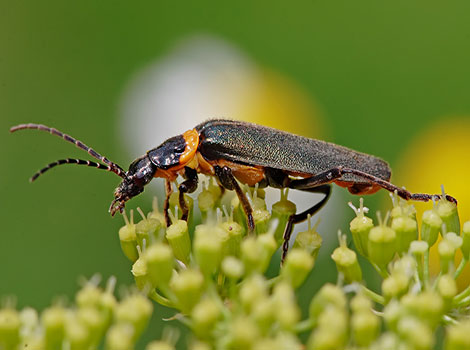
| Attributes | Quick facts |
|---|---|
| Size | Varies |
| Weight | 0.01–0.02 oz (0.3–0.6 g) |
| Lifespan | 2–3 months |
| Habitat | Meadows, gardens, and fields worldwide |
| Diet | Adults feed on nectar and pollen; larvae eat other insects |
| Social Structure | Solitary |
| Conservation | Least Concern |
Fun fact: They can detect the pheromone “calls” emitted by females up to a mile away using their feather-like antennae.
88. Smokybrown Cockroach
The Smokybrown Cockroach (Periplaneta fuliginosa) is a large species of cockroach, winged, and growing to a length of 1.3–1.4 in (32–35 millimetres). It is uniformly light to dark brown–mahogany coloration.
The smokybrown cockroach is very common in Japan, as well as the southern United States and tropical climates. The Smokybrown Cockroach is a nocturnal insect that often comes indoors during daylight hours to look for food and even to live
| Attributes | Quick facts |
|---|---|
| Size | 1.3–1.4 inches (32–35 mm) |
| Weight | 0.1–0.2 oz (3–6 g) |
| Lifespan | 1–2 years |
| Habitat | Warm, humid environments such as basements and gardens |
| Diet | Omnivorous scavenger; eats plant material and waste |
| Social Structure | Solitary but may form small groups |
| Conservation | Least Concern |
Fun fact: They are extremely dependent on humidity, and will die if they can’t get enough moisture.
89. Schaus Swallowtail
The Schaus Swallowtail (Papilio aristodemus) is a large brown and yellow butterfly endemic to Florida. It is restricted to intact tropical hardwood hammocks and their associated margins. The butterfly has black-brown wings with yellow markings.
The wingspan of Schaus’ swallowtail is 7.75 by 8.25 inches. Adults have a slow, leisurely flight and adeptly maneuver through the dense hardwood hammock vegetation. Females lay the green eggs singly on the new growth of wild lime.

| Attributes | Quick facts |
|---|---|
| Size | 7.75–8.25 inches |
| Weight | 0.01–0.02 oz (0.3–0.6 g) |
| Lifespan | 2–3 weeks |
| Habitat | Tropical forests in southern Florida and the Caribbean |
| Diet | Adults feed on nectar; larvae eat leaves of torchwood and wild lime |
| Social Structure | Solitary |
| Conservation | Endangered |
Fun fact: They are one of the rarest butterflies in the U.S.
90. Seven-spotted Ladybug
The Seven-spotted Ladybug (Coccinella septempunctata) is a species of medium-sized beetle found in a very limited area in the United States.
They have a bright red abdomen with black spot patterning. An average seven-spot ladybug will measure 8mm (0.5in) long. They feed almost exclusively on aphids. These animals live in woods, marshes, grasslands, parks, and gardens.
| Attributes | Quick facts |
|---|---|
| Size | 0.5 in (8 mm) |
| Weight | 0.001–0.002 oz (0.03–0.06 g) |
| Lifespan | 1–2 years |
| Habitat | Gardens, forests, and grasslands worldwide |
| Diet | Carnivorous; feeds on aphids and other small insects |
| Social Structure | Solitary |
| Conservation | Least Concern |
Fun fact: They can eat up to 5,000 insects in their lifetime.
91. Snowberry Clearwing Moth
The Snowberry Clearwing Moth (Hemaris diffinis) is a large moth from the Sphinx family. They have a broad, furry, yellow thorax and a black body with reddish-brown wings covered in scales. They often lose these scales, which gives their wings a transparent appearance.
They can be found in a variety of habitats, including gardens, meadows, and forests. The Snowberry Clearwing Moth is a day and night flyer that hovers over plants and flowers to feed on nectar.
| Attributes | Quick facts |
|---|---|
| Size | Varies |
| Weight | 0.01–0.02 oz (0.3–0.6 g) |
| Lifespan | 1–2 weeks |
| Habitat | Open woodlands and gardens in North America |
| Diet | Adults feed on nectar; larvae eat leaves of honeysuckle and snowberry plants |
| Social Structure | Solitary |
| Conservation | Least Concern |
Fun fact: These moths mimic bumblebees and even love to “buzz” around the same flowers and plants.
92. Saber-winged Grasshopper
Saber-winged Grasshopper (Phymateus morbillosus) is native to South Africa, where it inhabits grasslands and savannas. This grasshopper is a large insect, with a body length of 1.57-2.36 in (40-60 mm) and a wingspan of 70-100 mm. It is brightly colored, with a green body and yellow or orange wings.
The male has a distinctive sword-like projection on its head, which it uses to fight other males. Saber-winged Grasshoppers are herbivores, and their diet consists of grasses, leaves, and flowers. They are active during the day and spend most of their time hopping on the ground.
| Attributes | Quick facts |
|---|---|
| Size | 1.57-2.36 in (40-60 mm) |
| Weight | 0.01–0.02 oz (0.3–0.6 g) |
| Lifespan | 2–3 months |
| Habitat | Grasslands, meadows, and open fields in temperate regions |
| Diet | Herbivorous; feeds on grasses and other vegetation |
| Social Structure | Solitary but may form groups during migrations |
| Conservation | Least Concern |
Fun fact: They can change color to blend into their surroundings.
93. Spider Wasp
The Spider Wasp (Pompilidae) is a carnivorous insect that lives in tropical and temperate forests worldwide. It is related to grasshoppers, crickets, and mantises. The wasp is usually brown, black, or yellow, weighing 0.01–0.03 oz (0.3–0.9 g). It preys on spiders to feed its larvae or parasitizes other spider wasps.
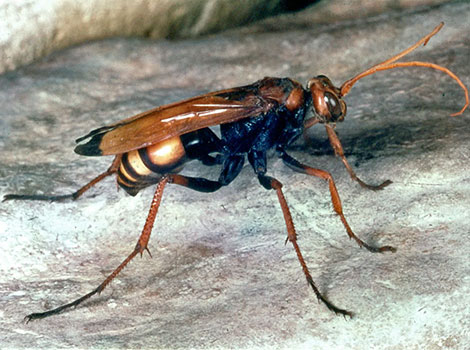
| Attributes | Quick facts |
|---|---|
| Size | Varies |
| Weight | 0.01–0.03 oz (0.3–0.9 g) |
| Lifespan | 4–6 weeks |
| Habitat | Forests, grasslands, and deserts worldwide |
| Diet | Adults feed on nectar; larvae consume paralyzed spiders provided by the female |
| Social Structure | Solitary |
| Conservation | Least Concern |
Fun fact: They have four distinct life stages: the egg, the larva, the pupa, and the adult.
94. Stick Insect
The Stick Insect (Phasmatodea) is a herbivore that lives in tropical and temperate forests worldwide. It is usually brown, green, or black and can grow from 0.46 to 12.9 inches. The insect spends much of its time in trees, munching on leaves. When predators such as birds approach, the insect tries to remain completely still to blend with the branches.
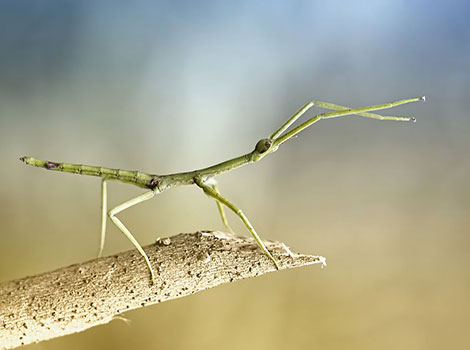
| Attributes | Quick facts |
|---|---|
| Size | 0.46–12.9 inches |
| Weight | 0.03–0.1 oz (0.9–3 g) |
| Lifespan | 1–2 years |
| Habitat | Forests and grasslands in tropical and temperate regions |
| Diet | Herbivorous; feeds on leaves of various plants |
| Social Structure | Solitary |
| Conservation | Least Concern |
Fun fact: The females from these species lay eggs that look like plant seeds.
95. Stag Beetle
The Stag Beetle (Lucanus cervus) is a large insect found in southern and central Europe. It measures between 1.37 and 2.95 in (3.5 and 7.5cm) in length and is known for its massive, antler-like jaws. These beetles are usually very docile and start life as larvae, living in old trees and rotting wood.
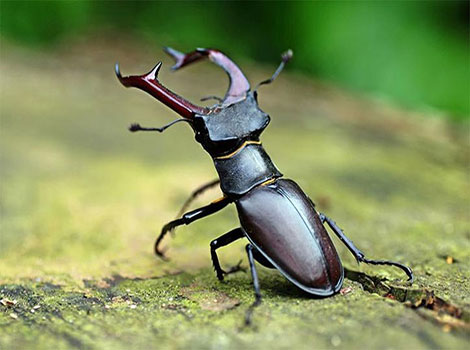
| Attributes | Quick facts |
|---|---|
| Size | 1.37–2.95 in (3.5–7.5 cm) |
| Weight | 0.1–0.2 oz (3–6 g) |
| Lifespan | 1–2 years |
| Habitat | Forested areas and woodlands worldwide |
| Diet | Larvae eat decaying wood; adults consume sap |
| Social Structure | Solitary |
| Conservation | Near Threatened |
Fun fact: Adult males use their jaws to fight rivals and impress potential mates.
Moving on from the world of insects, let’s now take a look at some incredible bird species beginning with the letter S.
Birds that start with S
Explore a fascinating list of birds that begin with the letter ‘S’, showcasing unique species from around the world.
| Snowy Owl | Sandpiper | Screech Owl |
| Scarlet Macaw | Summer Tanager | Swallow |
| Sword-billed Hummingbird | Spectacled Owl |
96. Snowy Owl
The Snowy Owl (Arctic Owl) is a large, white owl of the true owl family. They are well adapted to cold climates and are commonly found in tundra, taiga, mountainous areas, and the Arctic. They often build nests on the ground, in tree hollows, or on cliffs.
It has a wingspan of 4.1-4.9 feet (125-150 cm) and weighs between 3.5-6.6 pounds (1.6-3 kg). The Snowy owl is often active during the day, especially in the summertime. It is a nomadic bird, rarely breeding at the same locations or with the same mates year after year.
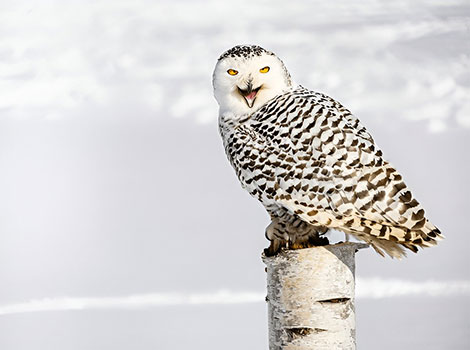
| Attributes | Quick facts |
|---|---|
| Size | 4.1–4.9 ft (125–150 cm) wingspan |
| Weight | 3.5–6.6 lbs (1.6–3 kg) |
| Lifespan | 10–20 years |
| Habitat | Arctic tundra, open fields, and grasslands |
| Diet | Carnivorous; eats lemmings, small mammals, and birds |
| Social Structure | Solitary except during breeding |
| Conservation | Least Concern |
Fun fact: They can fly at speeds up to 80 km/h.
97. Sandpiper
The Sandpiper (Common Sandpiper) is a small wader that measures around 7-9.4 inches (18-24 cm) in length with a wingspan of 13.8 inches (35 cm) and weighs about 1.4 ounces (40 g). They have a brown upper body and a white underside.
Sandpipers are found across most of temperate and subtropical Europe and Asia, and migrate to Africa, southern Asia, and Australia in winter. They are ground feeders that dine on crustaceans, insects, worms, and other coastal creatures.
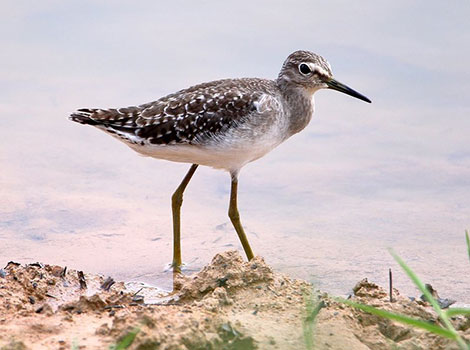
| Attributes | Quick facts |
|---|---|
| Size | 7-9.4 inches (18-24 cm) |
| Weight | 0.5–8.8 oz (14–250 g) |
| Lifespan | 7–10 years |
| Habitat | Wetlands, mudflats, and coastal areas |
| Diet | Omnivorous; eats insects, crustaceans, and plant material |
| Social Structure | Migratory; forms flocks during migration |
| Conservation | Least Concern |
Fun fact: They display coordination when running in groups.
98. Screech Owl
The Screech Owl (Eastern Screech Owl) has a large, round head with prominent ear tufts, yellow eyes, and a yellowish beak. They are medium-sized, about 7.9-9.8 inches (20-25 cm) tall, and have a wingspan of about 2-2.2 feet (60-68 cm).
Screech owls are found throughout much of eastern North America, from Mexico to Canada. They adapt to many different types of habitats, including forests, parks, countryside, and even urban areas. They are excellent hunters, primarily feeding on small mammals such as mice, voles, and shrews.
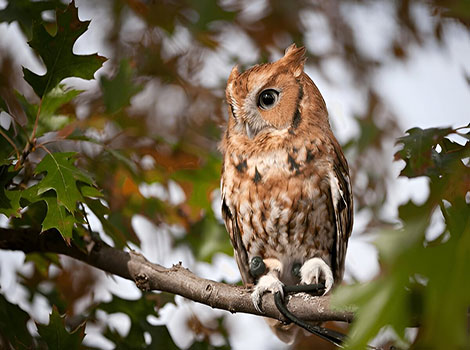
| Attributes | Quick facts |
|---|---|
| Size | 7.9-9.8 inches (20-25 cm) |
| Weight | 3.5–9.8 oz (100–280 g) |
| Lifespan | 8–10 years |
| Habitat | Forests, woodlands, and urban parks |
| Diet | Carnivorous; eats insects, small mammals, and birds |
| Social Structure | Solitary except during breeding |
| Conservation | Least Concern |
Fun fact: They possess large eyes relative to their body size, which helps them see in low light conditions.
99. Scarlet Macaw
The Scarlet Macaw is a large parrot that lives in the tropical humid environments of the Amazon Rainforest. It is about 31.9 to 37.8 inches long, of which more than half is the pointed, graduated tail typical of macaws, and it weighs about 2.2 pounds.
Their plumage is mostly scarlet, but the rump and tail-covert feathers are light blue. Scarlet Macaws are found throughout much of eastern North America, from Mexico to Canada. They are excellent hunters, primarily feeding on small mammals such as mice, voles, and shrews.
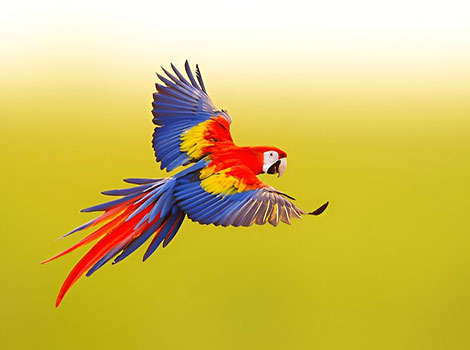
| Attributes | Quick facts |
|---|---|
| Size | 31.9-37.8 inches |
| Weight | 2–2.5 lbs (0.9–1.1 kg) |
| Lifespan | 40–50 years |
| Habitat | Tropical rainforests in Central and South America |
| Diet | Omnivorous; eats fruits, nuts, seeds, and insects |
| Social Structure | Pairs or small family groups |
| Conservation | Least Concern |
Fun fact: These birds can fly at speeds up to 35 miles per hour.
100. Summer Tanager
The Summer Tanager (Summer Redbird) is a medium-sized American songbird. Adults stand about 25 inches (63.5 centimeters) tall and have a wingspan of 20-22 inches (52-56 centimeters) wide.
They weigh about 2 pounds (0.90 kilograms). Summer Tanagers are diurnal birds. When not breeding, they usually spend time singly or sometimes join mixed-species flocks of fruit-eating birds.
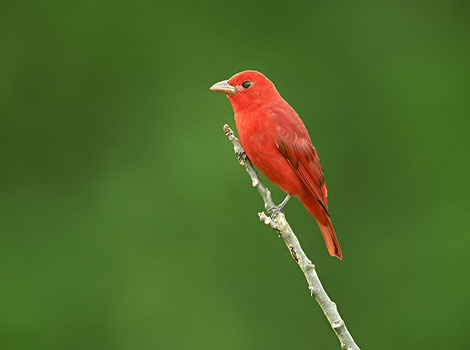
| Attributes | Quick facts |
|---|---|
| Size | Varies |
| Weight | 1.1 oz (30 g) |
| Lifespan | 5–10 years |
| Habitat | Open woodlands and forests |
| Diet | Omnivorous; eats bees, wasps, and fruit |
| Social Structure | Solitary or in pairs during breeding season |
| Conservation | Least Concern |
Fun fact: They have an American robin-like song.
101. Swallow
The Swallow (Barn Swallow) is a small bird known for its agile flight. They have short bills, but strong jaws and a wide gape, which are adapted for their insectivorous diet. They are found across the globe, but their greatest diversity is in Africa, where they are also believed to have evolved as a group.
They inhabit a wide range of habitats and prefer open areas where they can catch insects. They use man-made structures to breed and, as a result, are common in human habitation.
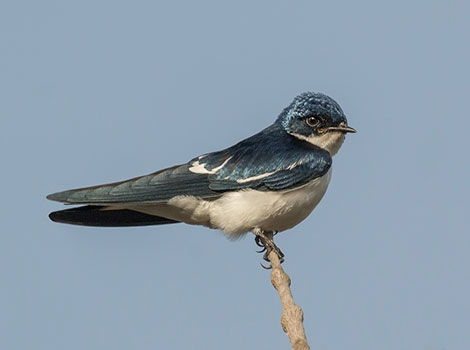
| Attributes | Quick facts |
|---|---|
| Size | Varies |
| Weight | 0.6–0.7 oz (16–20 g) |
| Lifespan | 4–8 years |
| Habitat | Open areas, near water, and urban regions |
| Diet | Insectivorous; eats flying insects |
| Social Structure | Highly social, nesting in colonies |
| Conservation | Least Concern |
Fun fact: They are known for their long-distance seasonal migration.
102. Sword-billed Hummingbird
The Sword-billed Hummingbird is a neotropical species from the Andean regions of South America. It is among the largest species of hummingbirds, with adults measuring 5.1-5.5 inches long excluding the bill, and weighing 0.35-0.53 ounces (10-15 g).
The most distinctive feature of this species is its enormous bill, which is 3.1-4.7 inches long (8-12 cm). This bird inhabits humid and wet montane forests, forest edges, shrubland, gardens, and patches of páramo at elevations of 5,577–11,483 feet (1,700–3,500 m).
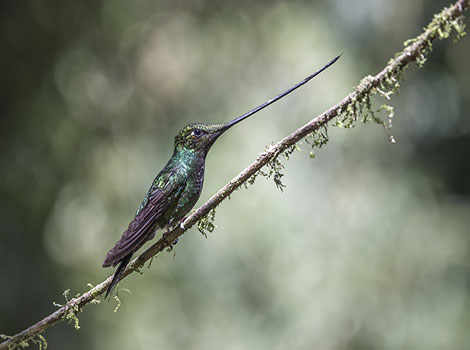
| Attributes | Quick facts |
|---|---|
| Size | 5.1-5.5 inches (excluding bill) |
| Weight | 0.5–0.6 oz (13–16 g) |
| Lifespan | 4–5 years |
| Habitat | High-altitude cloud forests in South America |
| Diet | Nectar from tubular flowers |
| Social Structure | Solitary, except during breeding |
| Conservation | Least Concern |
Fun fact: It’s the only bird to have a beak longer than the rest of its body, excluding the tail.
103. Spectacled Owl
The Spectacled Owl (Tropical Owl) is a large tropical owl native to the Neotropics. It’s found in forests from southern Mexico and Trinidad, through Central America, south to southern Brazil, Paraguay, and northwestern Argentina. It has a dark face, bright yellow eyes with spectacle-like markings.
The Spectacled Owl is a solitary, primarily nocturnal bird known for its unique hunting style of perching and scanning the area for prey, and is most vocal on calm, moonlit nights.
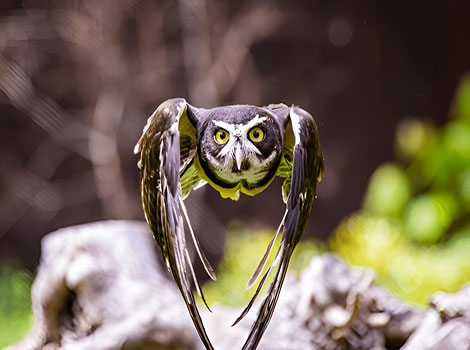
| Attributes | Quick facts |
|---|---|
| Weight | 1.7–2.4 lbs (0.8–1.1 kg) |
| Lifespan | 20–25 years |
| Habitat | Tropical rainforests in Central and South America |
| Diet | Carnivorous; eats small mammals and reptiles |
| Social Structure | Solitary, pairs during breeding season |
| Conservation | Least Concern |
Fun fact: This owl is known to make a number of different vocalizations.
After exploring the diverse and fascinating birds that start with the letter S, there are other kinds of animals starting with the letter S.
Other animals that start with S
Finally, here are the uncategorized animals starting with the letter S:
| Snow Crab | Sea Anemone | Scolopendra |
| Sea Swallow | Scallops |
104. Snow Crab
The Snow Crab (Queen Crab) is a marine creature found in the northern parts of the Atlantic and Pacific Oceans. It has a carapace length between 3.1”-5.4” (8-13.6 cm), carapace width of 3.7”-6.5” (9.4-16.5 cm), body height of 1.5”-2.5” (3.7-6.4 cm), and weight between 1.1-3 lb (.5-1.35 kg). Adult snow crabs typically range from 12-24 ounces (340-680 grams). They are carnivorous, feeding on fish, crustaceans, mollusks, and other invertebrates.
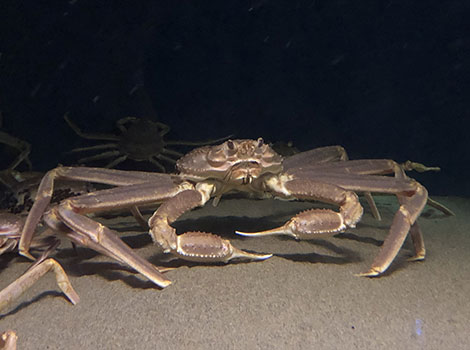
| Attributes | Quick facts |
|---|---|
| Size | 3.1”–6.5” carapace width |
| Weight | 1.5–4 lbs (0.7–1.8 kg) |
| Lifespan | 10–15 years |
| Habitat | Cold ocean waters of the North Atlantic and North Pacific |
| Diet | Omnivorous; eats mollusks, worms, algae, and detritus |
| Social Structure | Solitary but gathers in groups during mating season |
| Conservation | Least Concern |
Fun fact: They communicate with each other by waving or drumming their pincers.
105. Sea Anemone
The Sea Anemone (Actiniaria) is a marine creature found in nearly every marine habitat, with the greatest numbers occurring in the tropics. They come in a variety of shapes and sizes, from a few millimeters to about 5 feet (about 1.5 meters) in diameter. Sea anemones use their stinging tentacles to capture prey.
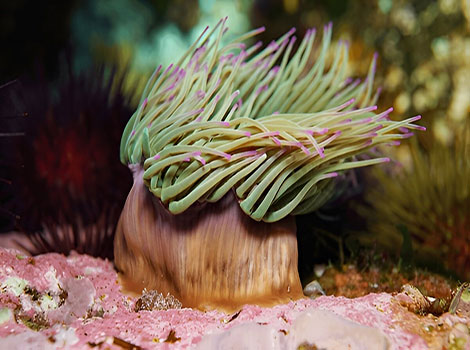
| Attributes | Quick facts |
|---|---|
| Size | Up to 5 feet (1.5 meters) |
| Weight | 0.1–2 lbs (50–900 g), depending on species |
| Lifespan | 50–100 years |
| Habitat | Oceans worldwide; attached to rocks, coral, or the seafloor |
| Diet | Carnivorous; feeds on plankton, fish, and shrimp |
| Social Structure | Solitary or in colonies |
| Conservation | Least Concern |
Fun fact: They form a symbiotic alliance with clownfish, which are immune to the anemone’s sting.
106. Scolopendra
The Scolopendra (Centipede) is a carnivorous insect that feeds primarily on insects and other invertebrates. The venom of most species is not medically significant; however, bites from several species can cause intense and long-lasting pain and swelling.
Scolopendra is characterized by a depressed body, a pair of antennae, and between 21 and 23 pairs of legs, with the first pair modified as fangs to inject venom; they are generally small in size, but can exceed 11.8 inches (30 cm), and are found across the world’s tropics and warmer temperate areas, often hiding in bushes, rocks, logs, leaves, and rock crevices during the day.
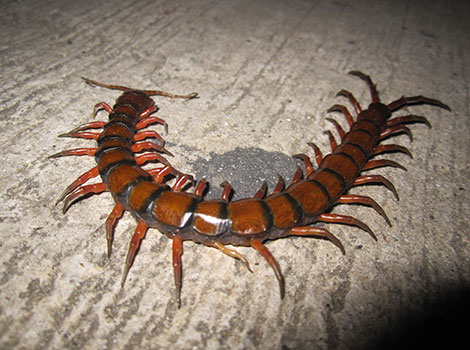
| Attributes | Quick facts |
|---|---|
| Weight | 0.1–2 oz (3–57 g) |
| Lifespan | 5–7 years |
| Habitat | Forests, deserts, and tropical regions worldwide |
| Diet | Carnivorous; feeds on insects, small mammals, and reptiles |
| Social Structure | Solitary |
| Conservation | Least Concern |
Fun fact: They cannot completely regenerate its venom within the first 48 hours, limiting its defense activity.
107. Sea Swallow
The Sea Swallow (Glaucus atlanticus) is a brightly colored nudibranch, commonly known as sea slugs. It grows up to 1.2 inches (3 cm) long. The Sea Swallow is found throughout the Atlantic, Pacific, and Indian Oceans in tropical and subtropical waters.
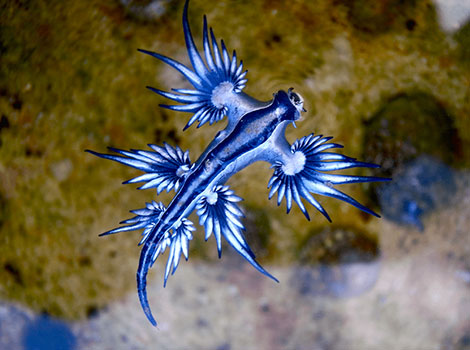
| Attributes | Quick facts |
|---|---|
| Weight | 0.01–0.03 oz (0.3–1 g) |
| Lifespan | 1–3 years |
| Habitat | Warm ocean waters; floats on the surface |
| Diet | Carnivorous; preys on jellyfish, including Portuguese man o’ war |
| Social Structure | Solitary |
| Conservation | Least Concern |
Fun fact: Despite its small size, it preys on the venomous Portuguese man o’ war.
108. Scallops
Scallops (Pectinidae) are marine bivalve mollusks found in all the world’s oceans. They inhabit environments ranging from shallow seagrass beds to deep sea, with a preference for sandy bottoms. Their thin, lightweight shells aid their unique ability among bivalves to swim.
This is achieved by rapidly opening and closing their shells, propelling them through the water. Scallops possess 2 hinged shells, 1 side slightly flatter than the other. They can have up to 200 eyes lining their mantle, which may be a brilliant blue color. These eyes allow them to detect light, dark, and motion.
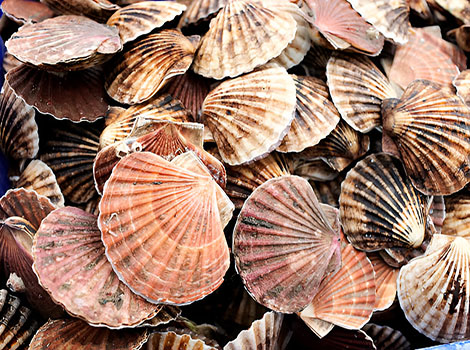
| Attributes | Quick facts |
|---|---|
| Weight | 0.1–3 lbs (0.05–1.3 kg), depending on species |
| Lifespan | 5–20 years |
| Habitat | Oceans worldwide; found on sandy or muddy seabeds |
| Diet | Filter-feeder; consumes plankton and organic particles |
| Social Structure | Solitary but can be found in groups |
| Conservation | Least Concern |
Fun fact: They are one of the very few groups of bivalves that can swim short distances.
FAQs
What sea animals start with S?
Sea animals that start with S include Squid, Shrimp, and Swordfish. Squid inhabit both coastal and oceanic waters, using their tentacles to catch prey. Shrimp, found in oceans and freshwater, have flexible bodies and fan-like tails and feed on small plants and animals. Swordfish, thriving in tropical waters, are fast swimmers that prey on bony fish and cephalopods.
What cute animals start with S?
Cute animals that start with S are Sheep, Shiba Inu, and Swan. Sheep, found in pastures, have woolly coats and prefer grazing in flocks. Shiba Inu, a Japanese dog breed, is small, muscular, and known for its playful nature. Swans are graceful birds with long necks, swimming elegantly in lakes and forming monogamous pairs.
What is a slow animal that starts with the letter S?
Slow animals that start with the letter S include Snails, Snapping Turtles, and Spiny Hill Turtles. Snails are herbivorous, with coiled shells, and move very slowly. Snapping Turtles live in freshwater habitats and are recognized for their strong jaws and defensive behavior. Spiny Hill Turtles are slow-moving reptiles with spiky shells that feed on plants and small animals.
What are jungle animals that start with S?
Jungle animals that start with S include Squirrel Monkeys, Sika Deer, and Siberian Tigers. Squirrel Monkeys, agile and diurnal, live in the rainforests of Central and South America. Sika Deer, native to East Asia, inhabit forested areas and graze on grasses and leaves. Siberian Tigers are solitary predators found in cold forests, hunting deer and wild boars.
What monkeys start with S?
Monkeys starting with S are Spider Monkeys, Squirrel Monkeys, and Saki Monkeys. Spider Monkeys are arboreal creatures with long limbs and tails, primarily eating fruits. Squirrel Monkeys live high in rainforest canopies and are active during the day. Saki Monkeys, found in South America, have bushy tails and a fruit-based diet.
What extinct animals begin with S?
Extinct animals that begin with S include Scutosaurus, Shunosaurus, and Spinosaurus. Scutosaurus was a herbivorous armored reptile that lived in the late Permian period. Shunosaurus, a Middle Jurassic dinosaur, had a blunt snout and lived in herds. Spinosaurus, a massive predator, was semi-aquatic and fed on fish during the Cretaceous period.
What are big animals that begin with S?
Big animals that start with S include Sumatran Elephants, Sri Lankan Elephants, and Scottish Deerhounds. Sumatran Elephants, found in Indonesia, are herbivores known for their strong familial bonds. Sri Lankan Elephants, native to Sri Lanka, are among the largest elephant subspecies. Scottish Deerhounds are tall hunting dogs, known for their speed and loyalty.
What is the fastest animal that starts with S?
The fastest animals starting with S are Sailfish, Short-faced Bears, and Shortfin Mako Sharks. Sailfish, with their pointed bills, are swift swimmers in warm oceans. The Short-faced Bear, now extinct, was a powerful predator during the Pleistocene. Shortfin Mako Sharks are known for their speed and hunt fish in temperate and tropical seas.
In conclusion, this article has illustrated the remarkable variety of animals starting with the letter S, showcasing their unique adaptations and habitats. From lush rainforests to arid deserts and deep waters, these creatures thrive in an array of ecosystems. To uncover more amazing animals and marvel at the diversity of life on Earth, please visit Animal Pedia for further exploration.
If you’re searching for animal names starting with a different letter, explore our other comprehensive articles dedicated to animal names.